
ELRE
KNX home automation for a villa: an architect's guide to scenes and design
KNX home automation: wired or wireless, scenes, security and an ETS project you own, explained by architects.
KNX home automation for a villa: how it is designed
Home automation is the set of systems that run lights, blinds, climate, access and scenes of a villa with a single system, and KNX is the open standard we most often specify for it. Done well, it is invisible: the right light comes on at the entrance, the house goes to night mode at a touch, the heating follows the schedule. Done badly, it becomes one more remote control, with a different app for every function and an installer who does not answer. The difference is decided in design, before the site opens.
Most pages that Google shows for this search are lists of benefits and product sheets. We explain, as architects, how a home automation system is designed in a villa: why an open standard such as KNX is chosen, what is decided on the plan and what in the electrical panel, and how to avoid being tied to a single installer. We do not sell systems, we do not cite brands and we do not give prices, which without a design would be invented numbers.
KNX home automation at a glance
- An open standard avoids depending on a single manufacturer or a single installer.
- The cabling is decided on site, before plastering: afterwards it is expensive.
- The project of the system is a document that belongs to whoever pays.
- The scenes are drawn on the family’s life, not on the catalogue of functions.
- Cybersecurity concerns remote access and updates.

The Villa Edit
Materials and systems of the villa
Air source heat pump
The guide
Whole house ventilation
The guide
Home cinema room
The guide
Infinity pool
The guide
Preliminary reading
Understand a villa before you buy it
Signature Architecture
Design or renovate a villa
Contact
Write to us
What KNX is
KNX is an open and standardised technology for building automation. The KNX Association describes it as a technology with thousands of interoperable devices, a single programming software called ETS and an ecosystem of manufacturers, training and resources. According to the association it is an open standard trusted for over thirty years, with more than 500 manufacturers and over 8,000 certified devices: these are figures declared by the association, which we quote as such.
For whoever designs a villa the point is interoperability: devices from different manufacturers speak the same language, and the system can be extended or changed over time without rebuilding everything. It is the difference between a system that lasts as long as the house and one that depends on the fate of a company. We do not say KNX solves every problem: it is the choice that, for a villa of quality, gives the most freedom to change installer, components and interface.
Wired, wireless or cloud: which home automation
There are four solutions, summarised in the table:
| System | How it works | What to check |
|---|---|---|
| Wired bus (KNX) | A dedicated cable links sensors and actuators; every device is programmed with one software | Cabling on site, project in ETS, qualified integrator |
| Wireless | Devices that communicate by radio, with no dedicated cable | Range through walls, batteries, interference, long-term reliability |
| Cloud or app | Devices connected to a service on the internet | Dependence on the service, updates, privacy |
| Hybrid | A bus for the core and wireless for accessories | Who integrates and documents the whole |
In a new villa the classic choice is the wired bus for the core of the system, that is lights, blinds, climate and scenes, because the cables are laid before plastering and last as long as the house. Wireless makes sense in renovations, where the walls cannot be opened, and for accessories added later. The cloud is convenient but ties the house to an outside service: if the company closes or changes its terms, the functions disappear.
Explore our projects
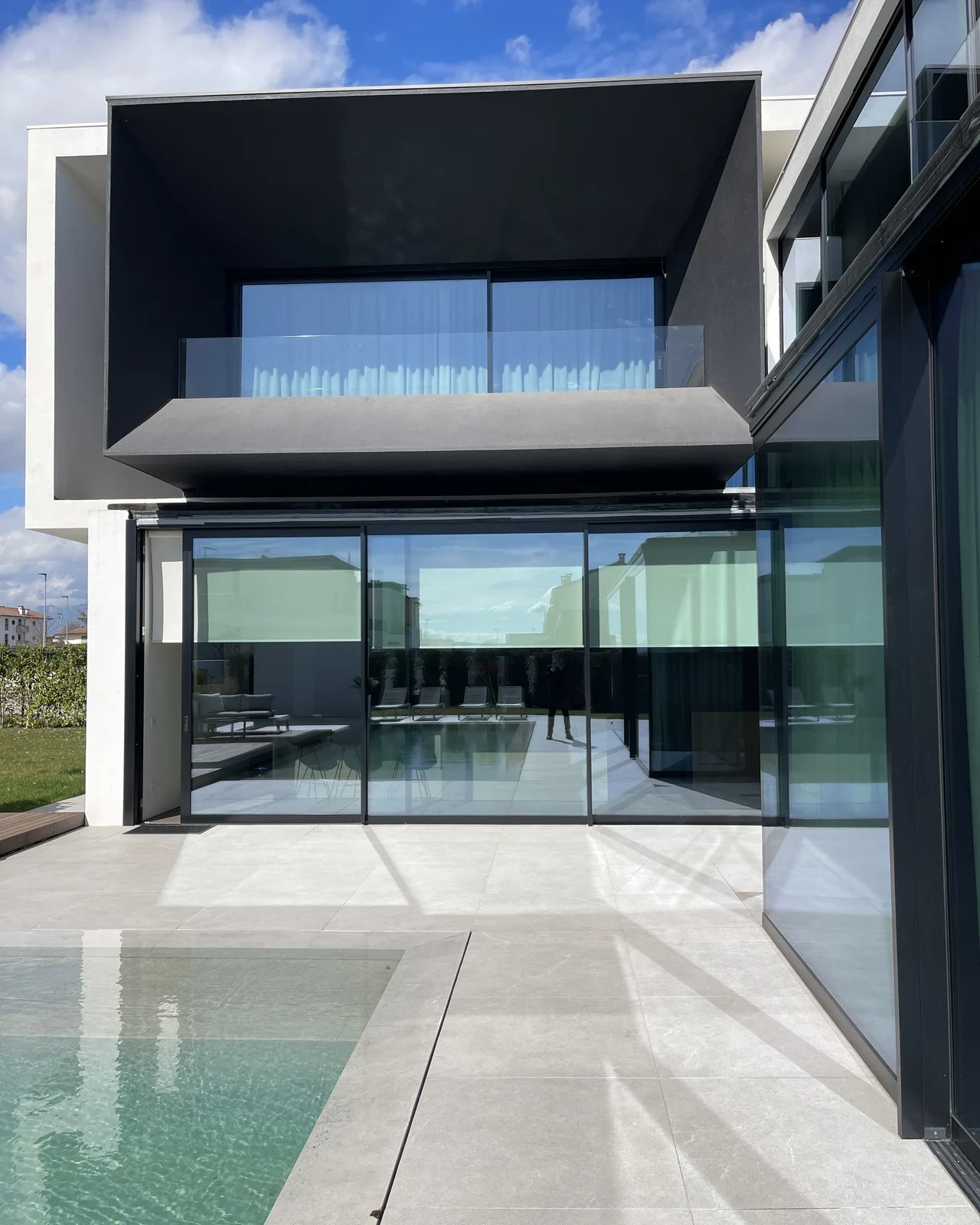
Metra glazing, Viabizzuno and OTY lighting, infinity pool: design and site direction by the studio.
Invest
Before buying a luxury villa in Italy, the Dominican Republic, Zanzibar or Dubai: send us the…
What is decided on the plan
Good home automation starts on the floor plan. You decide where the light points are, where you want wall controls and where a sensor is enough; where the bus lines run and where the panels sit; which rooms have scenes of their own. Wall controls are an architectural subject: plates, materials, heights and positions must agree with the finishes, the door and the light.
Our method is simple: for each room we write what must happen when the family comes in, goes out, sleeps, entertains. From that table we derive sensors, actuators and controls; we do not start from the catalogue of what the system can do. Home automation with a thousand useless functions is harder to use and to maintain.
Explore our projects

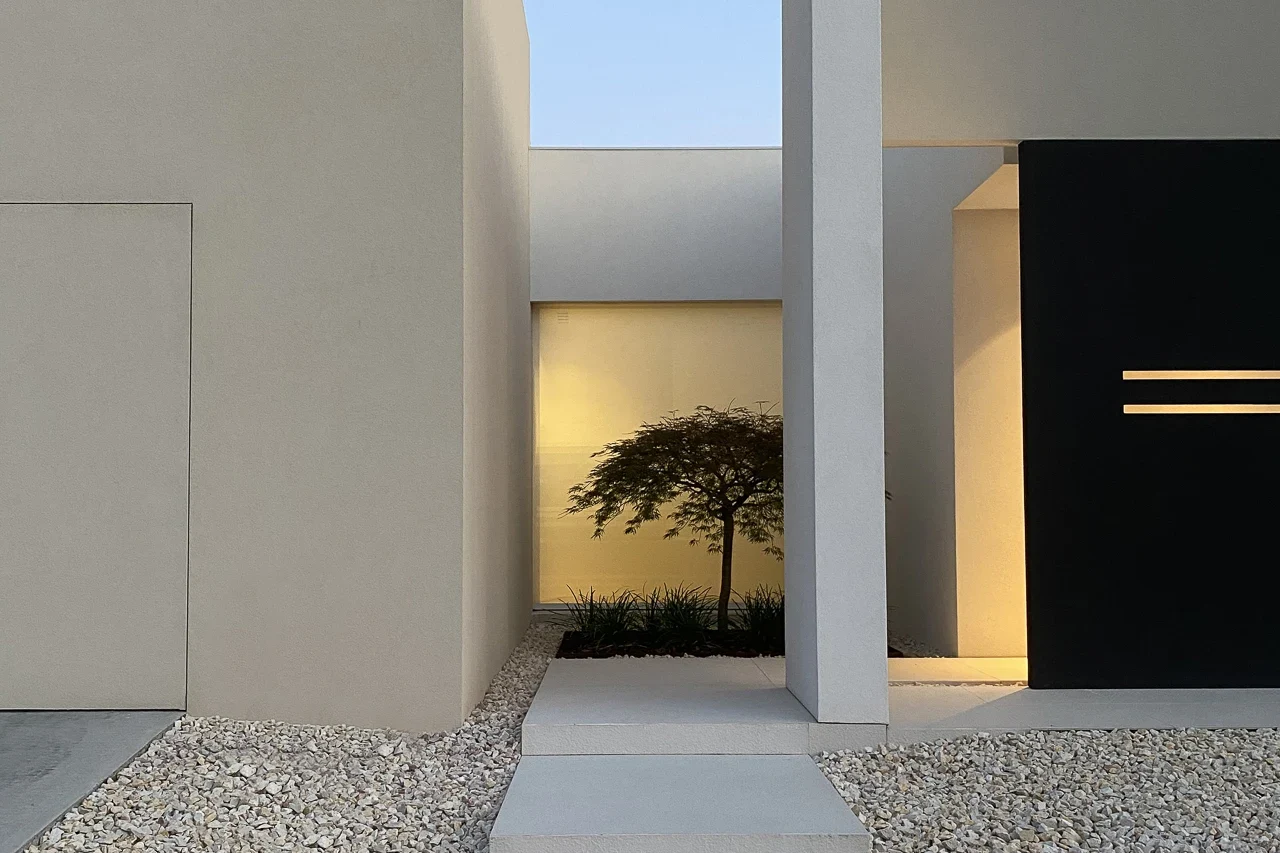
Schüco glazing, Minimal Cucine and Modulnova kitchen, Poliform and Baxter furniture, Occhio lighting, MAFI wood.
Lights, blinds and scenes
Lights are the function used most. In a villa we design different circuits for general light, accent light and night light, dimmable and with scenes: dinner, reading, guests, night. The dimming technique depends on the fittings: it must be decided with the lighting designer before choosing the drivers, because some combinations do not work or flicker.
Blinds and curtains follow the sun: they lower in summer for comfort and rise in winter for solar gains. In rooms with large windows it is the shading, more than the cooling machine, that makes the difference: the subject is the same as with the air source heat pump and summer comfort.
Climate, ventilation and consumption
KNX home automation does not replace the heating design: it completes it. The system reads temperatures, controls zones and valves and can talk to the heat pump and to whole house ventilation. A thermostat in every room is useless if the system is not balanced; the design comes first, then the control. With radiant flooring such as underfloor heating, response is slow: thermal scenes are programmed hours ahead.
For consumption, the system can measure and display data per circuit: useful to understand where energy goes and to manage loads such as the electric car, the pool or heating. We do not promise percentage savings, because they depend on the family’s habits and on the house.
Explore our projects
Edra sofas, Varenna kitchen, Noorth and Agape bathrooms: a studio project.
Audio, video and home cinema
Multiroom audio and video link to home automation with controls and scenes, but they require systems of their own. For a home cinema room the automation handles lights, curtains and entrances, while audio and projection sit on a dedicated system. Mixing everything in a single complicated system is a frequent mistake: a clear integration between well-distinct systems is preferred.
Security and access
Alarm and video surveillance are systems in their own right, with their own rules and installers. Home automation can integrate, for example by switching on lights in case of an alarm or simulating presence, but it does not replace them. Ask that the security system keeps working even if the automation stops, and that the access keys be managed by the family.
Remote access is convenient and risky: it must be protected with strong authentication, periodic updates and a configuration that does not expose the house directly to the internet. The design states who manages access, where the credentials are kept and what happens if the supplier is no longer available.
Architecture
Luxury interiors for villas: the 12 systems of The Villa Edit, from passive house to furniture…

Invest
Whole house ventilation for a villa in Italy, explained by architects: solutions, ducts, silence…
The project is yours: ETS and documentation
A KNX system is programmed with the ETS software, and the project file contains all the addresses and functions. That file is the document that lets another installer step in in the future. Ask in the contract that the project be delivered to you at the end of the works, together with the panel diagrams, the device lists and the instructions for use. Without the file, the client is tied forever to whoever built the system.
Add training to the contract: a session with the family to explain scenes and controls, and a simple manual. A house that only the installer can use is not a smart house: it is a hostage house.
Panel and technical room
The KNX bus needs power supplies, actuators and tidy panels. The technical room should be sized with free space for future extensions, comfortable access, ventilation and an orderly layout of wiring. A panel crammed with terminals and unlabelled wires is a problem in ten years, when someone has to step in.
How to choose the integrator
The quality of home automation depends more on who installs it than on the catalogue of devices. The integrator must be able to read your design, to talk to the electrician, the energy engineer and the lighting designer, and to leave complete documentation. Ask for references of villas already delivered, visit a working system and check that they are trained on the system they propose. An installer who does not want to hand over the project file is a signal not to ignore.
Also ask how support works: who answers in case of a fault, in what time, with what remote tools, and what happens if the company changes business. KNX home automation is a system you use every day for twenty years: the support contract is part of the design as much as the devices, and should be put in writing from the start.
Home automation in a renovation
In an existing villa the wired bus is not always possible: opening walls and ceilings to lay cables costs money and makes dust. A hybrid system is then considered, with cabling in the areas where work is done anyway (kitchen, bathrooms, living room) and wireless devices in the other rooms. The criterion is to choose where home automation gives the most value: ambient lights, blinds and climate of the most used areas.
A renovation is also the chance to rethink the controls: fewer buttons, placed where they are needed, with scenes that reduce gestures. Do not reproduce the historic position of the switches, born for a simpler system. KNX home automation works when it simplifies life, not when it adds devices.
Invest
Air source heat pump for a villa in Italy, explained by architects: types, envelope, underfloor…
Architecture
UHNW luxury villa architecture designed and supervised by Federico Cappellina’s studio since 2002…
KNX in our projects
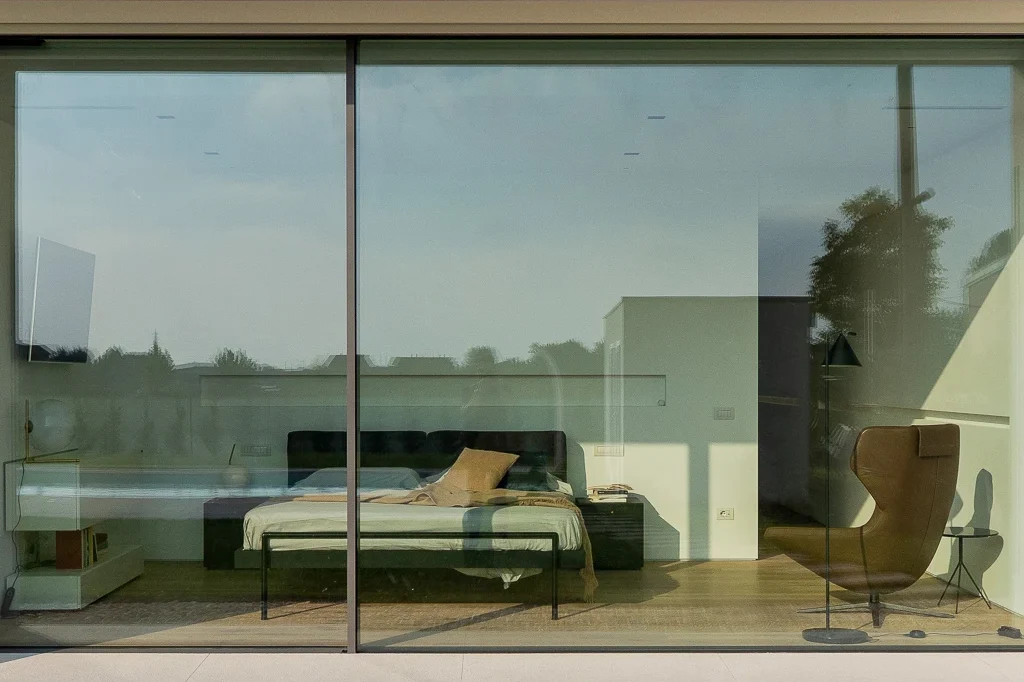
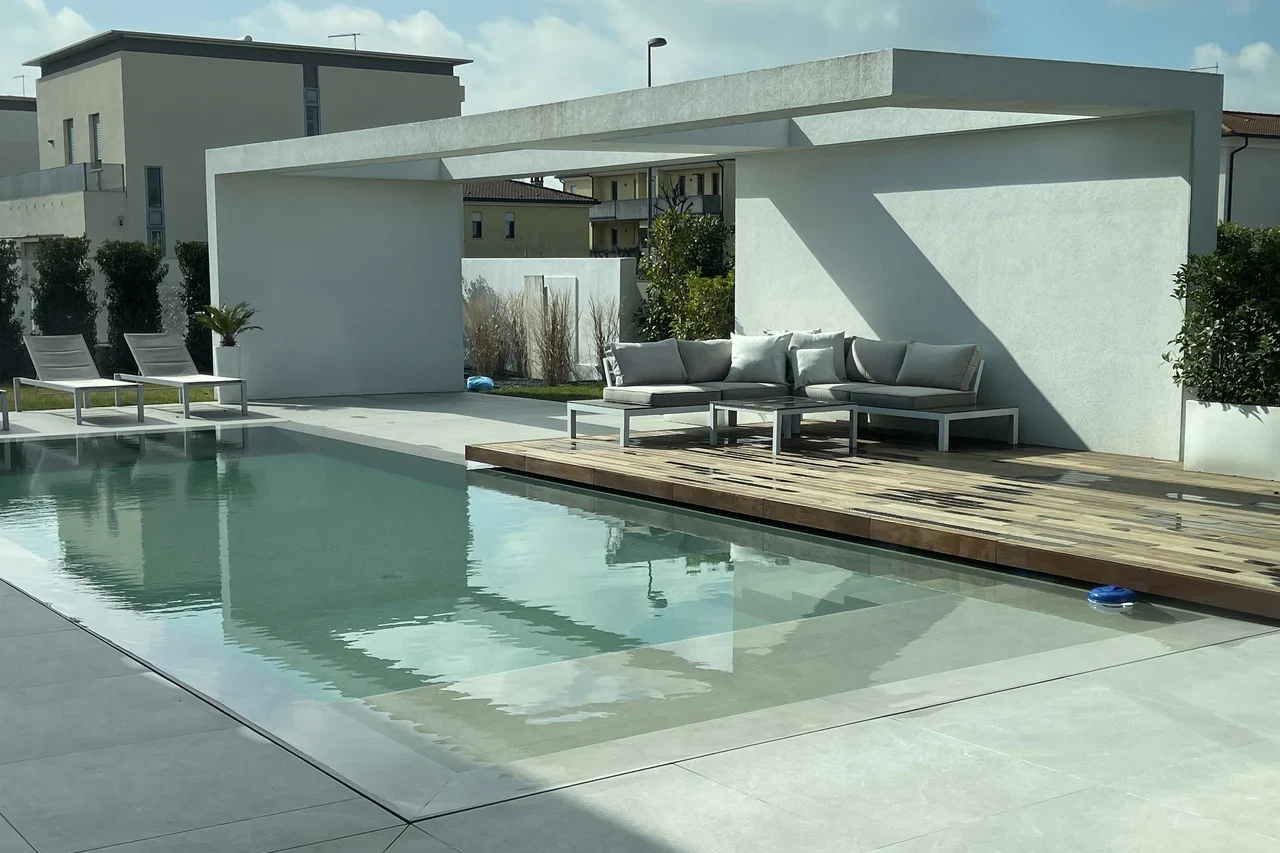
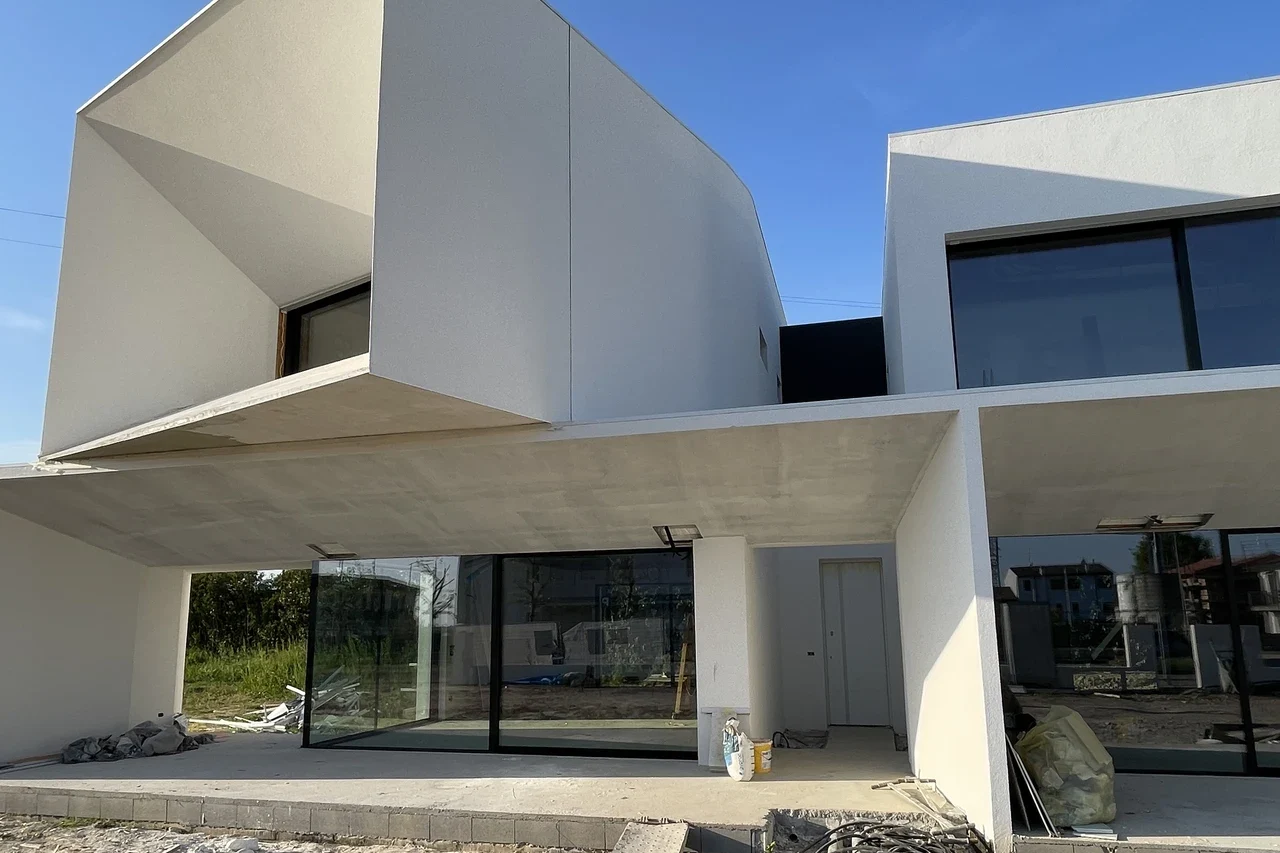
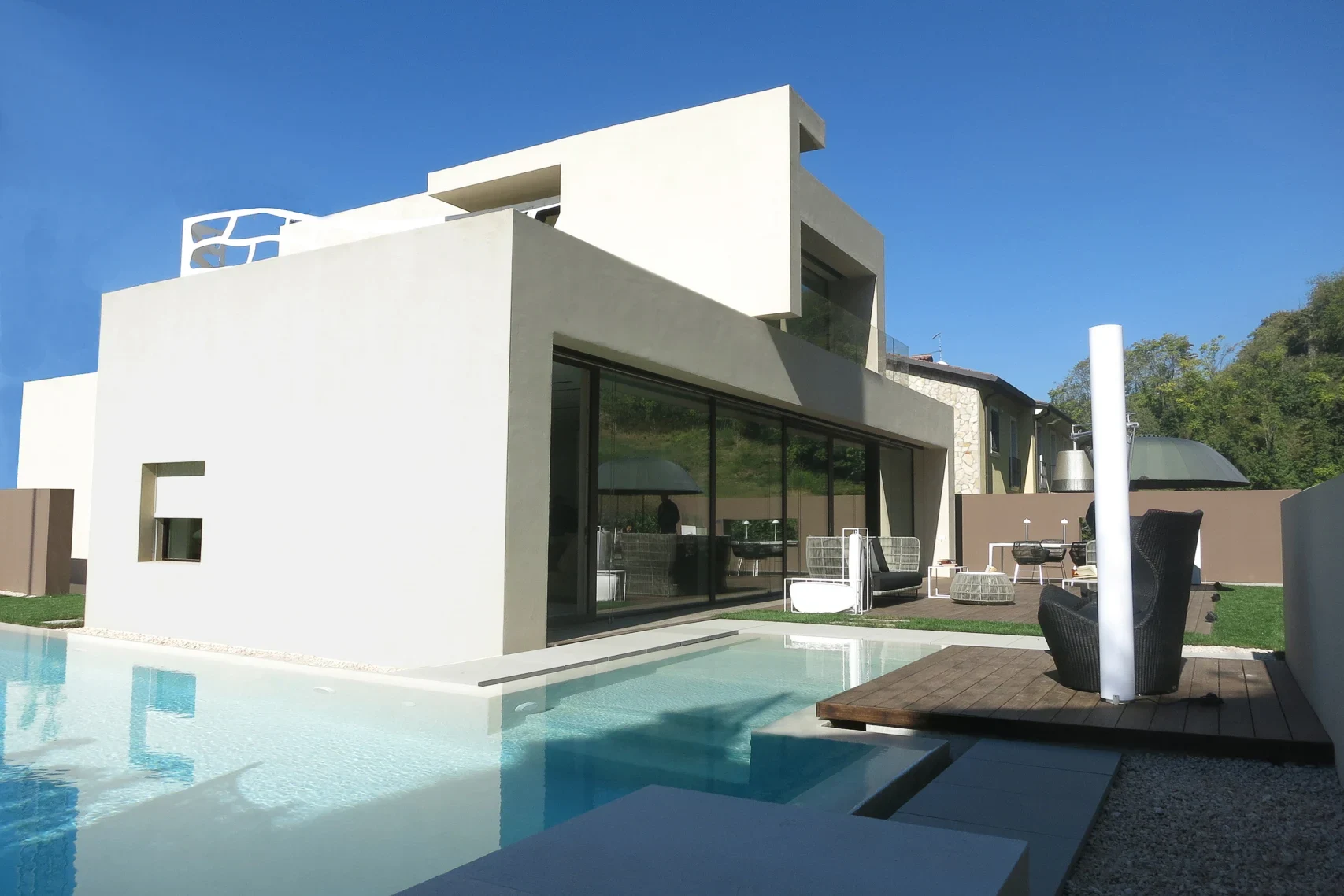
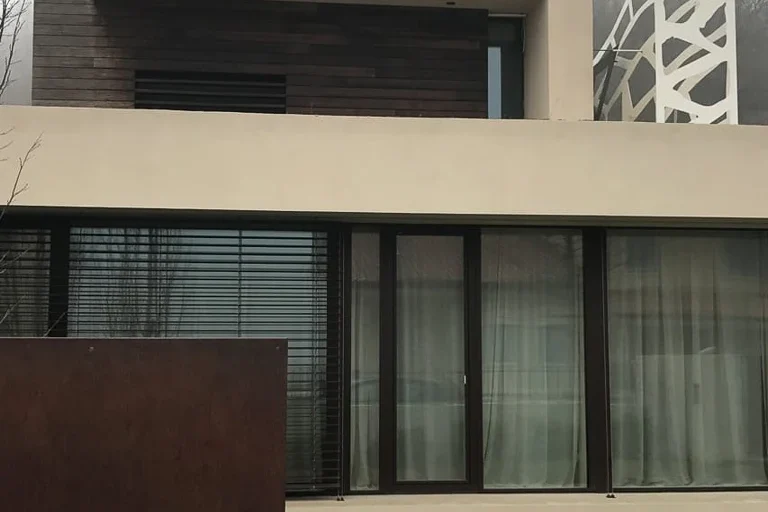
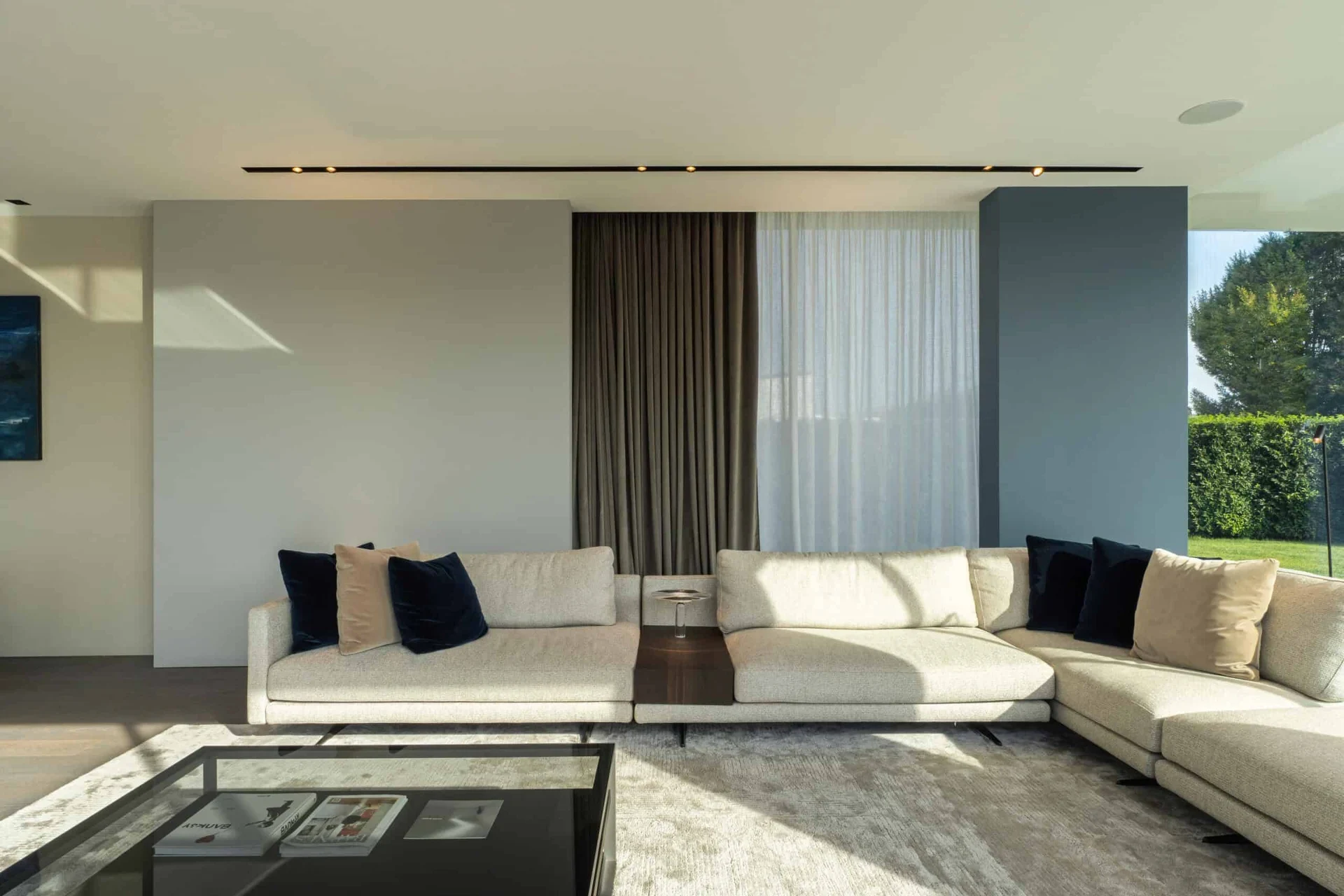
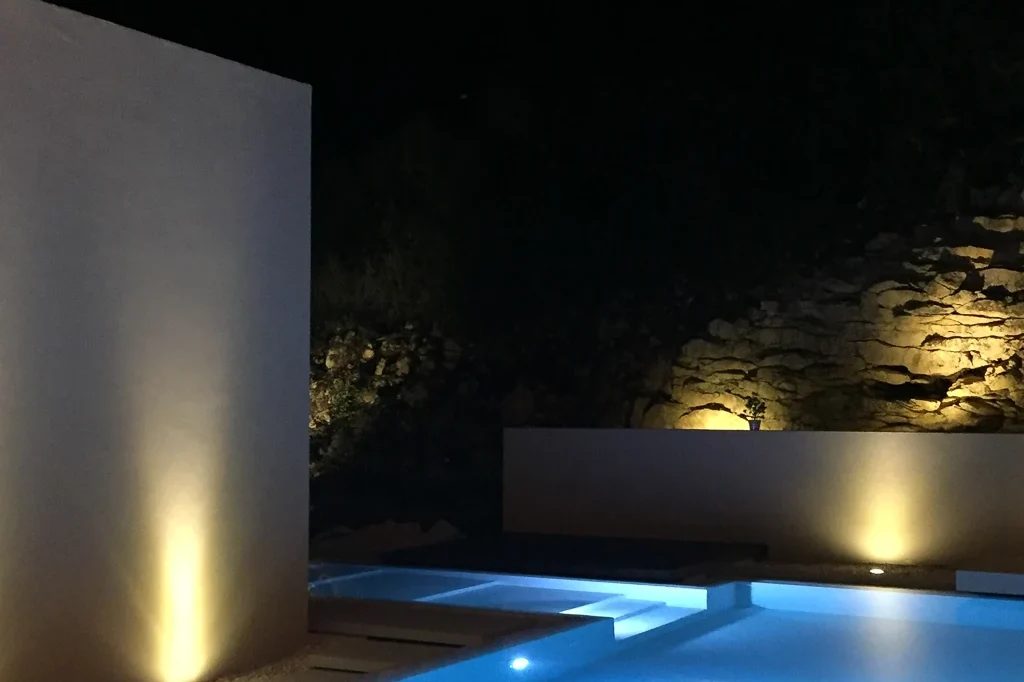
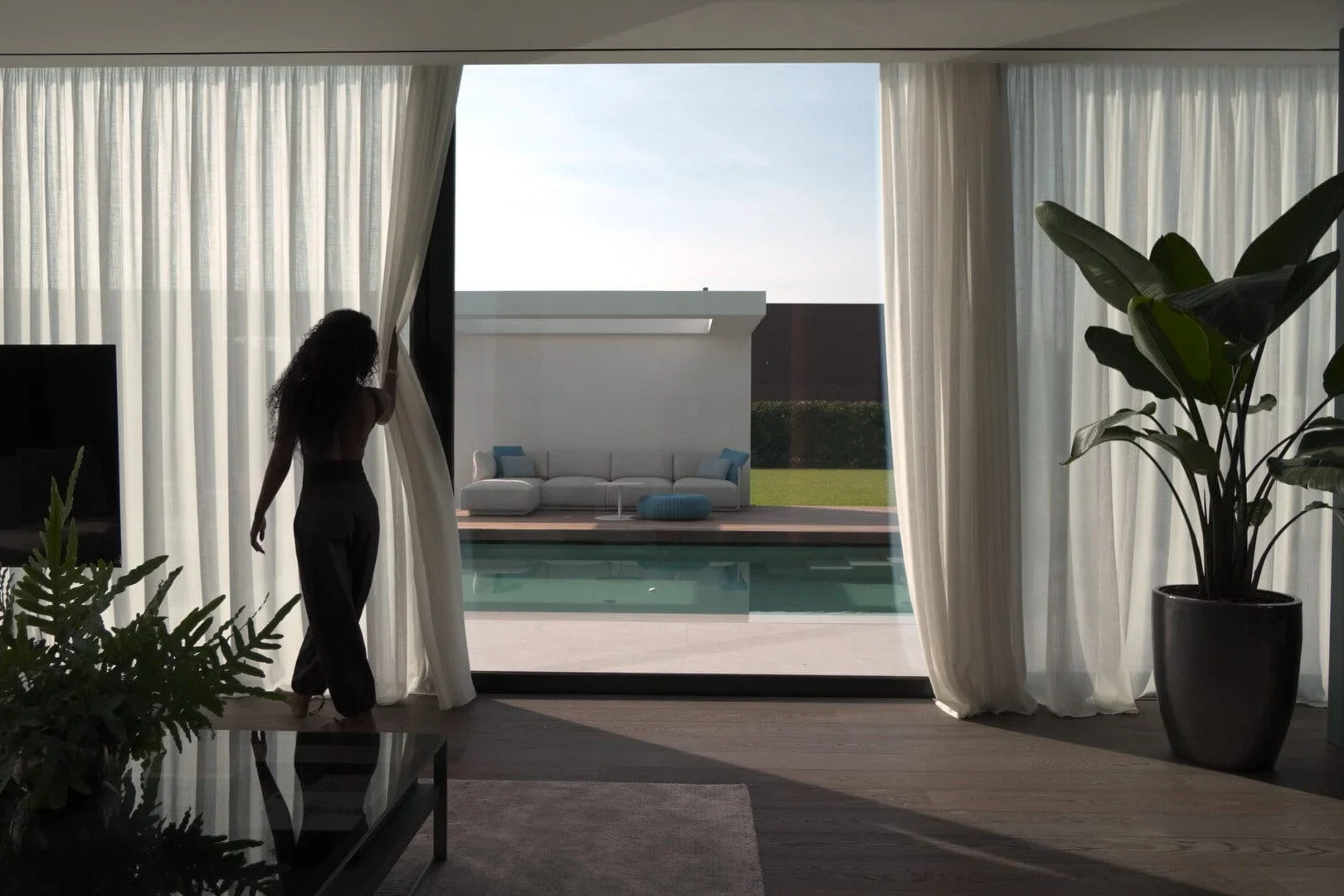
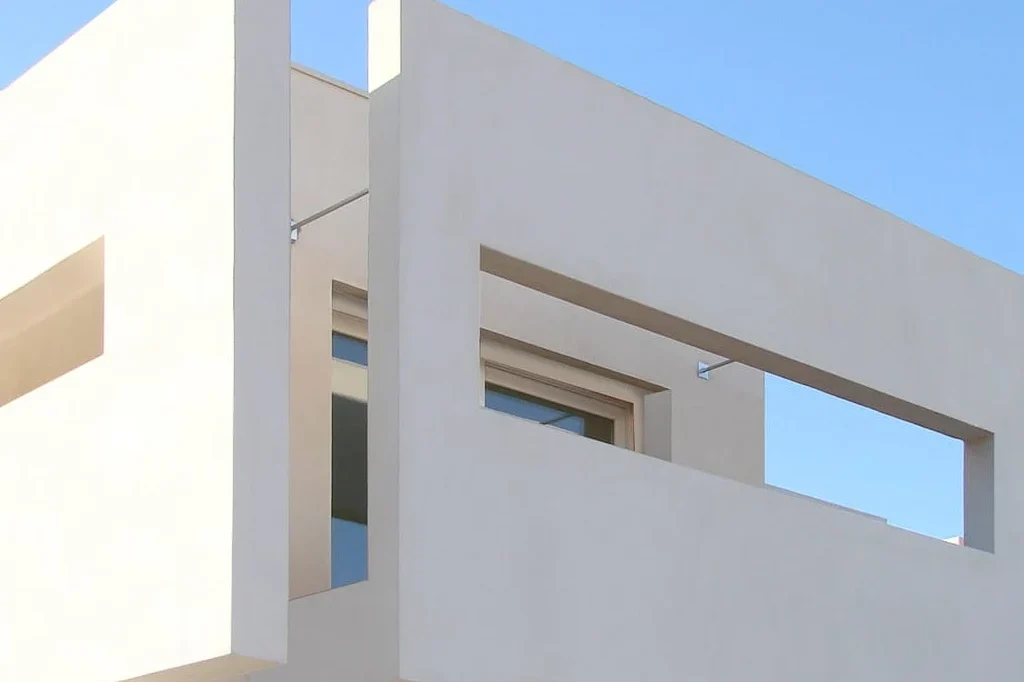
A clarification: the photos in this guide show exteriors and interiors of the studio’s projects, and none documents a home automation system. We chose them because they show how spaces, light and windows are conceived together, which is where home automation starts. For related topics see our guides to the infinity pool and the modern fireplace.
How much does KNX home automation cost?
We do not give figures, because the cost depends on the number of points, the functions, the cabling and the integration with the other systems. The real cost of KNX home automation depends on six items: design and programming, devices and actuators, cabling and panels, interfaces and controls, integration with climate, audio and security, training and support. Ask for quotes that separate them.
The advice is to spend first on cabling and design, which are not redone, and to leave accessories for later: sensors, extra controls and interfaces are added easily when the bus is already laid. Incentives change often: check them with your technician and accountant at the time of the application.
Invest
Infinity pool for a villa in Italy, explained by architects: building permit, position, overflow…
KNX home automation: checklist before you sign
- Does the KNX home automation use the open KNX standard throughout?
- Is the cabling of the KNX home automation planned before plastering?
- Are the scenes of the KNX home automation written room by room?
- Will the ETS project file of the KNX home automation be delivered at the end of the works?
- Is remote access to the KNX home automation protected?
- Does the quote for the KNX home automation separate design, devices, cabling and support?
KNX home automation: ten mistakes to avoid
- Choosing a closed system tied to a single installer.
- Not planning the cabling before plastering.
- Starting from the catalogue of functions and not from the family’s life.
- Not getting the ETS project and the diagrams delivered.
- Placing wall controls without coordinating them with the finishes.
- Mixing audio and video in a single complex system.
- Tying security to the automation without a standalone function.
- Exposing remote access without protection.
- Forgetting the training of the family.
- Comparing quotes without separating design, devices, cabling and support.

Invest
Home cinema room explained by architects: where to place it, sound insulation, quiet services…
KNX home automation: frequently asked questions
What is KNX?
An open and standardised technology for building automation. According to the KNX Association it has thousands of interoperable devices and a single programming software, ETS.
What is home automation in a villa?
It is the set of systems that run lights, blinds, climate, access and scenes of a house with one system, controlled by buttons, panels and apps.
Wired or wireless?
In a new villa the wired bus for the core; wireless in renovations and for accessories.
Is the project mine?
It must be: ask in the contract for delivery of the ETS file, the panel diagrams and the instructions.
Does home automation replace the alarm?
No: the alarm is a system in its own right. Automation can integrate, but security must work even if the automation stops.
Can I control it remotely?
Yes, but access must be protected with strong authentication, updates and a configuration that does not expose the house directly to the internet.
How much does it cost?
It depends on points, functions, cabling and integrations. Ask for separate quotes for these items.
KNX home automation: in conclusion
KNX home automation in a villa is a project of architecture and systems before devices. Successful KNX home automation starts from the family’s life, uses an open standard, plans the cabling before plastering and leaves the project to the client.
Whoever plans KNX home automation for a villa should ask from the start which scenes will be drawn, who will deliver the project file and who will provide support over the years. They are the questions that separate KNX home automation that simplifies life from one that complicates it. With KNX the villa stays free to change installer, and KNX home automation lasts as long as the house.
Designing or renovating a villa in Italy?
Send us the plan: we tell you where to run the cabling, which scenes to draw and what to ask the installer. For a complete project see Signature Architecture or write to us from Contact.
Sources: KNX Association, What is KNX (the figures on manufacturers and devices are declared by the association). Checked on 8 November 2026. Photos: projects by Federico Cappellina Architects, which do not show a home automation system.
Would you like an opinion on the project?
Send us the plan: we reply with the points to verify.
Discover the UHNW Lifestyle
The Villa Edit: materials and systems read by architects.