
ELRE
Air source heat pump for a villa: an architect's guide to choice, noise and design
Air source heat pump: types, emitters, outdoor unit noise and refrigerant gases, explained by architects.
Air source heat pump for a villa: how to choose and design it
The air source heat pump is today the generator most often designed into a new or renovated villa: it heats and cools with a single system, makes the hot water and can run with solar panels. But an air source heat pump is not a boiler with another name.
It performs well only if the house loses little heat, if the water circulates at low temperature and if the outdoor unit is placed and sized with care. That is why the air source heat pump is designed together with the building envelope and the emitters, not picked from a catalogue.
Most pages that Google shows for this search are commercial guides with types and prices. We do something else: we explain, as architects, where to place the air source heat pump, what to look at in the European noise and efficiency limits, what the regulation says about refrigerant gases and what to ask the energy engineer. We do not sell systems, we do not cite brands and we do not give prices, because without a design they would be invented numbers.
Air source heat pump at a glance
- The envelope comes first: a house that loses little heat allows a smaller and more efficient heat pump.
- Low-temperature emitters (underfloor heating) are the natural partner of the air source heat pump.
- The outdoor unit makes noise and takes space: its position is decided on the plan, not on site.
- The refrigerant gas requires a certified installer, under European regulation.
- The cold season is the test: ask the designer how the machine works on the coldest days.
The Villa Edit
Materials and systems of the villa
Underfloor heating
The guide
External wall insulation
The guide
Hardwood flooring
The guide
Modern fireplace
The guide
Preliminary reading
Understand a villa before you buy it
Signature Architecture
Design or renovate a villa
Contact
Write to us
How it works and which types exist
An air source heat pump moves heat from a source (air, ground, water) to the heating system of the house, using electricity for the cycle. The European ecodesign rule, Regulation (EU) No 813/2013, covers space heaters up to 400 kW and expressly includes heat pumps. In a villa there are four solutions, summarised in the table:
| Type | Where the heat comes from | What to check |
|---|---|---|
| Air-to-water | Outdoor air, with an outdoor unit | Noise, position of the unit, performance on the coldest days |
| Ground source (water-to-water or brine-to-water) | The ground or groundwater, with probes or wells | Available land, permits, cost of drilling |
| Air-to-air | Outdoor air, with indoor split units | Look of the indoor units, no dedicated domestic hot water |
| Hybrid | A heat pump plus a fuel-burning generator | Complexity, maintenance of two systems, switching logic |
In most villas the air-to-water air source heat pump is the simplest choice, because it needs no drilling. Ground source performs better because the source is steadier, but it needs land, permits and a larger investment: it makes sense on a large plot and with a low-consumption house. The hybrid is considered only where a fuel-burning system already exists and cannot be abandoned.
Explore our projects
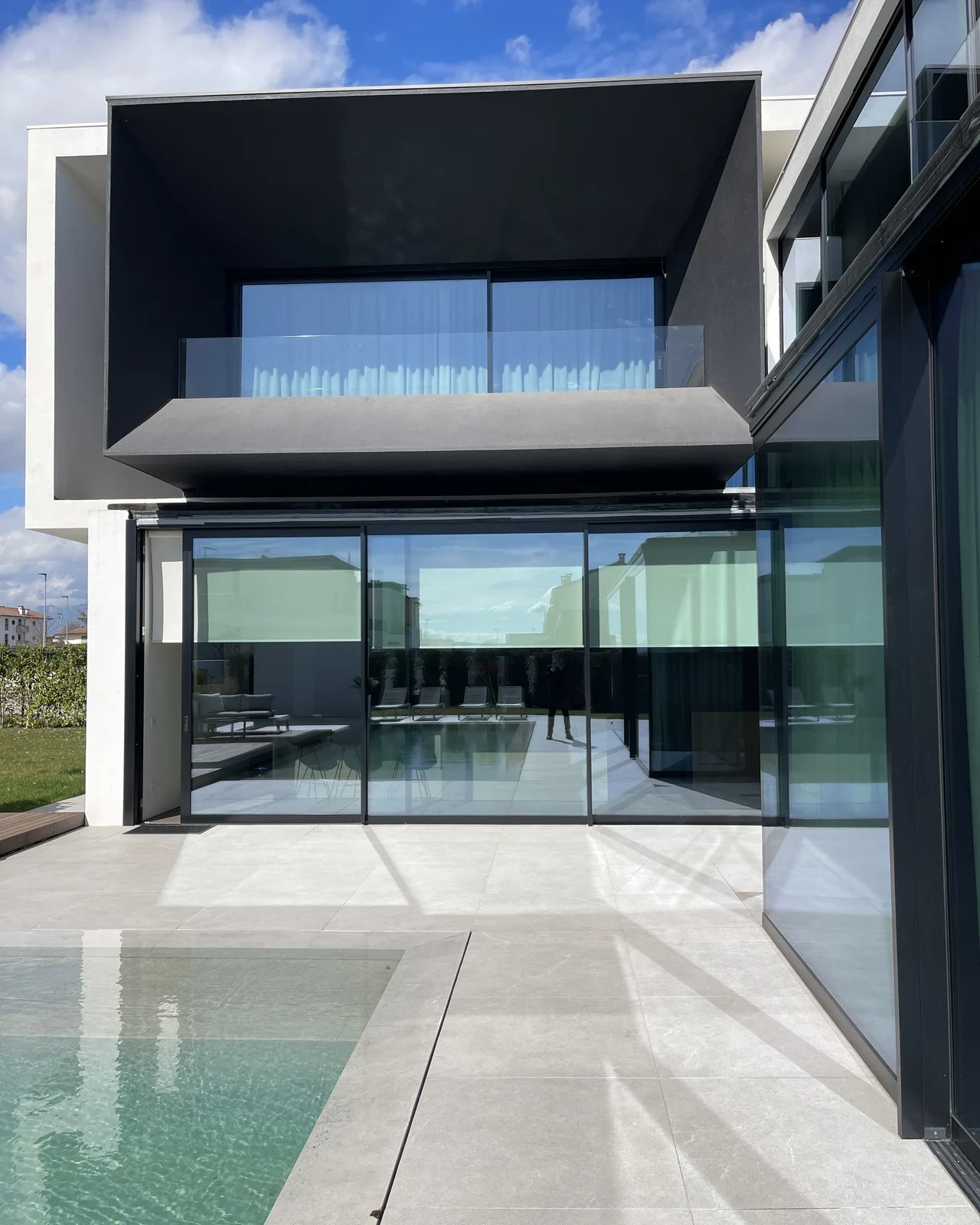
Metra glazing, Viabizzuno and OTY lighting, infinity pool: design and site direction by the studio.
Why you need an envelope that loses little first
An air source heat pump works best when it has to heat the water to low temperatures. That is possible only if the house loses little heat: insulated walls, well-fitted windows, thermal bridges solved. If the building is an existing villa with uninsulated walls, the first step is not choosing the air source heat pump but understanding whether to work on the envelope, as we explain in the guide to external wall insulation.
Replacing the old generator with an air source heat pump without touching walls and windows is possible, but it needs an honest calculation: the machine has to heat the water to higher temperatures, which lowers efficiency and may require larger emitters. There is no rule valid for all villas: the energy engineer’s design says it, with the data of the house.
Emitters: why underfloor heating is the natural partner
Low-temperature emitters, especially underfloor heating, are the classic pairing of the air source heat pump: large surfaces that give off heat with barely warm water. In a new villa it is almost always planned; in a renovation it is assessed case by case, because lifting floors is not always possible. A delicate floor like the one we describe in the guide to hardwood flooring requires a specific design of the flow temperatures.
Where underfloor heating cannot be used, there are low-temperature fan coil units, oversized radiators and ceiling or wall systems. They are compromises that are noisier or less even, and they must be sized on the operating temperature of the air source heat pump, not on that of an old boiler.
Architecture
Luxury interiors for villas: the 12 systems of The Villa Edit, from passive house to furniture…

Explore our projects

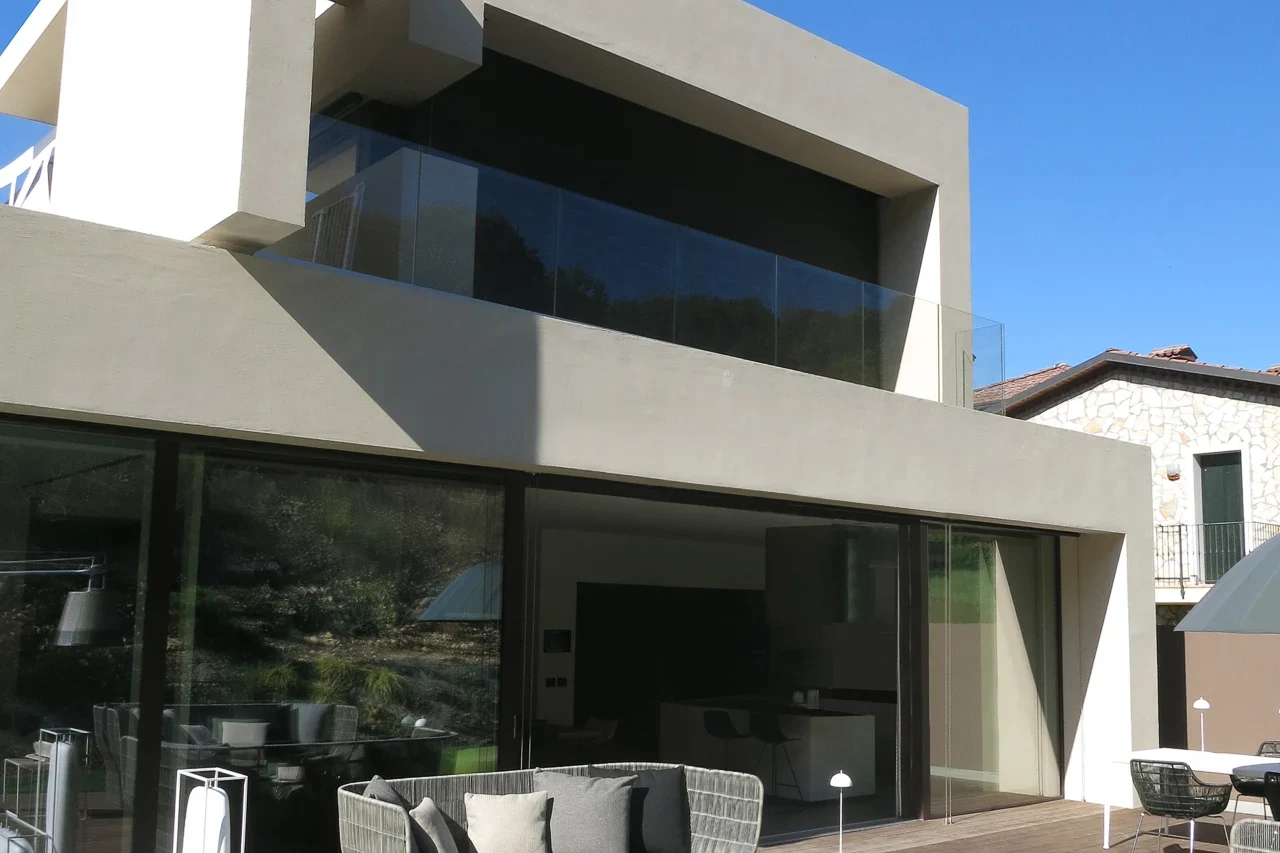
Schüco glazing, Minimal Cucine and Modulnova kitchen, Poliform and Baxter furniture, Occhio lighting, MAFI wood.
The outdoor unit: position and noise
The outdoor unit of an air-to-water air source heat pump is the most delicate part from the architect’s point of view: it takes space, makes noise and can be seen.
Regulation 813/2013, in Annex II, sets maximum sound power levels for heat pumps, valid from 26 September 2015 and different for rated output and for indoor or outdoor units: for appliances between 6 and 12 kW, for example, 65 dB for indoor units and 70 dB for outdoor ones; between 12 and 30 kW, 70 dB and 78 dB. These are legal maximums, not design targets.
Beware of a common misunderstanding: the sound power the regulation limits is not the noise you hear at a given point in the garden, which depends on distance, obstacles and reflections. That is why the air source heat pump must be placed away from bedrooms and from living terraces, not in a closed corner between two walls that amplifies the sound, and on bases that do not transmit vibration to the structure. The acoustic designer checks the values at the nearest point of the neighbouring property.
On the plan we reason like this: the outdoor unit sits in a technical bay or behind a ventilated screen, with free space for incoming and outgoing air and access for maintenance. A timber or metal grille that hides the machine works only if it does not obstruct the airflow: the manufacturer provides for it and the designer confirms it before drawing the facade.
Explore our projects
Edra sofas, Varenna kitchen, Noorth and Agape bathrooms: a studio project.
Efficiency: what the regulation says
Regulation 813/2013 also sets minimum seasonal space heating efficiency requirements. For heat pumps, in the text we read, the minimum is 110% from 26 September 2017, and 125% for low-temperature heat pumps. These are thresholds for access to the European market: a well-designed air source heat pump in a villa should do much better, but the actual value depends on flow temperature, climate and control, and must be asked of the energy engineer with a calculation, not read from a catalogue.
When comparing two offers, do not stop at capacity: look at the data sheet with the seasonal efficiency values, the test conditions and the water temperature they refer to. A very efficient air source heat pump at 35 degrees can perform much worse at 55: the comparison holds only at the same flow temperature.
Refrigerant gas and certified installers
An air source heat pump contains a refrigerant, and fluorinated fluids are regulated at European level. Regulation (EU) 2024/573 on fluorinated gases, which repeals the earlier 517/2014, provides that the people who install, maintain or repair equipment containing them must be certified. In practice: ask the contractor for the installer’s certificate, and ask the designer to state in the specification the type of refrigerant and the periodic checks the rules require.
The text we read does not allow us to say which appliances are subject to market bans and from when: the specific bans are in an annex that must be read in the full version. For an air source heat pump to be installed today, the choice of refrigerant is a question to ask the designer, with the manufacturer’s data sheet in hand.

Invest
External wall insulation for a villa in Italy, explained by architects: outside or inside…
Domestic hot water and storage
A villa uses hot water irregularly: in the morning, in the evening, when guests are staying. The air source heat pump produces it with a dedicated cylinder or a technical buffer, and the choice of volume depends on the number of bathrooms, habits and the presence of a spa or pool. A buffer that is too small forces the machine to work in inefficient conditions; one that is too large loses heat. The sizing is done by the energy engineer with the family’s data.
For a spa and a pool the story changes: continuous loads and different capacities often call for a dedicated machine. We never mix the house circuit with the pool circuit without a design that checks how they interact, so that in winter the pool does not draw heat away from the heating.

Invest
Hardwood flooring explained by architects: solid or engineered, oak and other species, herringbone…
Cooling and summer comfort
A reversible air source heat pump cools the house in summer, normally with the same radiant system or with fan coil units. Underfloor cooling must be handled with care, because below a certain temperature condensation forms, which is why humidity control and often dedicated dehumidification are needed. These are design details that make the difference between a cool house and a damp one.
Summer comfort does not depend only on the machine: orientation, shading of the glazing and protection of the walls do more than the installed capacity. In a villa with large glass surfaces, solar shading is the first part of the cooling system, even if it does not appear in the systems estimate.
Solar panels, storage and control
The air source heat pump and solar panels complete each other: the array produces energy in the sunny hours and the machine can store it as heat in the water of the house. A control that brings heating forward into the production hours makes better use of the solar panels, and well-configured home automation makes it automatic. We do not give sizes or yields here, because they depend on the roof, the orientation and the consumption.
What is needed in design is to leave the space: a technical room sized for the cylinder, manifolds, panels and any battery. A villa designed without a technical room ends up with systems in the garage or cellar, hard to maintain. The technical room is part of the architecture.
Invest
Modern fireplace explained by architects: where to place it, wood, pellet, gas or bioethanol, EU…
Constraints, permits and neighbours
On a protected building or in a protected area, placing an outdoor unit on a facade or in the garden may require the authorisation of the Soprintendenza or the municipality, and it is prudent to check the municipal building regulations before choosing the position. Relations with neighbours also count: a noisy machine on a boundary creates disputes that cost more than the system. For ground source, permits for drilling are also needed.
Our advice is to bring the subject to the table from the preliminary design: the position of the outdoor unit affects the layout of the house, the screening and the systems. Where a unit was added at the end of the works, the result is normally a makeshift solution.
The air source heat pump in our projects
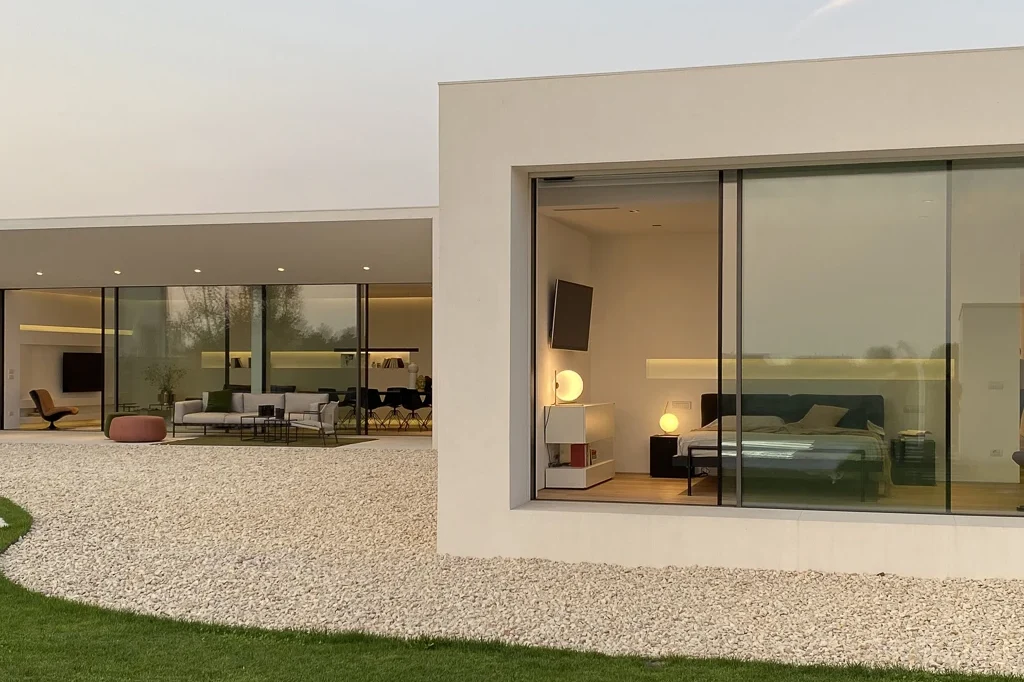
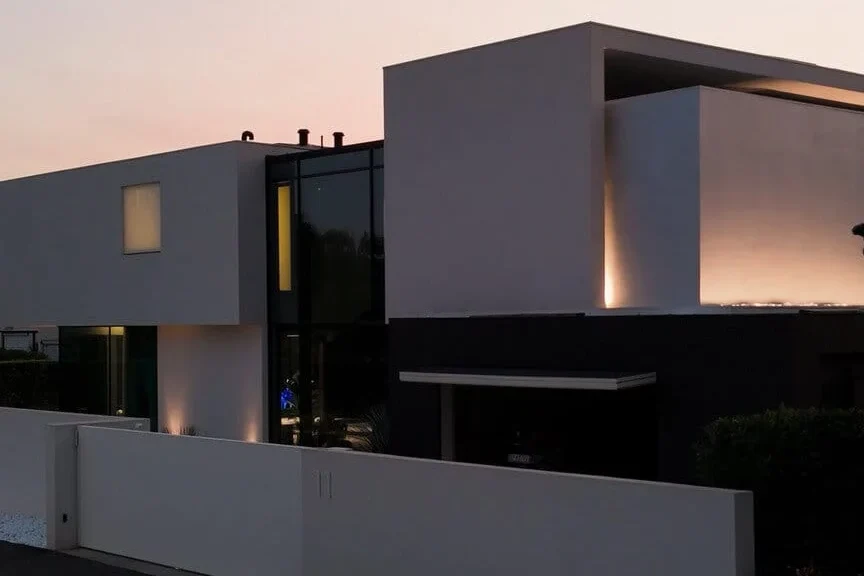
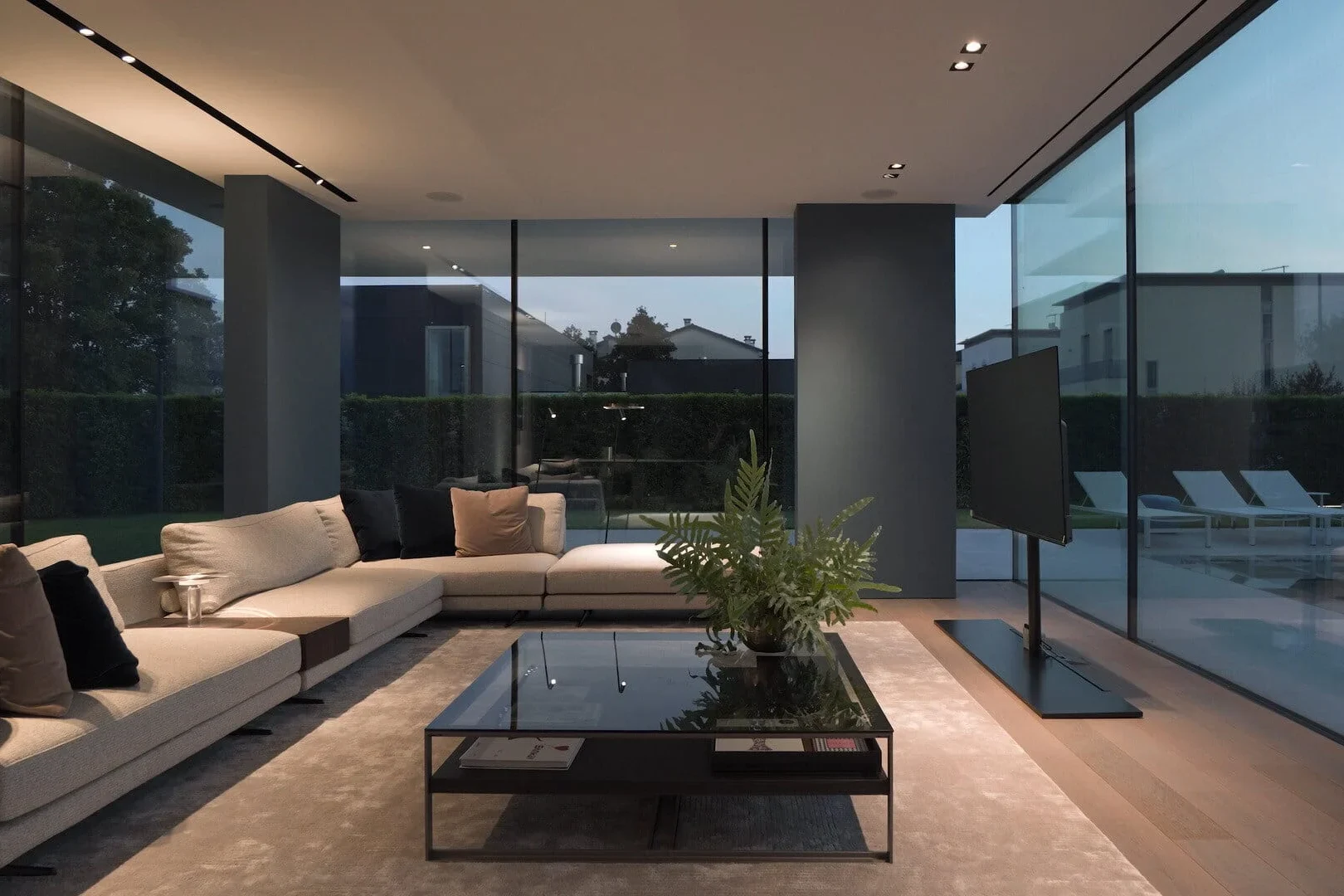
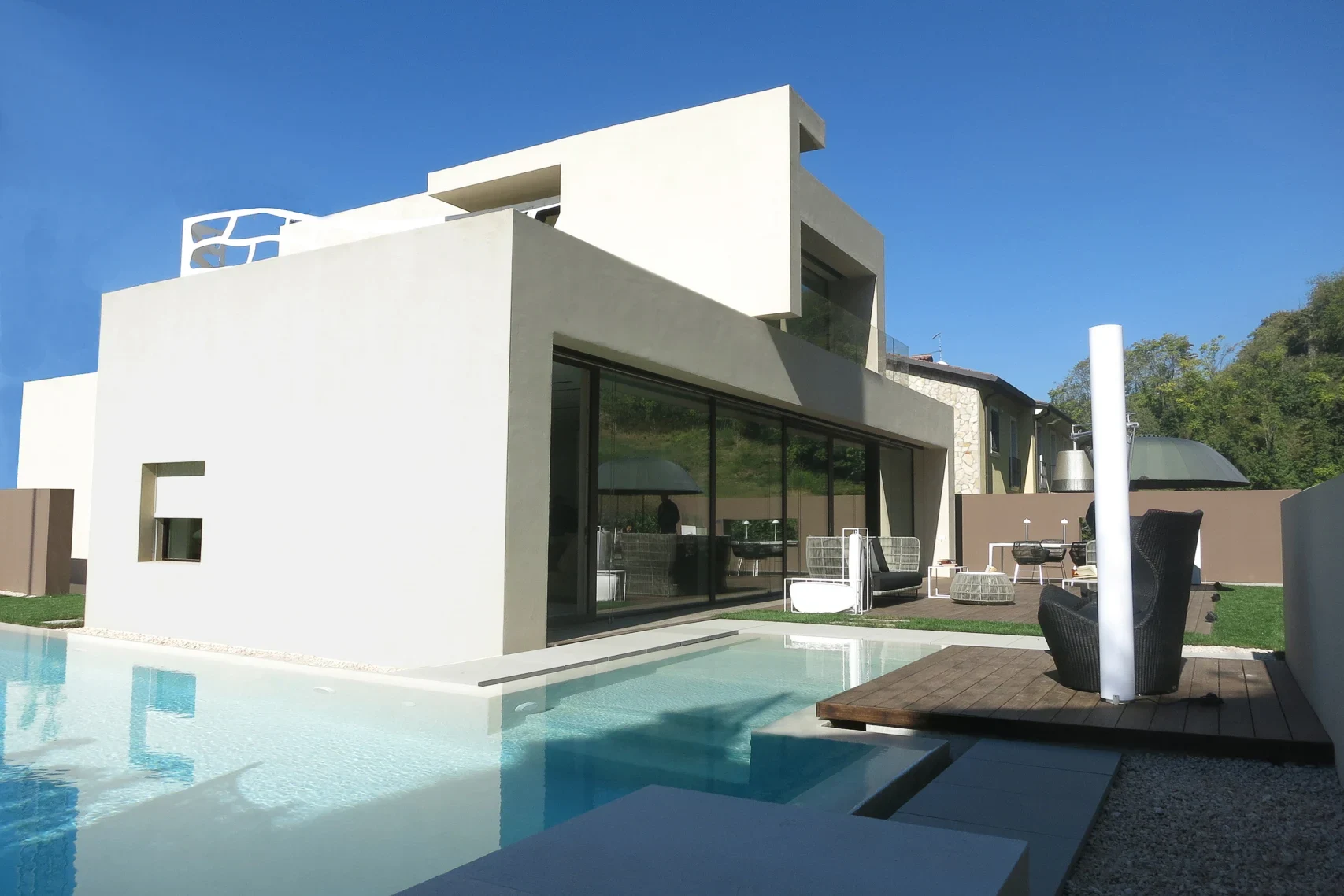
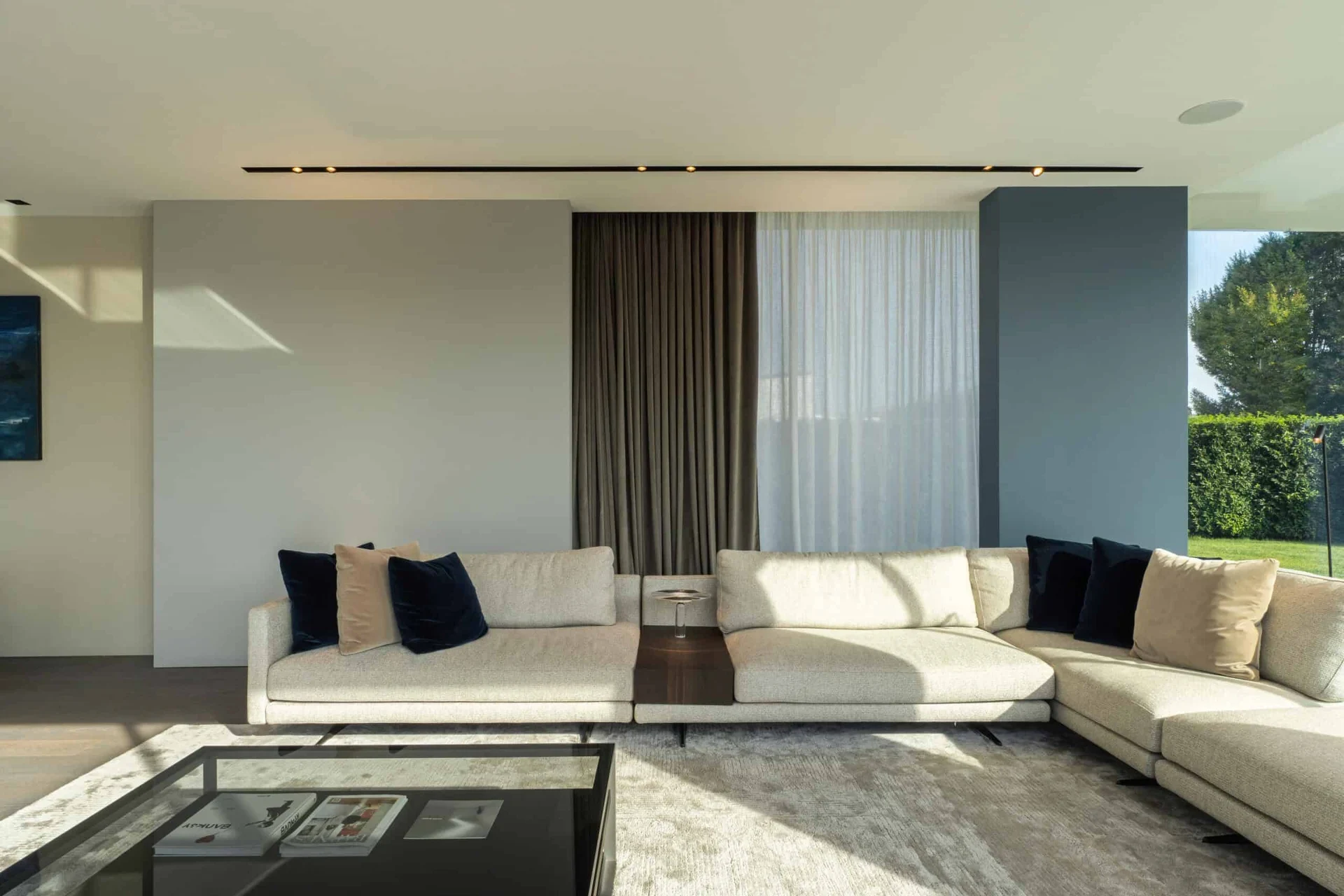
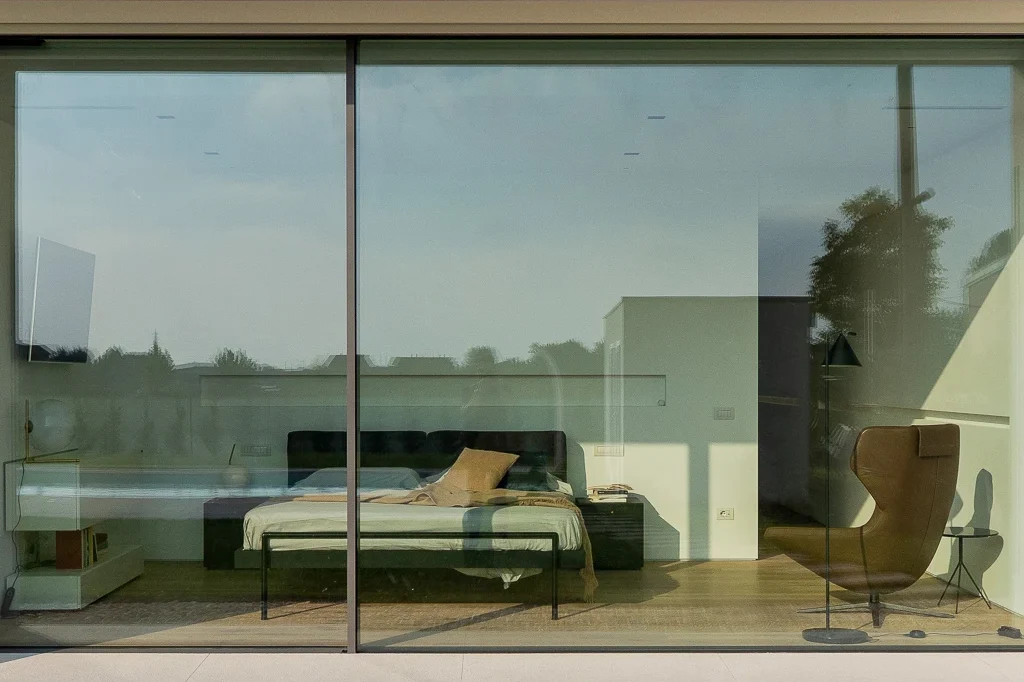
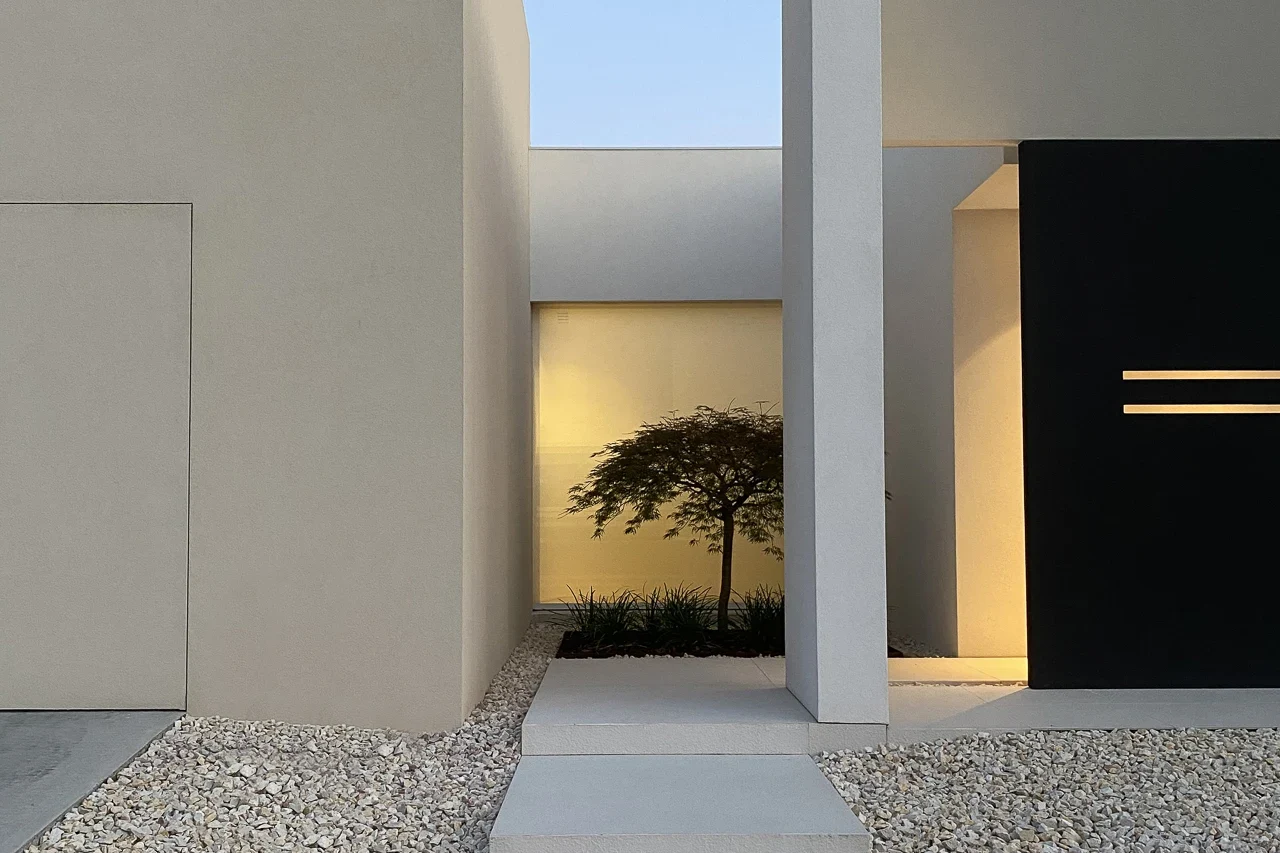
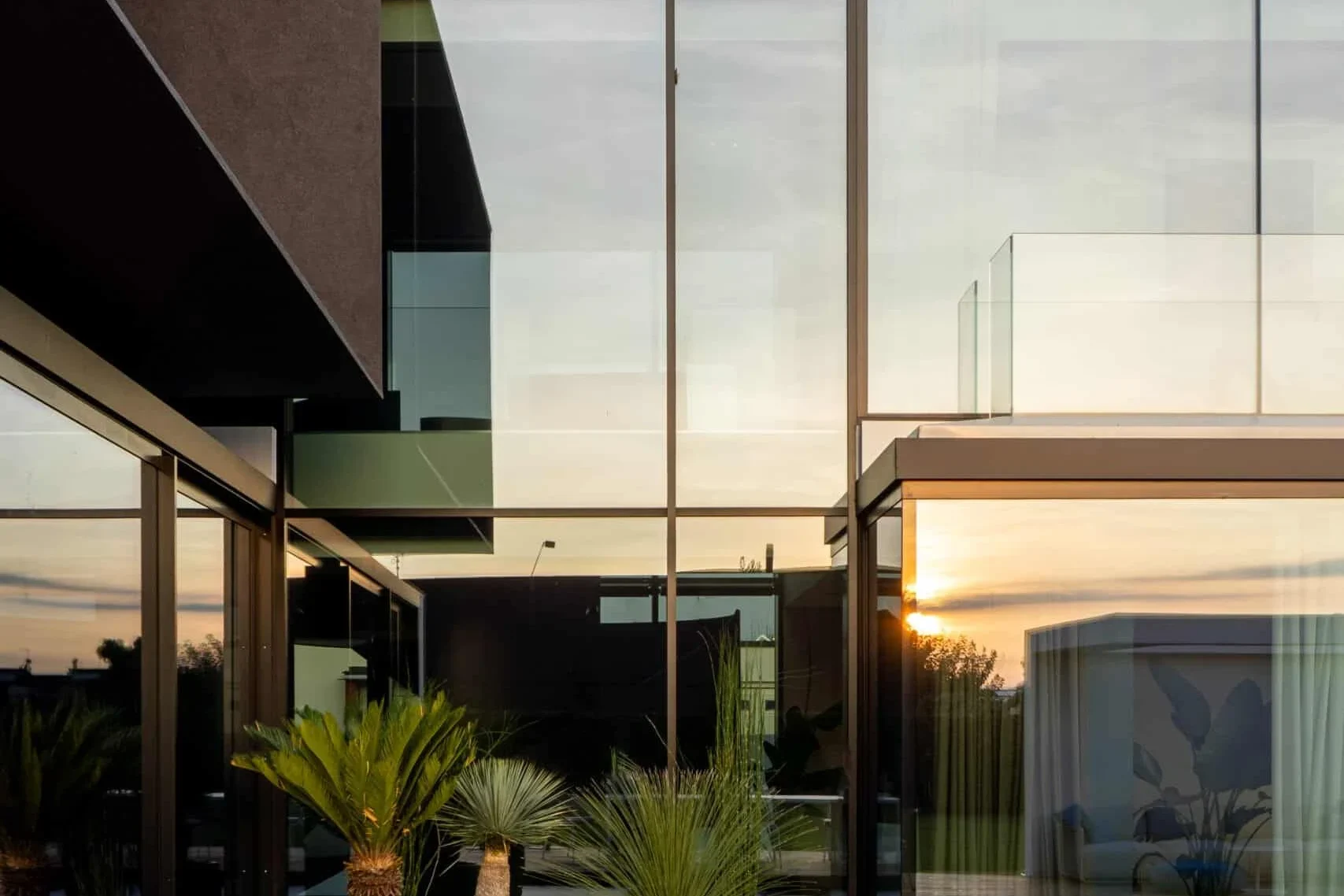
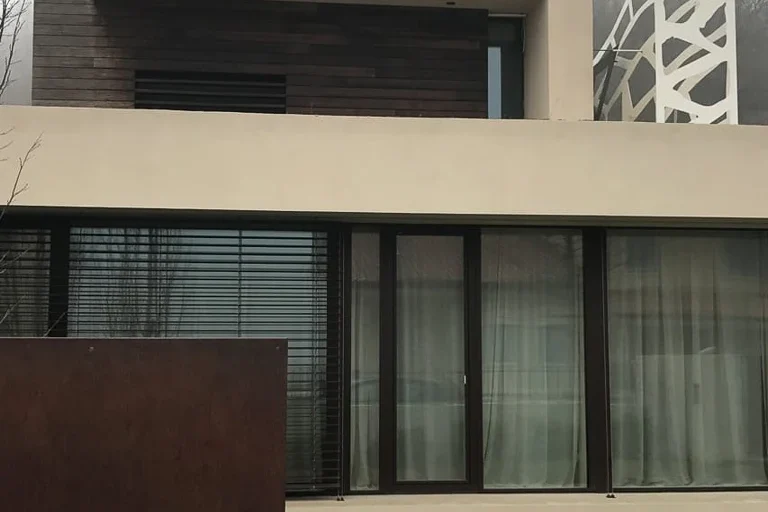
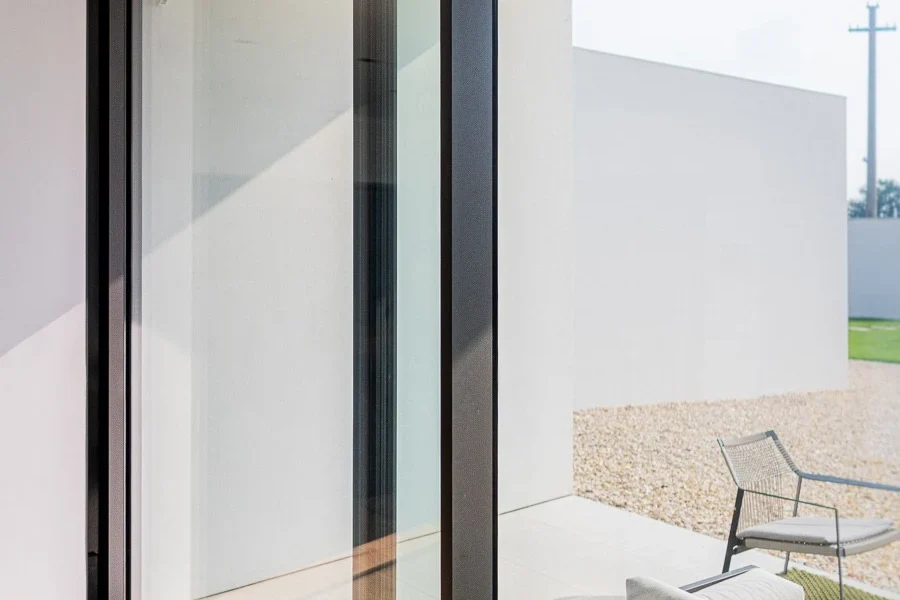
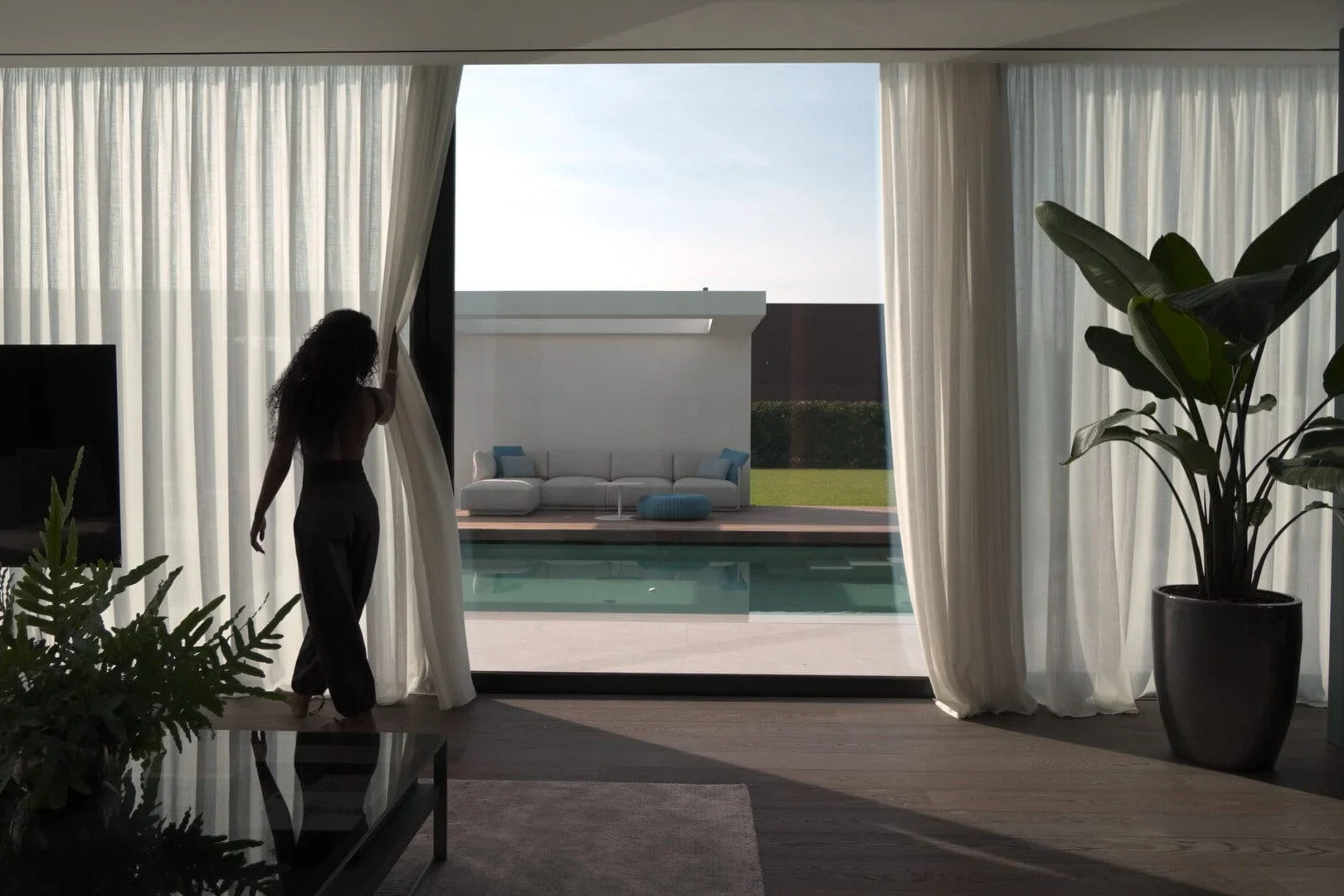
A clarification: the photos in this guide show exteriors and interiors of the studio’s projects, and none documents an air source heat pump or its installation. We chose them because they show how volumes, openings and garden are conceived together, which is where we start for the systems too. For related topics see our guides to the modern fireplace and the home cinema room.
Architecture
UHNW luxury villa architecture designed and supervised by Federico Cappellina’s studio since 2002…
How much does an air source heat pump cost?
We do not give figures, because the cost of an air source heat pump changes with capacity, source, type of emitters, storage and the work on the envelope. The real cost depends on six items: envelope and building work, generator, emitters and distribution, storage and technical room, control and home automation, permits and testing. Ask for quotes that separate them.
Incentives for replacing generators change often: check them with your technician and accountant at the time of the application, not on a web page. The advice does not change: spend first on the items that are not redone, namely the design, the envelope and the distribution, and then on the generator, which is replaced at the end of its life.
Air source heat pump: checklist before you sign
- Has the envelope been assessed before choosing the air source heat pump?
- Is the air source heat pump sized on the engineer’s calculation?
- Where will the outdoor unit of the air source heat pump stand, and how noisy is it?
- Is the installer of the air source heat pump certified for fluorinated gases?
- How does the air source heat pump behave on the coldest days?
- Does the quote for the air source heat pump separate envelope, generator, emitters and storage?
Invest
Before buying a luxury villa in Italy, the Dominican Republic, Zanzibar or Dubai: send us the…
Air source heat pump: ten mistakes to avoid
- Choosing the air source heat pump before assessing the envelope.
- Sizing on the old boiler instead of the engineer’s calculation.
- Placing the outdoor unit near bedrooms or a boundary.
- Hiding the machine behind a grille that blocks the air.
- Comparing offers without the same flow temperature.
- Ignoring the storage and the technical room.
- Entrusting installation to someone not certified for fluorinated gases.
- Cooling the floor without humidity control.
- Not checking constraints and building regulations for the outdoor unit.
- Comparing quotes without separating envelope, generator, emitters and storage.
Air source heat pump: frequently asked questions
What is an air source heat pump?
It is a generator that moves heat from the outdoor air to the heating system of the house, using electricity. It heats, cools and produces domestic hot water.
Which air source heat pump is best for a villa?
In most cases air-to-water for simplicity; ground source performs better but needs land and permits. The choice depends on the house and the plot.
Do I need underfloor heating?
It is not mandatory, but low-temperature emitters are the natural partner of an air source heat pump. Where they cannot be used, alternative emitters are sized on the temperature of the machine.
How noisy is an air source heat pump?
Regulation 813/2013 sets maximum sound power levels by output and position. What you hear in the garden depends on distance and obstacles: the acoustic designer checks it.
Who can install an air source heat pump?
For fluorinated gases, European Regulation 2024/573 provides that installation, maintenance and repair be carried out by certified persons.
Does it work in cold weather?
Yes, but efficiency falls with the outdoor temperature. Ask the energy engineer how the machine works on the coldest days of your area.
How much does an air source heat pump cost?
It depends on capacity, source, emitters, storage and work on the envelope. Ask for separate quotes for these items.
Invest
Underfloor heating explained by architects: systems, temperatures, heat pumps, suitable floors…
Air source heat pump: in conclusion
In a villa, an air source heat pump is a matter of architecture before technology. An air source heat pump works when the envelope loses little heat, when the emitters run at low temperature and when the outdoor unit is placed where its noise does not matter.
That is why the air source heat pump is decided together with the building, the garden and the systems, not afterwards. Whoever designs or renovates a villa should ask from the start where the air source heat pump will stand, who will install it and how it behaves on the coldest days.
Designing or renovating a villa in Italy?
Send us the plan: we tell you where to place the air source heat pump and the technical room, what to have checked by the energy engineer and the acoustic designer and what to ask the contractors. For a complete project see Signature Architecture or write to us from Contact.
Sources: Regulation (EU) No 813/2013, ecodesign requirements for space heaters (Annex II); Regulation (EU) 2024/573 on fluorinated greenhouse gases. Checked on 8 November 2026. Photos: projects by Federico Cappellina Architects, which do not show an air source heat pump.
Would you like an opinion on the project?
Send us the plan: we reply with the points to verify.
Discover the UHNW Lifestyle
The Villa Edit: materials and systems read by architects.