
ELRE
Stone cladding for a villa: an architect's guide to systems, stones and details
Stone cladding: how it is installed, how the stone is chosen, how water and frost are controlled and where corners go wrong, explained by architects.
Stone cladding for a villa: how it is designed
Stone cladding is the layer of natural stone that covers a facade, a plinth, a garden wall or an interior wall. In a villa it is often the choice that ties the house to its place: the stone of the hills, the lake or the mountains gives the building a weight and a permanence no render can offer.
But stone cladding is not only a matter of taste. It is heavy, it absorbs water, it expands, it must be anchored or adhered correctly and it ages differently depending on the stone and the finish. It is designed with the architecture, not chosen from a catalogue at the end.
The pages Google shows for this search are mostly from stone and veneer suppliers. We do something else: we explain, as architects working in Italy, how stone cladding is planned on a villa, which installation systems exist, how the stone is chosen, which details decide the quality and where the most common mistakes are. We do not sell stone, cite brands or quarries, or give prices, because without a design they would be invented numbers.
Stone cladding in brief
- The installation system matters as much as the stone: adhered slabs, ventilated facade, fair-faced masonry.
- The stone is chosen for the place and the climate, not only for the colour of the sample.
- Water is the enemy: absorption, frost and staining are controlled with the right stone and the right details.
- Corners, sills and the base decide whether stone cladding looks solid or stuck on.
- Maintenance is low if the design is right.
The Villa Edit
Materials and systems of the villa
External wall insulation
The guide
Ventilated roof
The guide
Floor to ceiling windows
The guide
Brise soleil
The guide
Preliminary reading
Understand a villa before you buy it
Signature Architecture
Design or renovate a villa
Contact
Write to us
Stone cladding systems
There are four main ways to build stone cladding on a villa. The table compares them: how they are built and when they make sense. The choice depends on the area to cover, the type of wall, the planned insulation and the image the house should have.
| System | How it is built | When it makes sense |
|---|---|---|
| Adhered slabs | Thin slabs fixed with adhesive to a stable substrate (masonry, base render) | Limited areas, plinths, skirtings; sound substrate without movement |
| Ventilated stone facade | Slabs hung on a metal subframe with clips, set off the wall; behind, insulation and an air cavity | Whole facades, new villas, when stone and external insulation are combined |
| Fair-faced stone masonry | Split or squared stones laid in mortar, often as a facing in front of a structure | Hill and mountain villas, restorations, retaining and garden walls |
| Strips and veneers | Thin, regular stone pieces, adhered, often in modules | Interior walls, small exterior areas; to be assessed carefully outdoors |
On the studio’s new villas, when stone covers whole facades, our preferred solution is almost always the ventilated facade: the slabs hang on a subframe, set off the wall, with insulation and a drying air cavity behind. We use adhered stone cladding for smaller areas and plinths, where the weight is limited and the substrate is reliable. Fair-faced masonry remains the most authentic choice in restorations and hill houses, where the stone is also structure or a thick facing.
Explore our projects
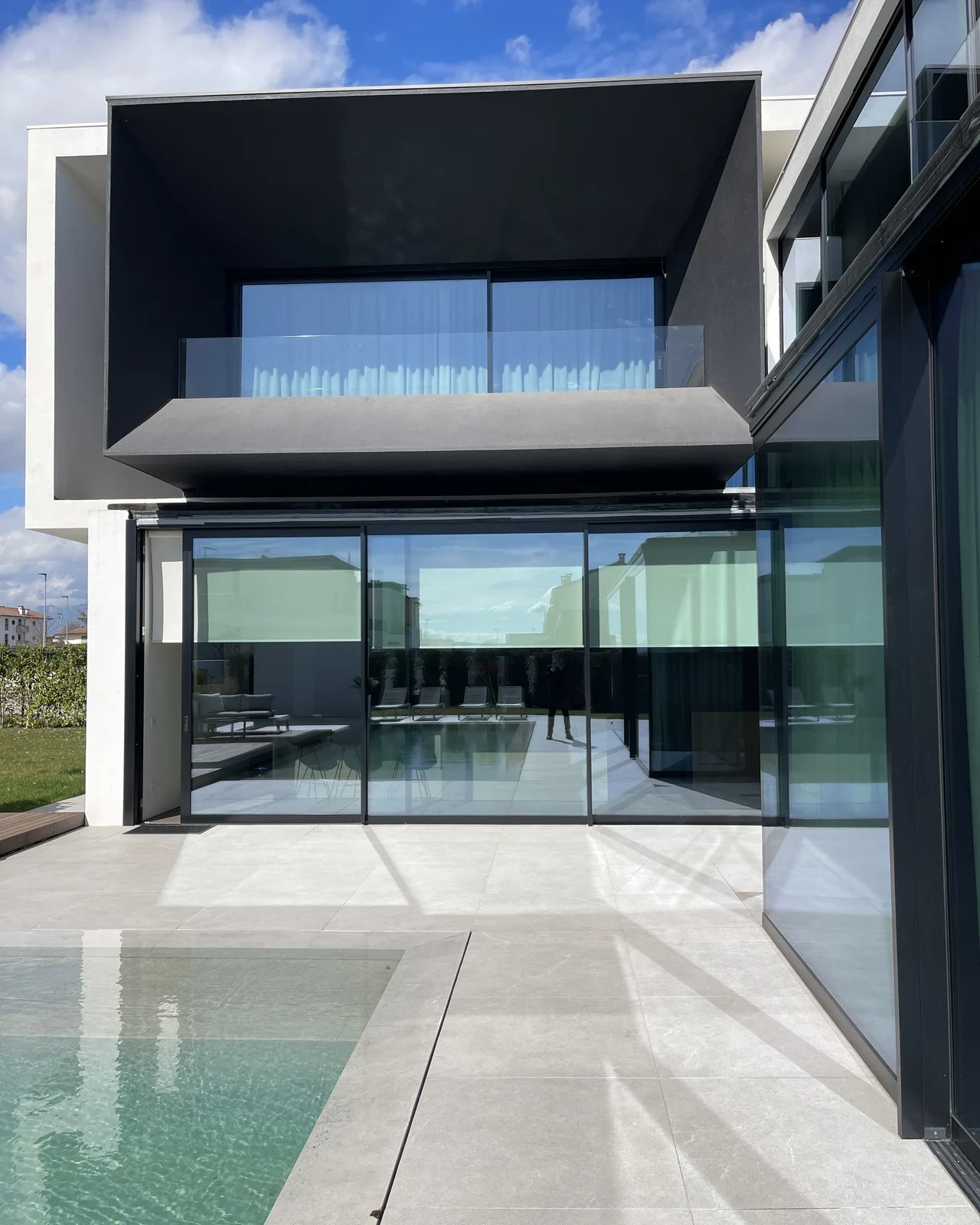
Metra glazing, Viabizzuno and OTY lighting, infinity pool: design and site direction by the studio.
Stone cladding and insulation
A contemporary villa must be insulated, and stone cladding has to be designed together with the insulation. With a ventilated facade the problem is solved cleanly: the insulation sits against the wall, the air cavity protects it and the stone slabs form the outer skin. With external wall insulation the matter is more delicate: not every insulation system is designed to carry adhered stone, and weight, thickness and adhesive must be checked with the chosen system before deciding.
A frequent solution is to combine: rendered facades on external insulation and stone parts on a ventilated facade, for instance a plinth, a volume or a main wall. The point to design is the transition between the two systems, which have different thicknesses: if it is not drawn, the stone cladding projects or recedes randomly against the render, and the facade loses its crispness.
How to choose the stone
The first question is not which stone is most beautiful, but which stone belongs to the place. In many parts of Italy there is a local stone that the landscape, the villages and the dry-stone walls have already made familiar: using it gives the villa a continuity that is felt at once. The second question is technical: how that stone behaves with water, frost, sun and dirt. The table summarises the families most used for stone cladding and what to check for each.
| Stone family | Character | What to check |
|---|---|---|
| Limestones and light stones | Warm tones, soft surfaces, widely used in the Veneto and around Lake Garda | Water absorption, frost resistance, tendency to stain |
| Sandstones | Visible grain, colours from grey to beige | Porosity, behaviour with rising damp and frost |
| Granites and gneiss | Hard, compact, suited to harsh climates | Weight, workability, fit with the landscape |
| Porphyry and split stones | Rough surfaces, strong colours, laid in irregular slabs | Variable thickness, joints, base detail |
| Travertine | Surface with natural voids, warm light | Filling of voids outdoors, absorption, maintenance |
Always ask for large samples and, if possible, look at the same stone already in place for years on a nearby building. A small, freshly cut sample says little about how the stone cladding will look after ten winters. Ask the supplier for the stone’s technical data sheets, in particular on water absorption and frost behaviour, and have the designer read them: we do not report the values of product standards here, which we did not consult for this guide.
Architecture
Luxury interiors for villas: the 12 systems of The Villa Edit, from passive house to furniture…
Explore our projects

Schüco glazing, Minimal Cucine and Modulnova kitchen, Poliform and Baxter furniture, Occhio lighting, MAFI wood.
Architecture
UHNW luxury villa architecture designed and supervised by Federico Cappellina’s studio since 2002…
Stone finishes
The same stone changes a great deal with its finish. A split face produces strong shadows and a rustic image; a honed surface is more abstract and modern. For exterior stone cladding, matt and slightly rough finishes are usually the most durable, because they age evenly and do not show every mark.
| Finish | Effect | Note for exteriors |
|---|---|---|
| Split face | Natural surface, strong shadows | Holds some dirt, ages well |
| Bush-hammered | Rough, even surface | Good for plinths and skirtings |
| Sandblasted or brushed | Matt surface, soft to the touch | Balance between cleanliness and naturalness |
| Flamed | Rough surface, typical of granites | Slip-resistant for steps and terraces |
| Honed or polished | Smooth, reflective surface | Loses its polish outdoors over time; better for interiors |
Explore our projects
Edra sofas, Varenna kitchen, Noorth and Agape bathrooms: a studio project.
The details that decide the quality
Stone cladding either looks solid or looks like a glued-on film: the difference is made at the corners. At the corners of the house the slabs must be resolved with a corner piece, a well-made forty-five-degree mitre or an overlap that shows the thickness of the stone. The same applies to window reveals and the tops of walls: wherever the thin cut edge of a slab shows, the illusion of solid stone breaks.
Sills, thresholds and wall copings must shed water away from the stone cladding, with a fall and a drip groove under the edge. The base must be lifted off the ground or protected with a plinth, because water rising from the soil and rain splash are the first cause of staining and detachment. Finally, the joints must be designed: aligned with windows and floor slabs on a contemporary villa, irregular and natural in split-stone masonry.
Water, frost and staining
Almost every problem with stone cladding comes from water. A very porous stone absorbs rain; if the absorbed water freezes in winter, the stone can spall. Water passing through mortar or adhesive carries salts that surface as white stains. Water trapped behind an adhered slab, unable to escape, can detach it over time. That is why the choice of stone, the installation system and the details that shed water must be decided together.
Water-repellent protective treatments can help, but they do not correct the wrong stone or a detail that traps water. If used, they must be breathable and compatible with the stone, and renewed according to the supplier’s instructions. The rule we follow is simple: first the right detail, then, if needed, the treatment.
Invest
External wall insulation for a villa in Italy, explained by architects: outside or inside…
Invest
Before buying a luxury villa in Italy, the Dominican Republic, Zanzibar or Dubai: send us the…
Stone cladding and architecture
In our villas stone often works as a plinth: a heavy volume on the ground, on which lighter volumes in render, timber or glass rest. In other projects a single stone wall runs through the house from outside to inside and becomes the spine of the living room. In both cases stone cladding talks to the openings: next to large floor to ceiling windows the stone gives weight and measure, and shading such as a brise soleil can pick up its colour.
The layout of the slabs matters too. Large slabs and thin joints give a contemporary, almost monolithic image; small irregular stones speak of rural tradition. There is no absolutely right choice, but there must be coherence with the rest of the villa, with the roof, for example a ventilated roof in clay tiles or metal, and with the surrounding landscape.
Stone cladding in protected areas
In many hill, lake and mountain areas of Italy, municipal regulations and landscape constraints specify facade materials, colours and finishes. Sometimes the local stone is exactly what is required; at other times the installation type or the finish is regulated. We do not report general rules, because they change from one municipality to another: the designer checks them with the planning office and the landscape authority before choosing the stone cladding.
Invest
Floor to ceiling windows for a villa in Italy, explained by architects: types, sun and shading…
Stone cladding indoors
Indoors stone has fewer enemies: no frost, little water, except in bathrooms and kitchens. A stone wall behind a fireplace, a master bathroom clad in the same stone as the facade or a staircase that continues the outside plinth are effective ways of bringing stone cladding into the house. Here more delicate finishes, honed or polished, can also be used, knowing that in kitchens and bathrooms stone must be protected from oil, acid and limescale stains.
Maintenance
Well-designed stone cladding needs little maintenance: a periodic check of joints, sills and copings, cleaning of the surfaces most exposed to splash and, where planned, renewal of the protective treatment. On a ventilated facade the accessible anchors and the openings of the air cavity at the bottom and top should be checked now and then. Ask the installer for a written maintenance plan and keep a few spare slabs of the same stone and batch: in ten years identical ones will be hard to find.
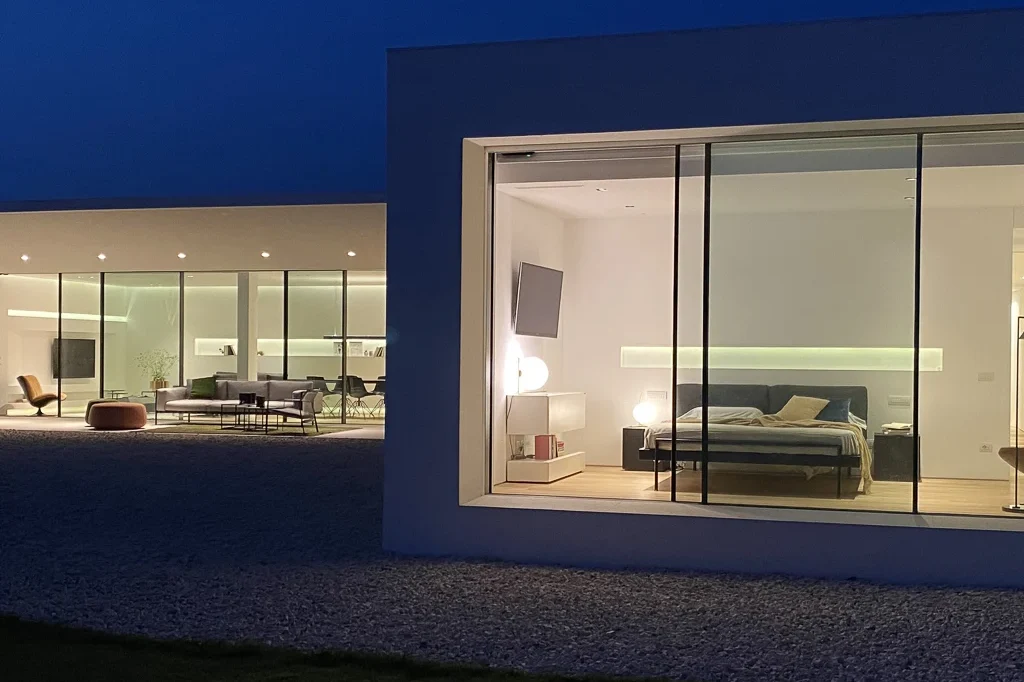
Stone cladding in our projects
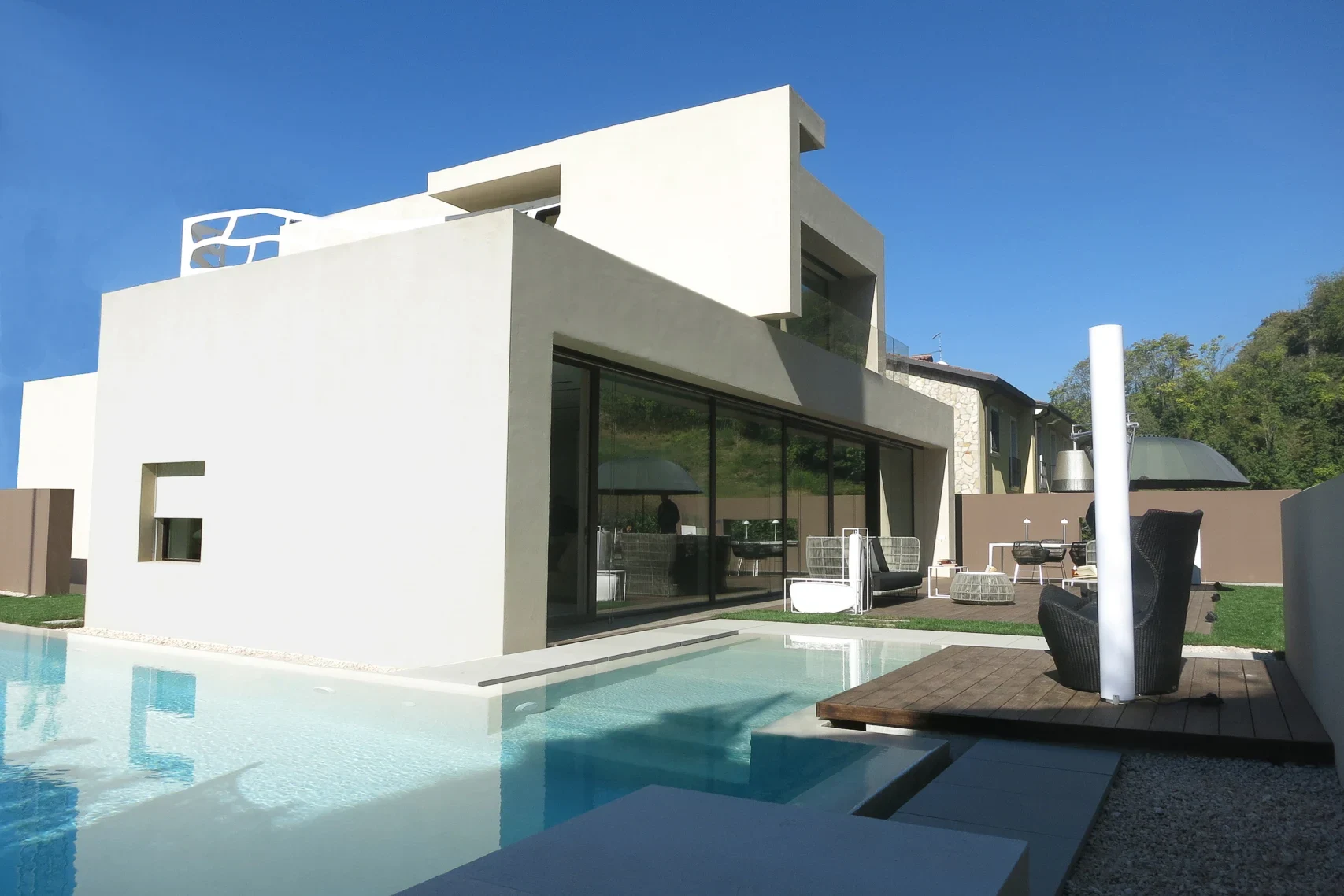
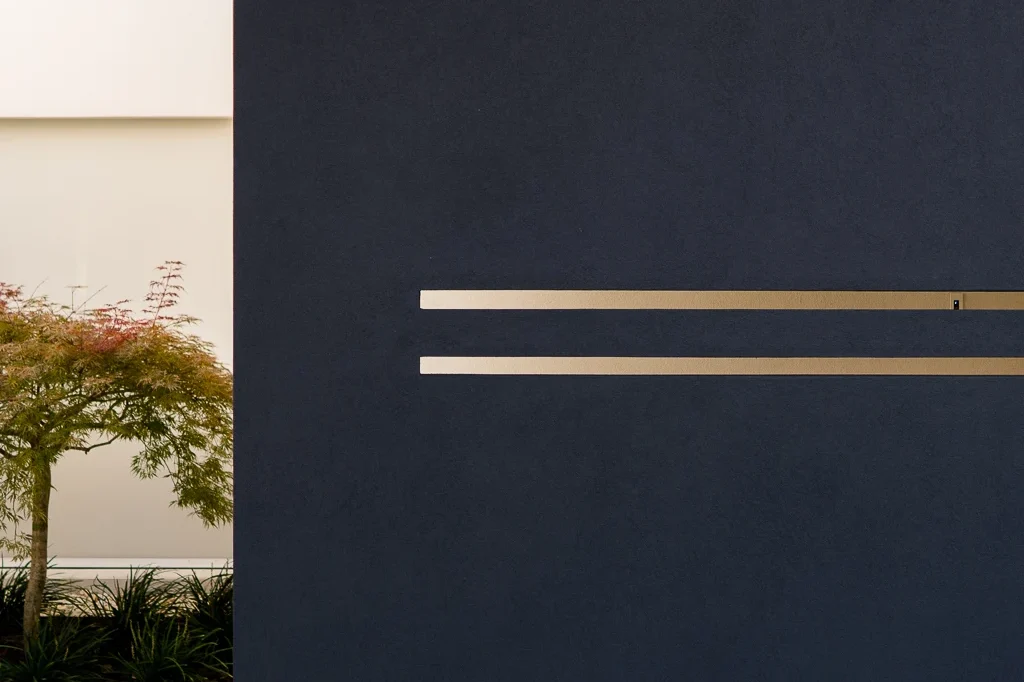
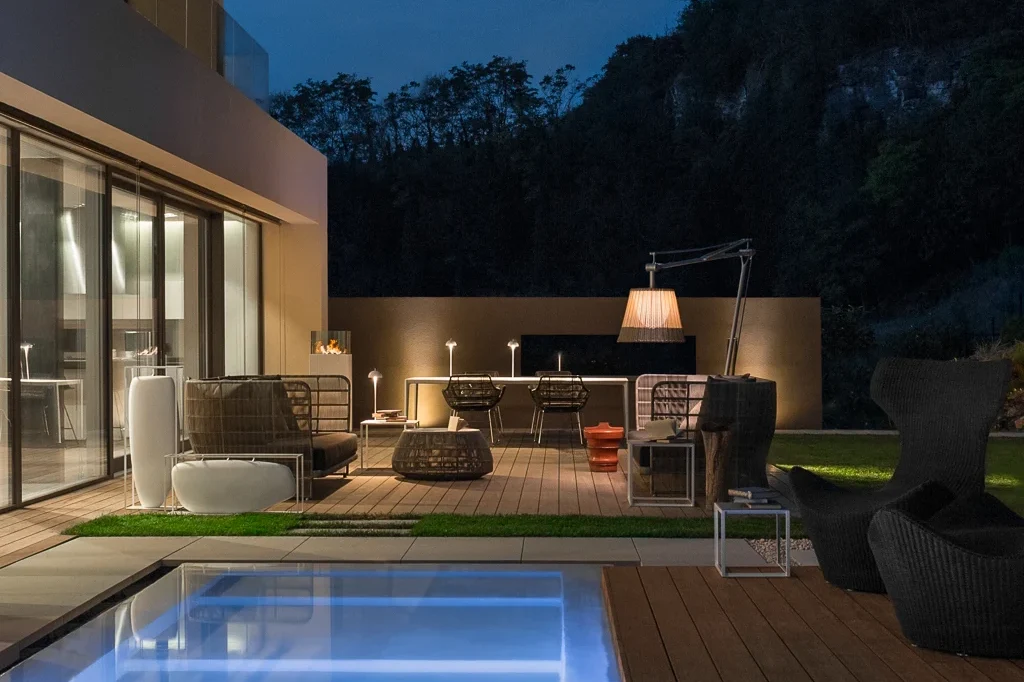
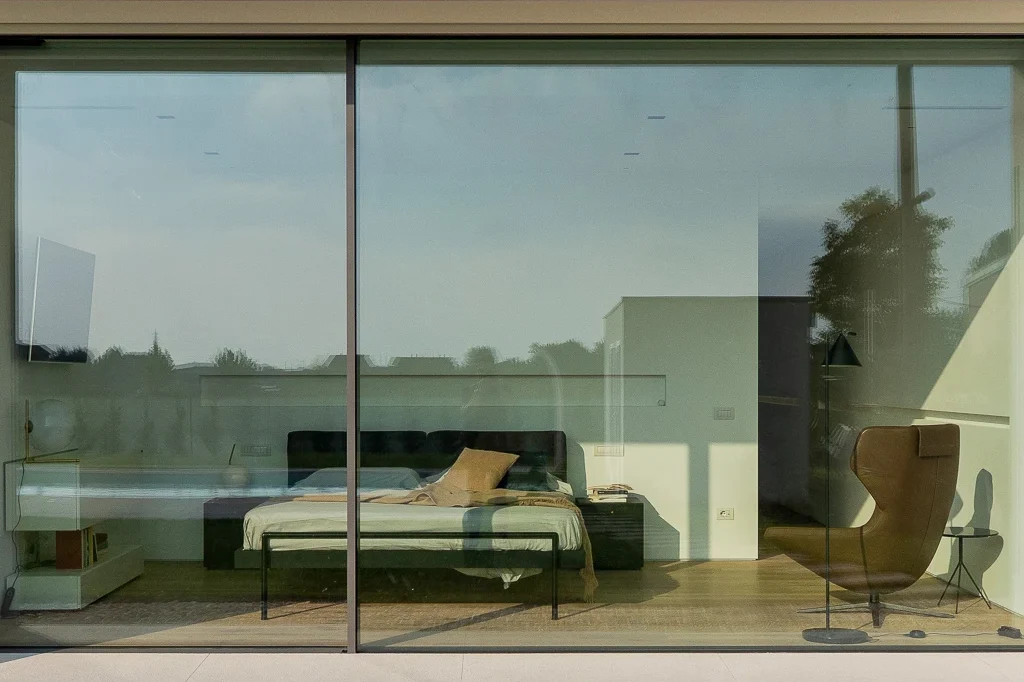
A clarification: the photos in this guide show exteriors and interiors of projects by Federico Cappellina Architects, and they do not document the installation systems described. We chose them because they show the relationship between material, volume and landscape from which a stone cladding choice starts. For related topics see the guides to external wall insulation, the ventilated roof and floor to ceiling windows.
How much stone cladding costs
We give no figures, because the cost of stone cladding depends on the stone, thickness, finish, installation system, subframe, special pieces for corners and sills, scaffolding and the complexity of the facade. Ask for quotes that separate supply of the stone, special pieces, subframe or adhesives, installation and temporary works, so that you compare truly similar offers.
The advice remains the same: spend on corners, sills and the base. They are the most visible points and, if wrong, they cannot be corrected without taking the stone cladding down.
Invest
Brise soleil for a villa in Italy, explained by architects: origin, orientation, types, fixed or…
Stone cladding: eight mistakes to avoid
- Choosing the stone from a small sample, without seeing it in place.
- Ignoring water absorption and frost behaviour.
- Adhering heavy slabs to an insulation system not designed to carry them.
- Leaving the thin cut edge of slabs visible at corners and reveals.
- Sills and copings without fall or drip groove.
- Taking the cladding down to the ground without a plinth or gap.
- Random joints, not aligned with windows and slabs.
- Not keeping spare slabs from the same batch.
Stone cladding: frequently asked questions
What is stone cladding?
Stone cladding is the layer of natural stone that covers a facade, a plinth, a wall or an interior wall, either adhered, hung on a ventilated facade or built as fair-faced masonry.
Adhered stone or ventilated facade?
For whole facades of a new villa a ventilated facade is usually preferable, because it combines stone and insulation and dries out. Adhesion suits smaller areas and reliable substrates.
Can stone be fixed on external insulation?
Only if the insulation system is designed to carry it: weight, thickness and adhesive must be checked with the chosen system before deciding.
Which stone should I choose for a villa?
First of all the stone of the place, then one that behaves well with water and frost in your climate. Look at it in place for years before choosing.
Does stone cladding stain?
It can stain from water carrying salts to the surface or from splash at the base. Details that shed water and correct plinths greatly reduce the problem.
What maintenance does it need?
Little: checking joints, sills and copings, cleaning exposed parts and, if planned, renewing a breathable protective treatment.
How much does stone cladding cost?
It depends on stone, thickness, finish, installation system and special pieces. We give no figures without a design: ask for quotes separated by item.
Invest
Ventilated roof for a villa in Italy, explained by architects: how it works, layers, comparison…
Designing or renovating a villa in Italy?
Send us the plan and elevations of the house: we tell you where stone cladding makes sense, which installation system to use and what to have checked by the supplier and the builder. For a complete project see Signature Architecture or write to us from Contact.
Note on sources: this guide reports the studio’s design practice and the general behaviour of natural stone (water absorption, frost, salt efflorescence). We do not cite product or installation standards, strength values or weights, which we did not consult for this guide, nor prices, brands or quarries. Updated on 10 November 2026. Photos: projects by Federico Cappellina Architects, which do not show the installation systems described.
Would you like an opinion on the project?
Send us the plan and elevations: we reply with the points to verify.
Discover the UHNW Lifestyle
The Villa Edit: materials and systems read by architects.