
ELRE
Solar battery storage for a villa: an architect's guide with PVGIS data
Solar battery storage: what a system really produces in Verona, which orientation to choose and where to place battery and inverter.
Solar battery storage for a villa: how to reason about it
Solar battery storage turns the roof of a villa into a small power station and keeps part of the energy for the evening and the night. It is a sensible choice if you reason with the right numbers: how much energy the roof really produces, how much the house uses in the hours when the sun is not there, and how much space and what conditions a battery requires. Solar battery storage is not bought by capacity, it is designed on the family’s consumption and on the architecture of the roof.
Most pages that Google shows for this search are commercial guides with brand comparisons. We do something else: we queried the European PVGIS service and report here the real yields of a system in Verona, by orientation, tilt and month. We then explain, as architects, where to place modules, inverter and battery. We do not sell systems, we do not cite brands and we do not give prices or battery capacities, which depend on the design.
Solar battery storage at a glance
- Production follows the sun: in Verona one well-oriented kWp yields about 1,360 kWh a year, but 160 kWh in July and 60 in December.
- Orientation matters: east and west yield about 78-79% of south.
- Storage moves energy from day to evening, it does not create more energy.
- Sizing starts from the house’s consumption, not from the roof area.
- The battery needs a suitable room, with safety rules to check.
The Villa Edit
Materials and systems of the villa
Air source heat pump
The guide
KNX home automation
The guide
External wall insulation
The guide
Infinity pool
The guide
Preliminary reading
Understand a villa before you buy it
Signature Architecture
Design or renovate a villa
Contact
Write to us
What a system produces in Verona: PVGIS data
The European Commission’s PVGIS is the official tool of the Joint Research Centre for estimating photovoltaic output. We queried it on 8 November 2026 for a 1 kWp system in Verona (45.438 N, 10.992 E), with system losses of 14%, the PVGIS-SARAH3 radiation database (2005-2023) and the horizon calculated from the terrain model. The values apply to a free-standing system, not integrated in the roof, and vary with the exact place, the real shading and the components.
Facing south with a tilt of 30 degrees, one kWp produces about 1,361 kWh a year in Verona. The distribution across the months is very uneven, as the table shows:
| Month | Jan | Feb | Mar | Apr | May | Jun | Jul | Aug | Sep | Oct | Nov | Dec |
|---|---|---|---|---|---|---|---|---|---|---|---|---|
| kWh per kWp | 70 | 86 | 123 | 132 | 144 | 150 | 161 | 149 | 125 | 97 | 66 | 60 |
In July one kWp produces about 161 kWh; in December about 60: more than two and a half times the difference. That is why solar battery storage does not by itself solve winter demand: the battery moves energy from day to evening, but not from July to December. Whoever wants to cover winter heating with solar panels must know that in the cold months the roof produces little.
Explore our projects
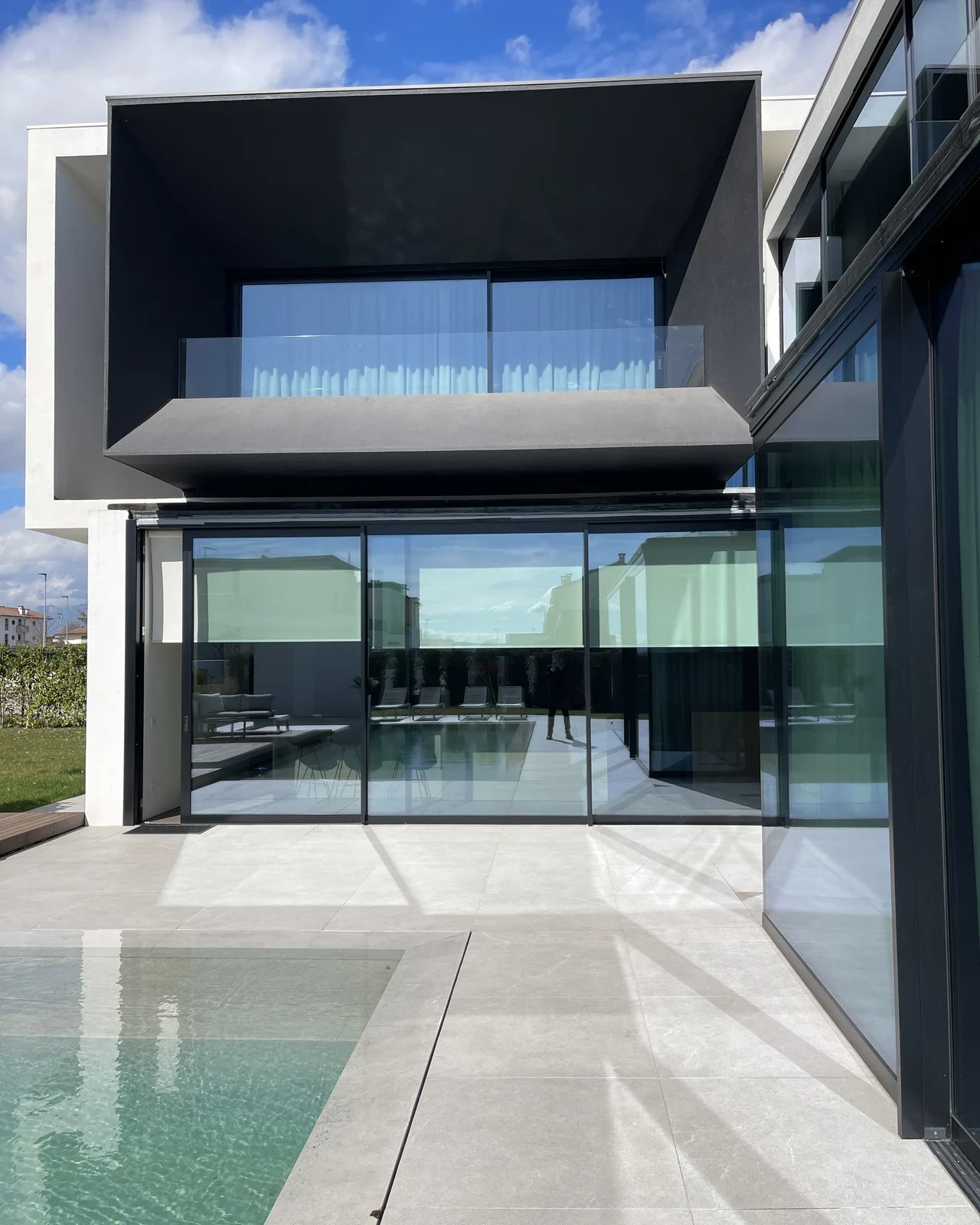
Metra glazing, Viabizzuno and OTY lighting, infinity pool: design and site direction by the studio.
Orientation and tilt
The ideal orientation is south, but a roof facing south-east or south-west loses very little. The table compares yields in Verona at a 30 degree tilt:
| Orientation (30° tilt) | Yearly yield per kWp in Verona | Compared with south |
|---|---|---|
| South | 1,361 kWh | 100% |
| South-east | 1,270 kWh | about 93% |
| South-west | 1,284 kWh | about 94% |
| East | 1,063 kWh | about 78% |
| West | 1,078 kWh | about 79% |
South-east and south-west yield about 93-94% of south, while east and west fall to about 78-79%. An east pitch and a west pitch together give a production spread more evenly across the day, with a lower noon peak: for a family that consumes in the morning and the evening it can be more useful than a single south side. The designer assesses the consumption curve, not only the yearly yield.
Tilt also matters, but less than people think:
| Tilt (facing south) | Yearly yield per kWp in Verona | Compared with south at 30° |
|---|---|---|
| 15° | 1,281 kWh | about 94% |
| 30° | 1,361 kWh | 100% |
| 45° | 1,369 kWh | about 101% |
| 90° (vertical facade) | 961 kWh | about 71% |
Between 30 and 45 degrees the yearly yield is almost the same (1,361 and 1,369 kWh per kWp), and the PVGIS calculation gives as optimum a tilt of 39 degrees with 1,375 kWh. A flat roof with almost horizontal modules yields less but fits the architecture better. A vertical facade, at 90 degrees, yields about 71%: it is an architectural solution, not an energy one, but useful in winter, when the sun is low.

Architecture
Luxury interiors for villas: the 12 systems of The Villa Edit, from passive house to furniture…
Invest
Infinity pool for a villa in Italy, explained by architects: building permit, position, overflow…
Explore our projects

Schüco glazing, Minimal Cucine and Modulnova kitchen, Poliform and Baxter furniture, Occhio lighting, MAFI wood.
Place matters: a few cities compared
The same capacity yields differently from one city to another. With the same settings (south, 30 degrees, 1 kWp, losses of 14%) PVGIS estimates for the year:
| City (south, 30°) | Yearly yield per kWp |
|---|---|
| Como | 1,306 kWh |
| Bolzano | 1,359 kWh |
| Verona | 1,361 kWh |
| Rome | 1,484 kWh |
From Como to Rome the difference is about 14%, and inside the same city a plot in a valley or in the shade of a hill produces less than an open one. For solar battery storage the production estimate is the first document to ask the designer for, with the real shading of the plot, and it must be re-read when the landscaping design changes.
That is why the figures of a system are not copied from a neighbour in another province: they are calculated on the place, the horizon and the real shadows of the plot.
Explore our projects
Edra sofas, Varenna kitchen, Noorth and Agape bathrooms: a studio project.
What storage does, and what it does not
Solar battery storage keeps in a battery the energy produced in excess during the day and makes it available when the modules are not producing. With storage a higher share of the energy produced is used in the house, and less is sold to the grid. But the battery does not increase production, does not cover the winter months and has a limited capacity: it moves energy by a few hours, not by a few months.
The capacity of the storage depends on evening and night consumption, not on the power of the modules. A family that uses little in the evening needs a small battery; a villa with an air source heat pump, an induction hob, an electric car and a pool requires a larger one. We do not write recommended capacities here: the designer derives them from a real consumption curve, measured on the bills or at the meter.
Solar panels, heat pump and home automation
Solar battery storage and the heat pump complete each other, but you have to know the limit: in winter the pump works hard and the roof produces little. A well-designed system brings forward heating and hot water production into the sunny hours, storing heat in the water of the house. KNX home automation makes this management automatic: it reads production and consumption, and moves flexible loads (boiler, pool, car charging) into the right hours.
With an envelope that loses little heat, like the one we describe in the guide to external wall insulation, winter demand falls and solar battery storage covers a higher share of consumption. It is the correct order: first reduce the demand, then size the production.
Invest
Before buying a luxury villa in Italy, the Dominican Republic, Zanzibar or Dubai: send us the…
Where to place modules, inverter and battery
Modules are an element of architecture. On a pitched roof they can be integrated or laid on top, and on a flat roof low structures are chosen, set back from the edges so that they are barely visible. In a villa of quality dark, uniform modules are preferred, with hidden cables and inspection channels, and breaking up the pitch with irregular rows is avoided. If the plot has a landscape constraint or the building is protected, a system on the roof may require authorisation: it must be clarified first.
The inverter and the battery sit in a dry, ventilated and accessible technical room, away from bedrooms and heat sources. Safety rules for storage systems (fire protection, distances, ventilation) must be checked with the electrical designer and the manufacturer’s data sheet: we do not write them here because we have not verified them on the official text. The design advice is to plan the space from the start, because adding a battery to a finished house costs more.
Invest
Air source heat pump for a villa in Italy, explained by architects: types, envelope, underfloor…
Shade, cleaning and upkeep
Shadows from chimneys, trees and neighbouring volumes can noticeably reduce production. PVGIS considers the far horizon, but not obstacles close to the roof: they must be assessed with a survey. A family designing a garden with tall trees must remember that in ten years they may shade the modules. Cleaning also counts: in areas with dust, pollen or leaves, a periodic check keeps the yield.
Production monitoring, linked to the app or to the home automation system, flags an abnormal drop early. Ask the installer for a maintenance contract that includes checking the modules, the connections and the inverter, and keep the manual with the data sheets and test certificates.
Roof, warranties and lifespan
Before laying modules on a roof, check the state of the covering: a solar battery storage system lasts many years, and removing it to redo the roof costs money. If the roof is old, it is better to redo it first, or in the same intervention, with waterproofing and insulation already coordinated. Ask the designer for the calculation of the roof’s load capacity and the design of the fixings, because modules add weight and wind loads.
For warranties, distinguish between modules, inverter and battery: they have different durations and conditions, and must be read on the manufacturer’s data sheet. We do not report years of warranty or charge cycles here, because we have not verified them on a particular product. Ask in writing who intervenes, in what time and on what conditions, and keep the documentation with the house manual.
Architecture
UHNW luxury villa architecture designed and supervised by Federico Cappellina’s studio since 2002…
Solar battery storage in our projects
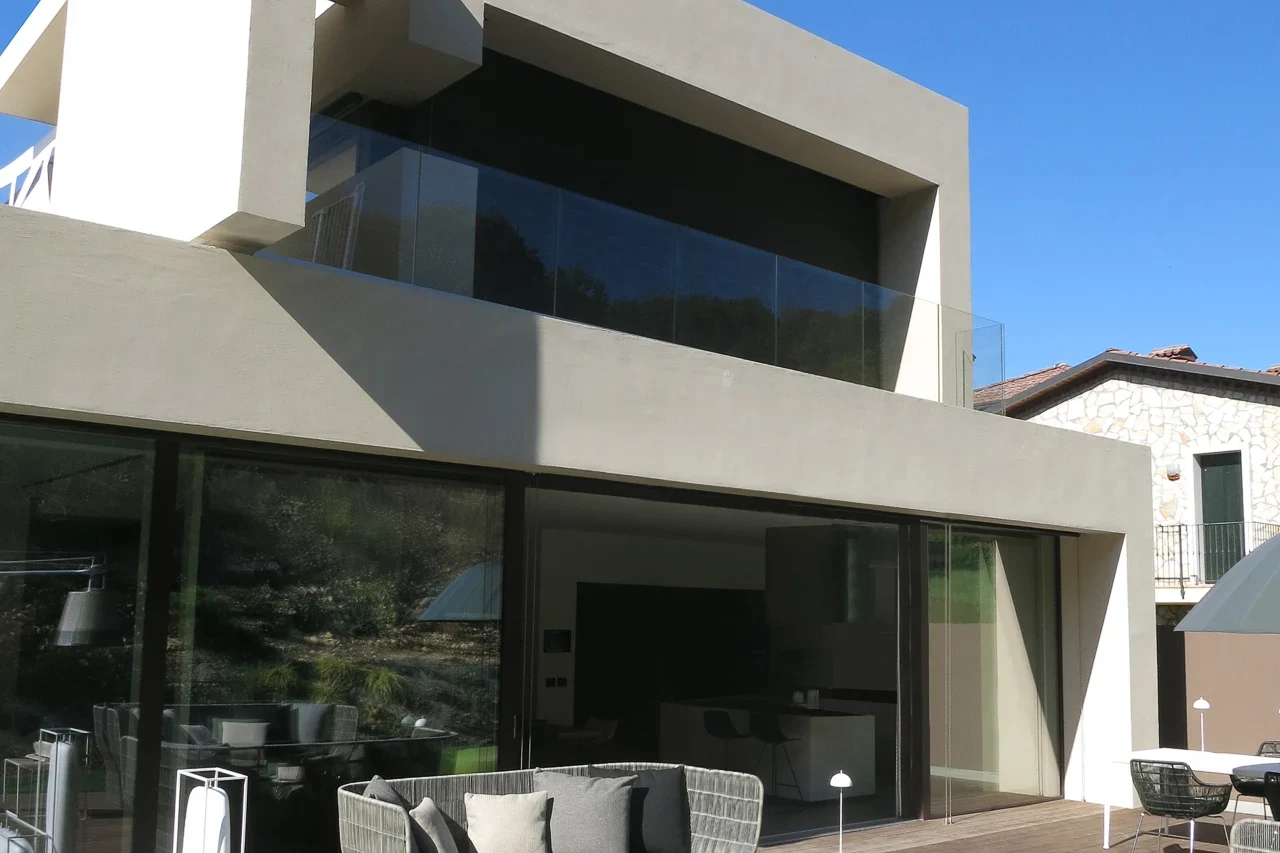
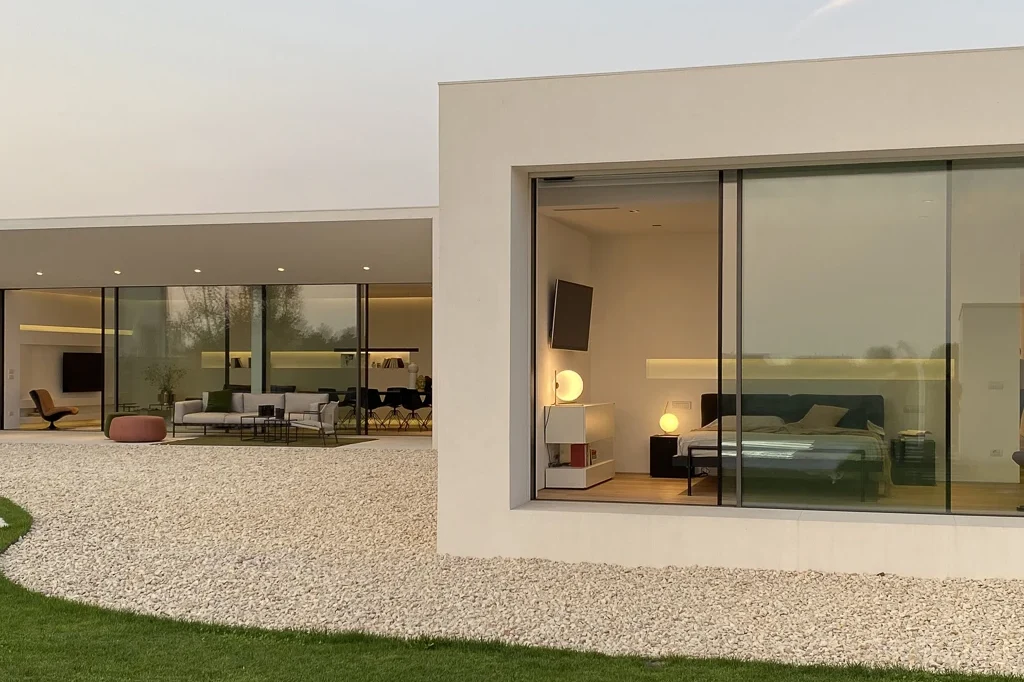
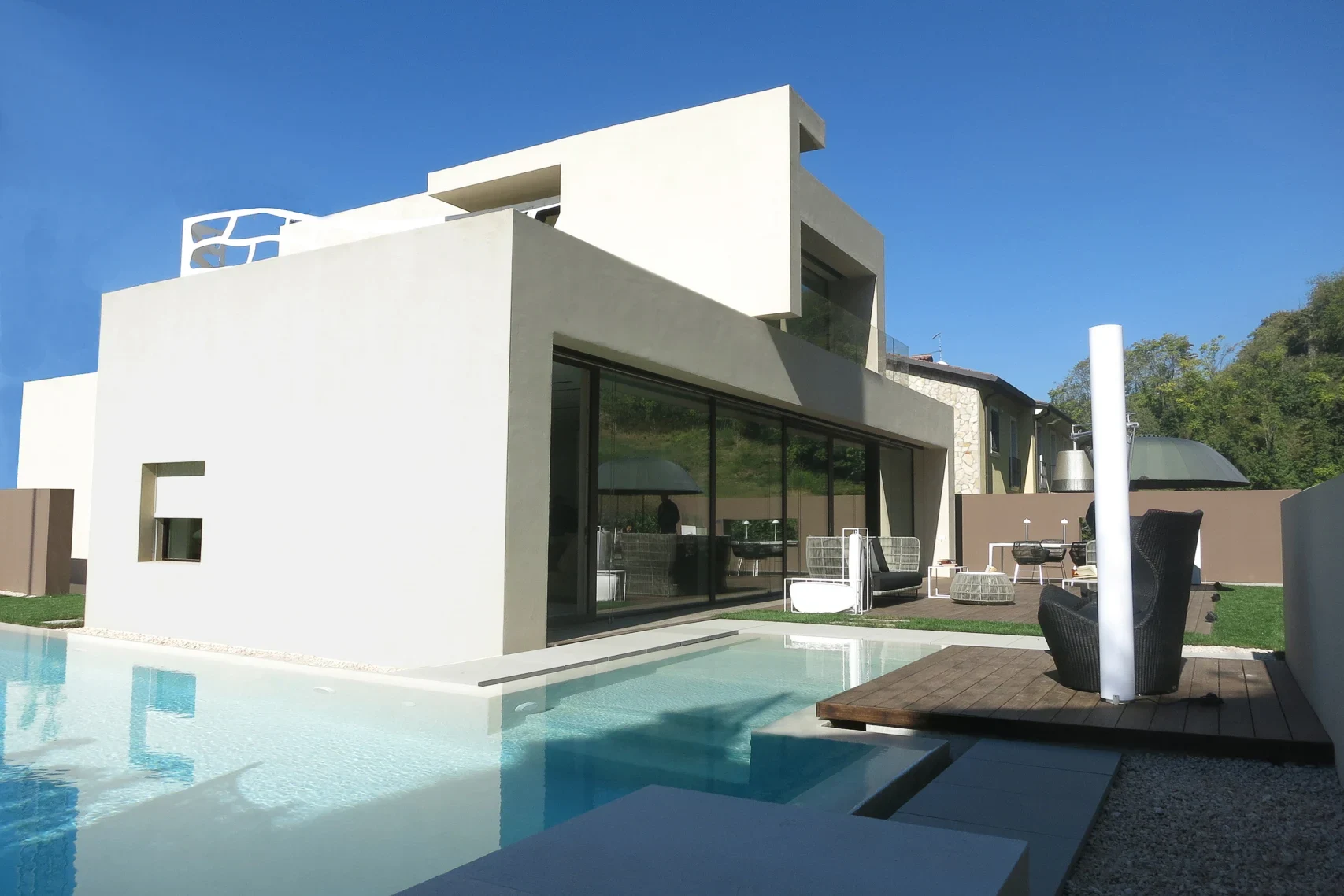
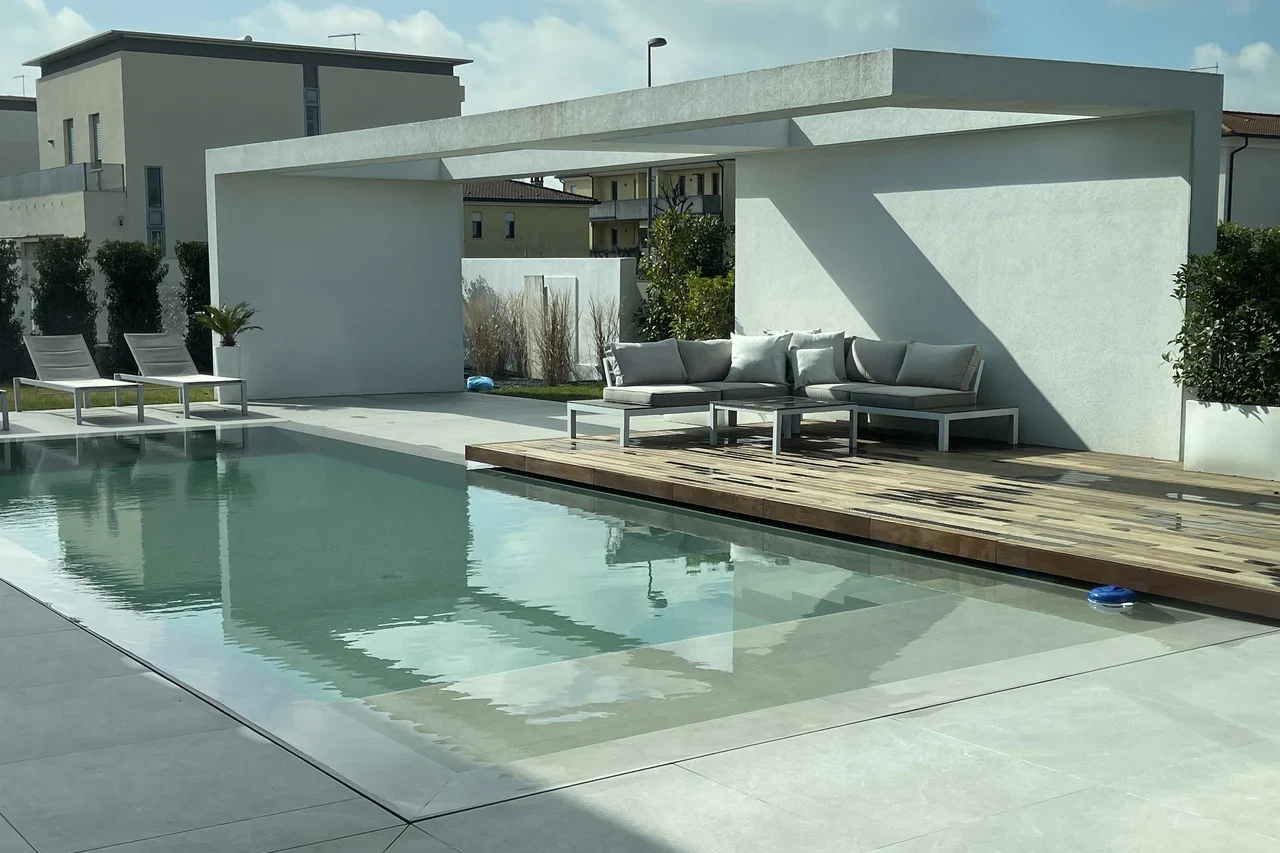
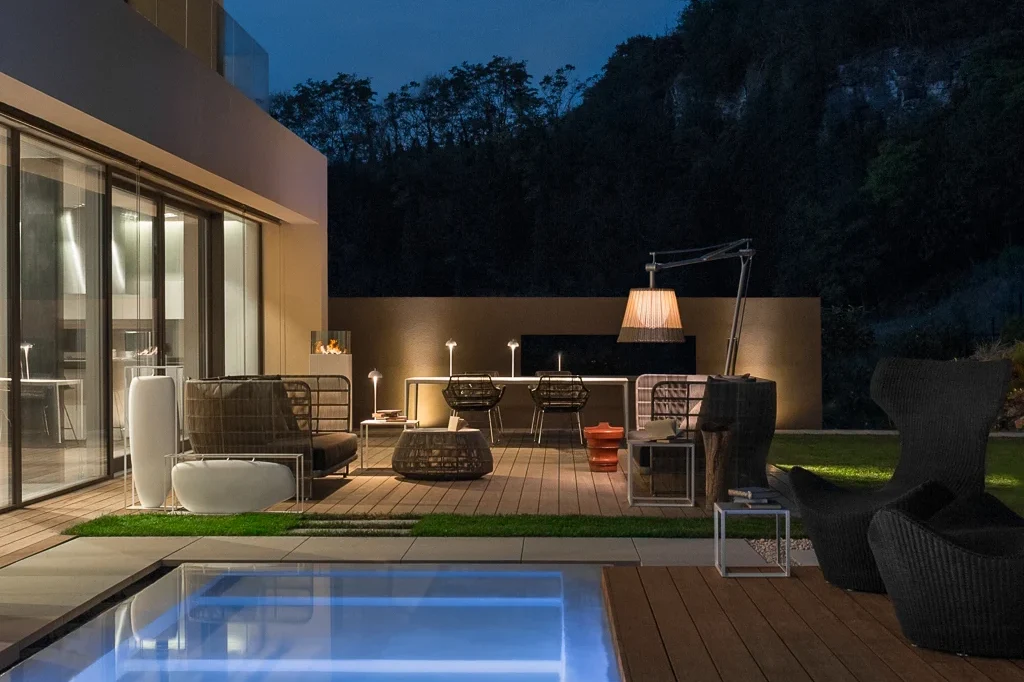
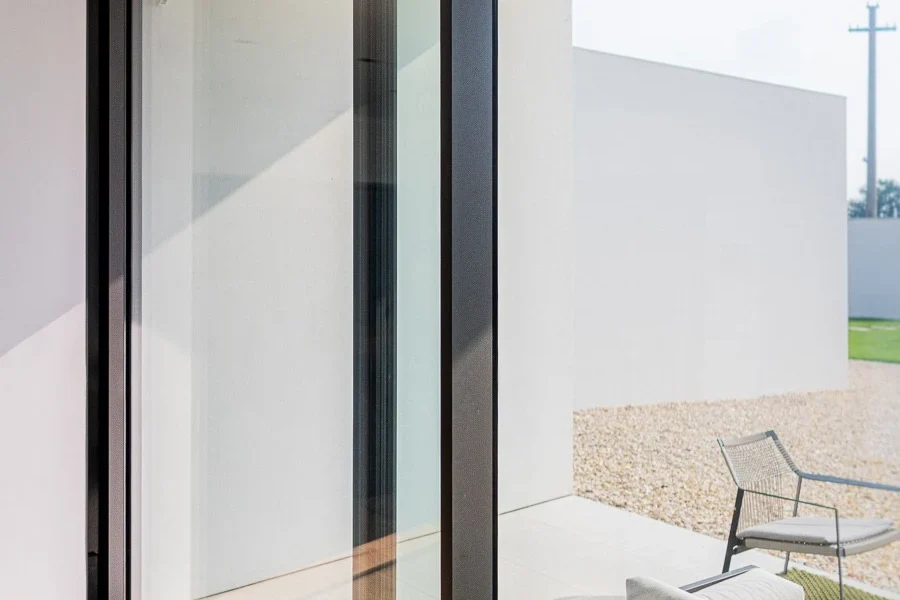
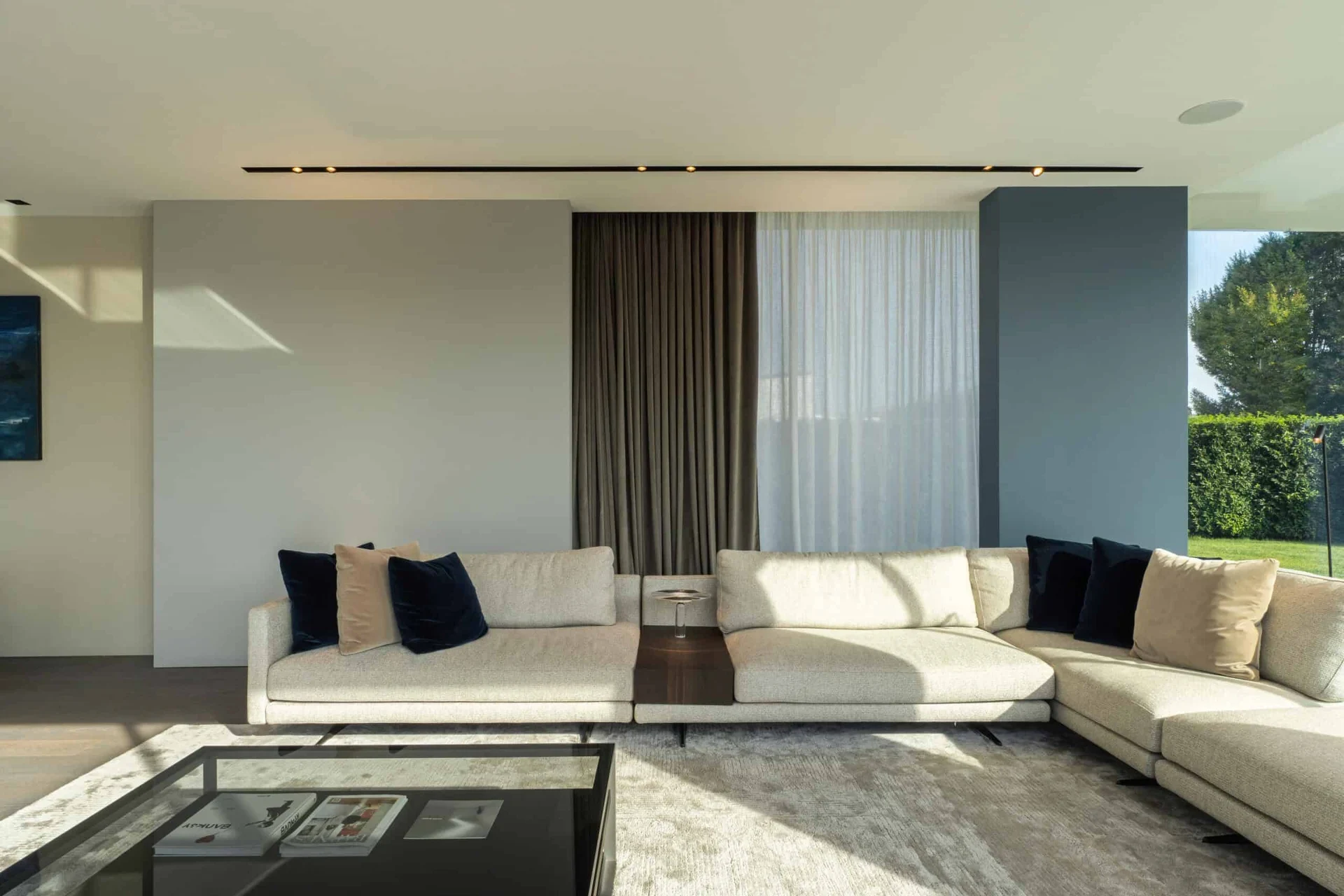
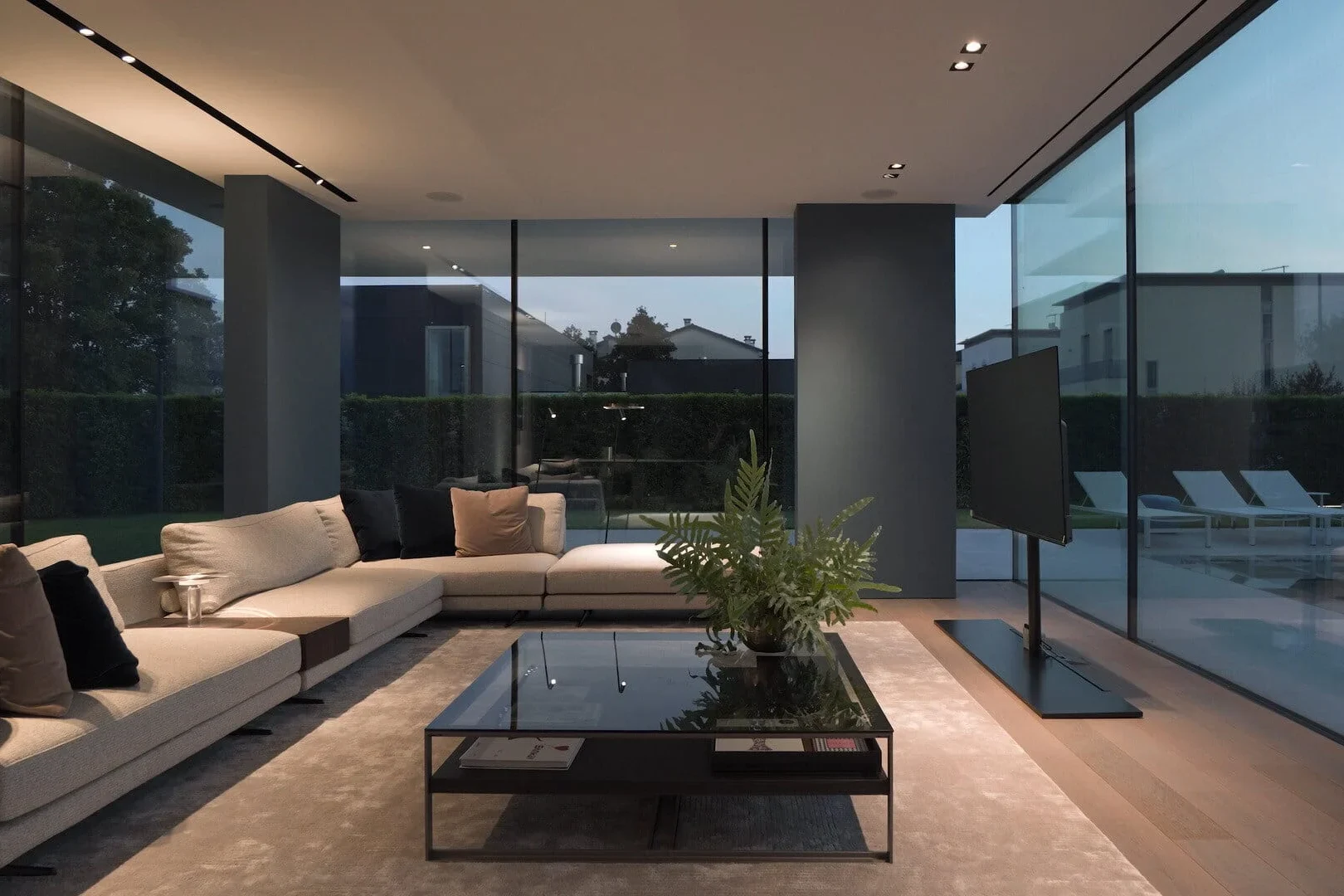
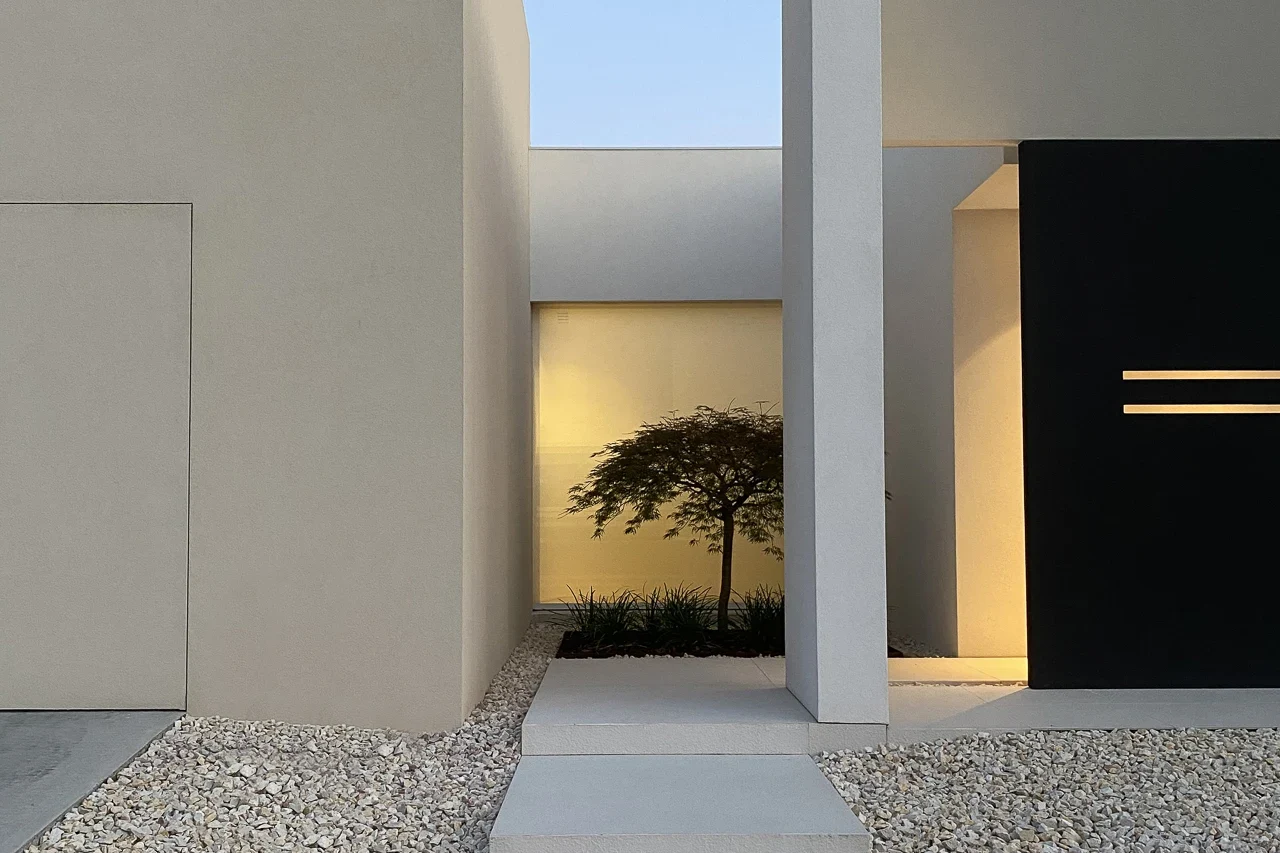
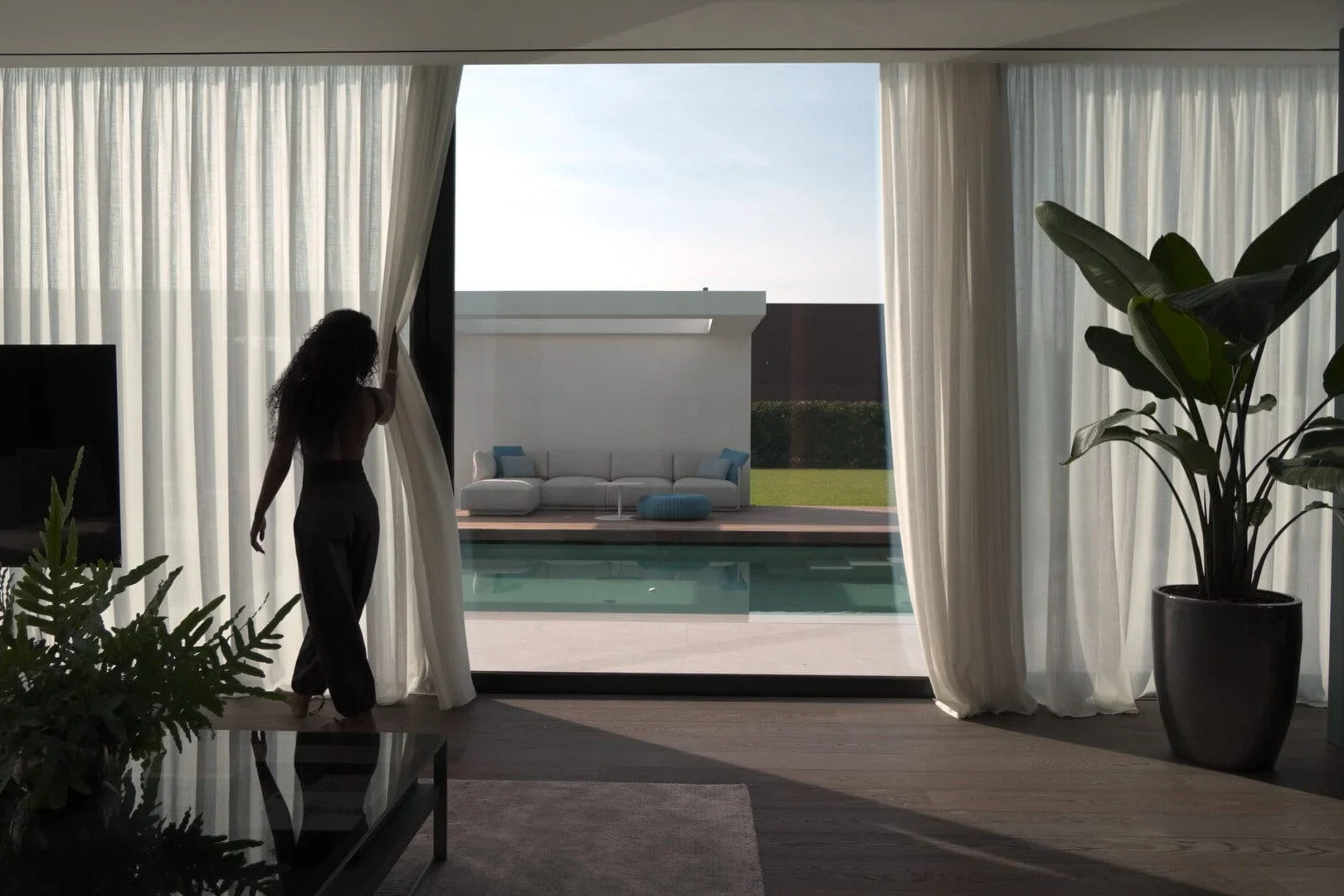
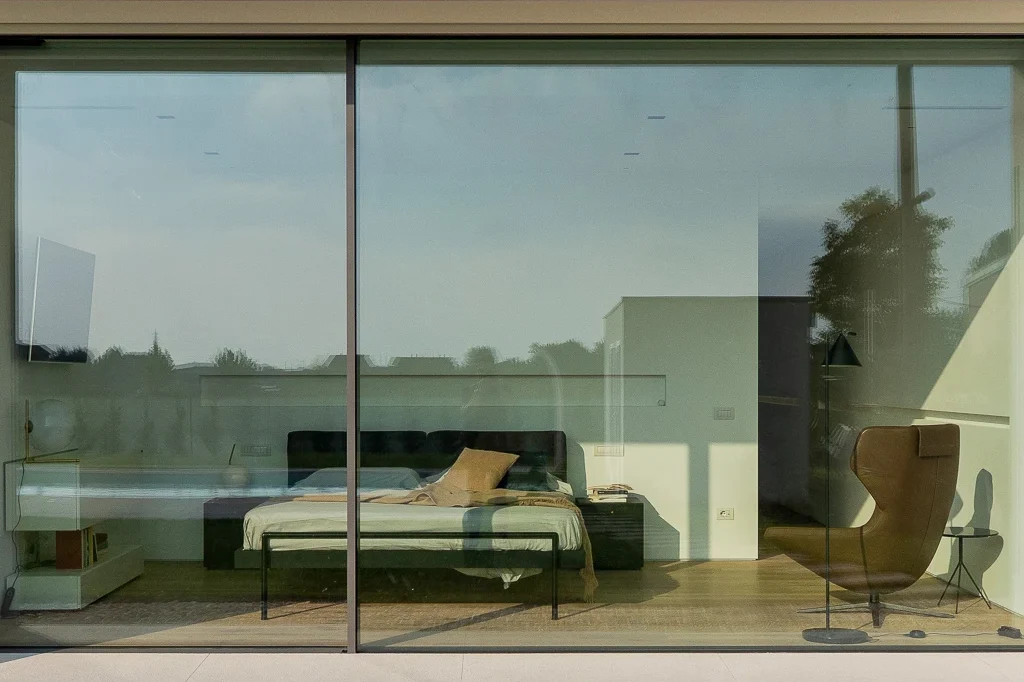
A clarification: the photos in this guide show exteriors and interiors of the studio’s projects, and none documents a photovoltaic system. We chose them because they show how roofs, volumes and garden are conceived together, which is where the design of the system starts. For related topics see our guides to whole house ventilation and underfloor heating.
How much does solar battery storage cost?
We do not give figures, because the cost depends on capacity, type of roof, storage capacity, technical room and integration with the other systems. The real cost depends on six items: modules and structure, inverter, battery, cabling and panels, design and paperwork, testing and monitoring. Ask for quotes that separate them.
Incentives and feed-in tariffs change often and we do not report them: check them with your technician and accountant at the time of the application. The advice does not change: size on real consumption, not on the available roof, and spend first on the items that last, namely structure, cabling and design.
Solar battery storage: what to ask the designer
A good solar battery storage project starts from three documents: the family’s consumption curve, the roof survey with its shadows and the plan of the technical room. Without them, solar battery storage remains an estimate. Ask the designer to write how much energy the solar battery storage produces month by month and how much it moves to the evening, and to show where the inverter and the battery stand.
Well integrated solar battery storage in a villa is not noticed from the outside, but it can be read in the design: cable routes, panel board, ventilation of the room and access for maintenance. If solar battery storage is added later, these elements have to be found afterwards and cost more; this is why it pays to decide from the first drawings whether the villa will have solar battery storage.
Solar battery storage: checklist before you sign
- Is the solar battery storage sized on the family’s real consumption?
- How much does the solar battery storage produce month by month on your plot?
- Where do the inverter and the battery of the solar battery storage stand?
- Does the solar battery storage really cover evening and night, or does it promise the winter?
- Does the roof carry the solar battery storage and the wind loads?
- Is monitoring of the solar battery storage active?
- Do the warranties of the solar battery storage distinguish modules, inverter and battery?
- Does the quote for the solar battery storage separate modules, inverter, battery and paperwork?
- Who maintains the solar battery storage, and under what contract?
- Is the solar battery storage coordinated with the heat pump and home automation?
Invest
External wall insulation for a villa in Italy, explained by architects: outside or inside…

Solar battery storage: ten mistakes to avoid
- Sizing on the roof area instead of consumption.
- Expecting solar panels to cover winter heating.
- Choosing the battery without a consumption curve.
- Ignoring future shade from trees and volumes.
- Neglecting the look of the roof in a villa of quality.
- Forgetting the landscape constraint.
- Placing the battery in a damp or hot room.
- Not planning the space for storage from the design.
- Not activating production monitoring.
- Comparing quotes without separating modules, inverter, battery and paperwork.
Solar battery storage: frequently asked questions
How much does a solar system produce in Verona?
According to PVGIS, one kWp facing south at a 30 degree tilt produces about 1,361 kWh a year, with about 161 kWh in July and 60 in December.
What orientation is best?
South. South-east and south-west yield about 93-94% of south; east and west about 78-79%.
What tilt should I choose?
Between 30 and 45 degrees the yearly yield is almost the same. PVGIS gives about 39 degrees as optimum in Verona.
Does storage cover the winter?
No: it moves energy by a few hours, from day to evening. In winter the roof produces little, and the battery does not change that.
What capacity does the battery need?
It depends on the family’s evening and night consumption. The designer calculates it on a real consumption curve.
Does it go well with a heat pump?
Yes, with a control that moves flexible loads into the sunny hours, but in winter production stays limited.
How much does it cost?
It depends on capacity, roof, storage and technical room. Ask for separate quotes for these items.
Invest
KNX home automation for a villa in Italy, explained by architects: wired or wireless, scenes…

Solar battery storage: in conclusion
Solar battery storage in a villa is a project of architecture and numbers. Good solar battery storage starts from the family’s consumption, uses the real production data of the place, places modules, inverter and battery where the architecture allows and does not promise to cover the winter.
Whoever plans solar battery storage for a villa should ask from the start how much the roof produces month by month, how much energy the house uses in the evening and where the battery will stand. Solar battery storage pays when it answers these three questions, and not when it follows the catalogue.
Designing or renovating a villa in Italy?
Send us the plan and a photo of the roof: we tell you how to reason about orientation, technical room and integration with the heat pump and home automation. For a complete project see Signature Architecture or write to us from Contact.
Sources: PVGIS, European Commission (Joint Research Centre), queried on 8 November 2026 with 1 kWp, system losses 14%, database PVGIS-SARAH3 (2005-2023), free-standing system; values are estimates, not guarantees. Photos: projects by Federico Cappellina Architects, which do not show a photovoltaic system.
Would you like an opinion on the project?
Send us the plan and a photo of the roof: we reply with the points to verify.
Discover the UHNW Lifestyle
The Villa Edit: materials and systems read by architects.