
ELRE
Infrared sauna and villa wellness
Infrared sauna, red light and cold water: how to design a private wellness area that is really used, with the brands we consider the best.
Infrared sauna: why it is entering villas
The infrared sauna has become the most common form of sauna in private homes. Unlike the traditional Finnish sauna, which heats the air to very high temperatures with a stove, the infrared sauna uses radiant panels that warm mainly the body and less the air in the cabin. The result is a gentler heat, lower air temperatures and shorter warm-up times.
For a villa this means a more compact cabin, usually powered by a domestic electrical system, with no chimney and none of the work a wood-fired stove requires. That is why the infrared sauna appears more and more often in master suites, wellness areas and even private gyms.
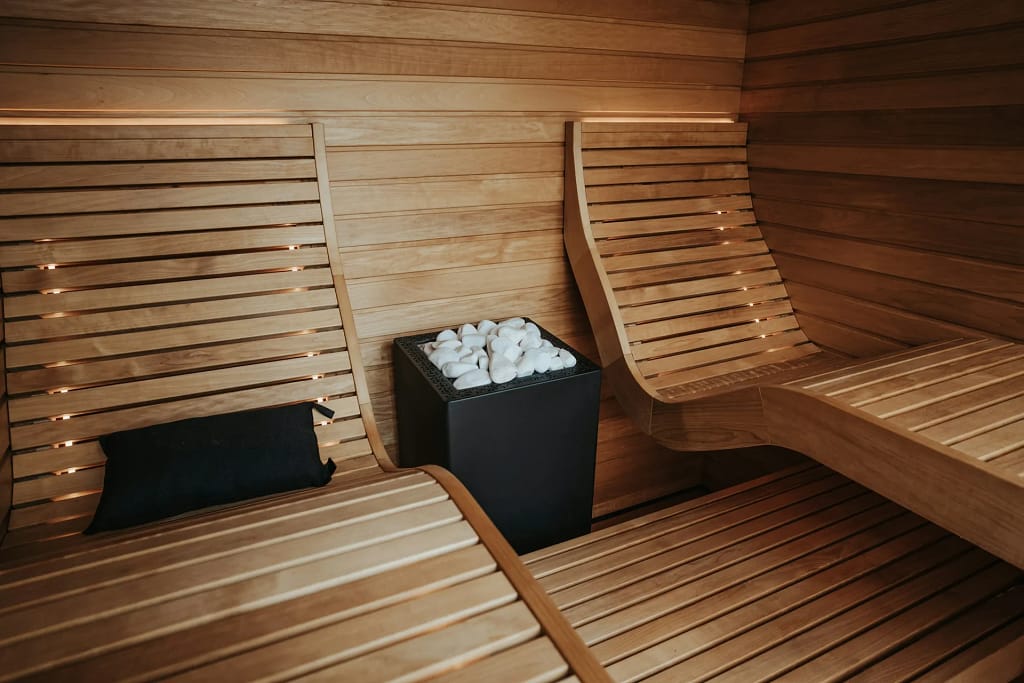
Infrared sauna or Finnish sauna?
There is no absolute right choice. The Finnish sauna offers intense heat and the steam of water poured on the stones: it is a ritual, it needs more space, careful ventilation and a more powerful system. The infrared sauna is simpler to install, warms up quickly and works at lower air temperatures, which many people find more tolerable.
In the studio’s practice we suggest the Finnish sauna to those already used to sauna and with generous space, perhaps outdoors in the garden; the infrared sauna to those who want daily, short and easy use, close to the bedroom or bathroom. Hybrid cabins combining the two technologies also exist.
What the studies say
The most cited studies on sauna come from Finland: a large observational study published in JAMA Internal Medicine in 2015 (Laukkanen and colleagues) associated more frequent use of the traditional sauna with a lower risk of cardiovascular death. It is an association, not proof of cause, and it concerns the Finnish sauna. Research on infrared saunas is younger. Anyone with heart problems, low blood pressure or who is pregnant should talk to their doctor before using one.
Explore Longevity
The longevity home
The method
Sauna and villa wellness
Sauna, red light, cold plunge
Sleep and recovery
Bedroom and technologies
Biohacking
Biological age and biomarkers
Supplements
European selection
Nutrition
Functional anti-ageing nutrition
Products
The chosen partners
Private Service
Private Consultation
Would you like to design a wellness area with a sauna in your villa?
Contact usWhere to place the infrared sauna in the villa
Position decides whether the sauna will be used. Our rule is simple: the sauna must be close to a shower and a rest area, and away from circulation. The best locations are a dedicated wellness area, the master bathroom if large enough, or a pavilion in the garden connected to the pool.
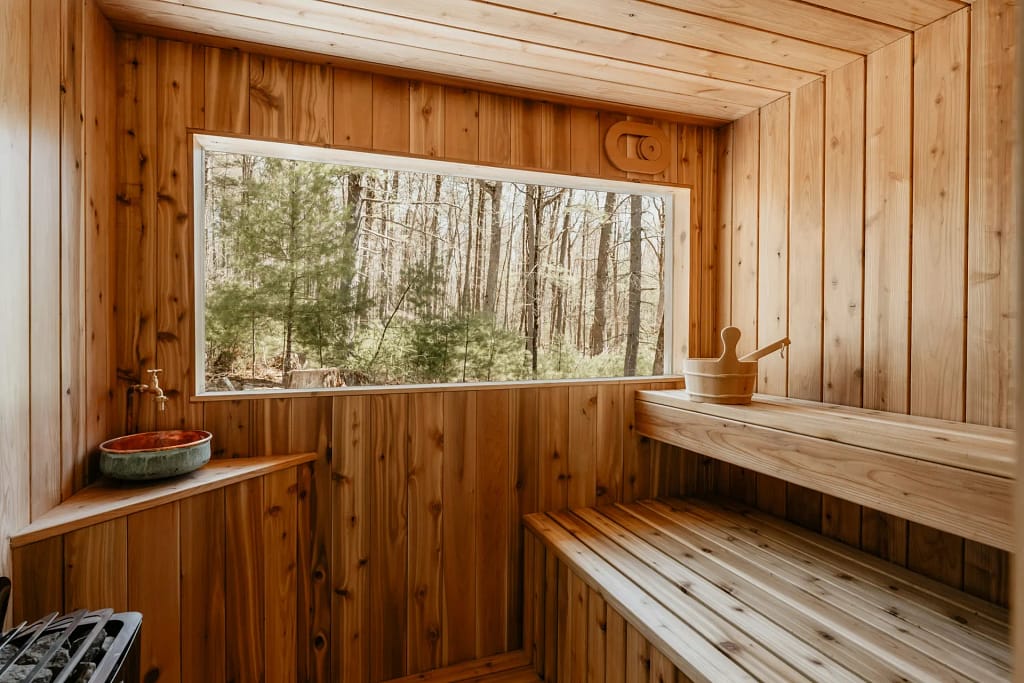
Avoid airless, lightless basements: the sauna becomes a forgotten room. Better a few square metres on the bedroom floor, with a window onto greenery, than a large dark room. The view matters too: ten minutes of heat in front of a garden are worth far more than the same ten minutes facing a wall.
Space and dimensions
An infrared cabin for one or two people usually takes up little more than one square metre; for three or four people about two to three square metres are needed. Add the space to open the door, a shower nearby and ideally a seat for resting. At design stage the room height and the load capacity of the floor are also checked if the cabin is heavy.
Systems: electricity, ventilation, light
An infrared sauna needs a dedicated electrical line, sized according to the manufacturer’s instructions, and a well-ventilated room so that the heat and humidity produced by the body do not stay in the space. Lights should be warm and dimmable; many brands also offer chromotherapy, which is an aesthetic choice more than a functional one. Everything must be planned before the finishes.
Longevity
Longevity and biohacking lifestyle: scientific protocols, curated products and dedicated retreats…
Red light therapy: red light at home
Red light therapy, or photobiomodulation, uses LED panels that emit red and near-infrared light. It has become popular in the wellness world and some infrared saunas already integrate it. Research is ongoing and results vary greatly by application: this is why we present it as a wellness technology to use with realistic expectations, not as a cure.
In a villa a red light panel fits in the wellness area, the gym or the dressing room. It needs a free wall, a socket nearby and a spot where you can stand or sit a short distance from the panel. Among the specialist brands we point to Mito Red Light, which makes panels in several sizes.
Cold plunge: cold water after the heat
The contrast between hot and cold is part of the sauna tradition throughout northern Europe. At home it is achieved with a cold shower, a temperature-controlled plunge tub or, in the garden, a pool. Dedicated cold tubs, called cold plunges, keep the water at a few degrees thanks to a chiller and a filtration system.
From a design point of view the cold tub needs a water point, a drain, a socket for the chiller and a water-resistant floor. It should be placed near the sauna, outdoors or in a ventilated room. Immersion in cold water is a stress for the body: anyone with cardiovascular problems should talk to their doctor.

Longevity
Luxury biohacking lifestyle: advanced technologies and measurable protocols for UHNW clients who…
The sequence of the wellness area
A wellness area works when the spaces follow the order of use: changing room, shower, infrared sauna, cold water, rest. Each step should be short and private; the rest area should have natural light and ideally a view. It is the same logic as the great spas, scaled down to a home.
In the studio’s projects the wellness area often opens onto the garden or the pool, so the route can continue outdoors in the warm season. Materials such as stone, treated wood and breathable plaster withstand heat and humidity and age well.
Investire
Functional anti-aging nutrition: a personalised system using food and supplementation to slow…
The infrared sauna brands we recommend
We have selected brands with long experience, after-sales service and clear technical information. Before buying, check availability in your country, delivery times, local service and the European electrical certifications of the chosen model.
Sunlighten
Sunlighten is one of the best-known infrared sauna makers, with lines ranging from single-person cabins to multi-person models and full-spectrum versions. It suits those looking for a high-end infrared sauna with a wide choice of sizes and finishes.
Longevity
Longevity and biohacking products: a curated selection of supplements, devices and tools chosen…
Clearlight
Clearlight makes full-spectrum infrared saunas, indoor and outdoor, with a stated focus on low electromagnetic emissions. The outdoor saunas are interesting for those who want a wellness pavilion in the garden.
Mito Red Light
Mito Red Light specialises in red and near-infrared light panels. It is the natural complement to an infrared sauna for those who want to add red light to the wellness area.
Transparency: some links on this page lead to the websites of the brands mentioned and may in future become affiliate links: if you buy, Elite Luxury Real Estate may receive a commission at no extra cost to you. The content is for information only and does not replace a doctor’s advice.
Architettura
Luxury interiors for villas: the 12 systems of The Villa Edit, from passive house to furniture…
How to choose the right infrared sauna
Before choosing a model it pays to answer four questions. How many people will use it together? Where will it go, indoors or outdoors? How often will it be used? Do you want only the infrared sauna or also red light and chromotherapy? The answers narrow the field immediately and let you compare a few models instead of a whole catalogue.
Then come the technical details: type and position of the radiant panels, quality of the wood and glues, European electrical certifications, warranty, availability of spare parts, delivery and installation times. A quality infrared sauna lasts many years: it is worth taking time over the choice and having it checked by whoever designs the home’s systems.
What a wellness area with an infrared sauna costs
The cost depends on three items: the cabin, the building work and the systems. High-end infrared cabins vary widely in price by size and model; the work ranges from almost nothing, if the cabin goes into an existing bathroom, to significant, if a complete wellness area with shower, cold tub and relaxation area is built. We do not publish figures because they change with the market and with every house: the right way is a quote on the real project.
A practical tip: providing the electrical line, drain and ventilation at design stage costs little even if the sauna is installed years later. It is one of the most cost-effective choices you can make in a new villa.
Architettura
UHNW luxury villa architecture designed and supervised by Federico Cappellina’s studio since 2002…
Maintenance and daily use
An infrared sauna needs little maintenance: cleaning the wooden surfaces, a towel on the benches, airing after use. Cold tubs instead need water and filter checks, like a small pool. In a villa with a maintenance service these checks fit into the pool routine.
The most sustainable use is short and regular: a few minutes, several times a week, followed by a shower and a moment of rest. It is precisely the sauna’s closeness to the bedroom and bathroom that makes this regularity possible.
Mistakes to avoid with the infrared sauna
The first mistake is choosing the sauna from a catalogue without thinking about the space: a beautiful cabin in a room with no air and no shower nearby will not be used. The second is underestimating the systems, discovering when work is finished that the dedicated electrical line is missing or the room is not ventilated. The third is overloading the wellness area with technologies: better a few things done well.
The fourth mistake is ignoring maintenance: a neglected cold tub becomes a hygiene problem. The fifth is buying products with no local service: a sauna is an appliance that lasts many years and sooner or later needs a spare part.
Infrared sauna in the garden: the wellness pavilion
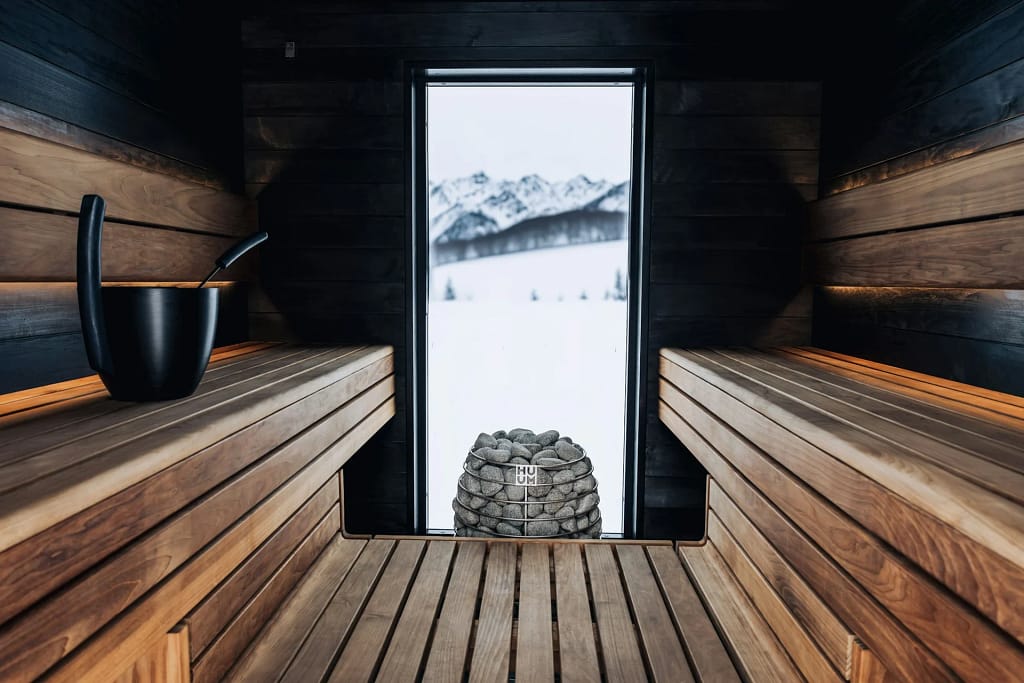
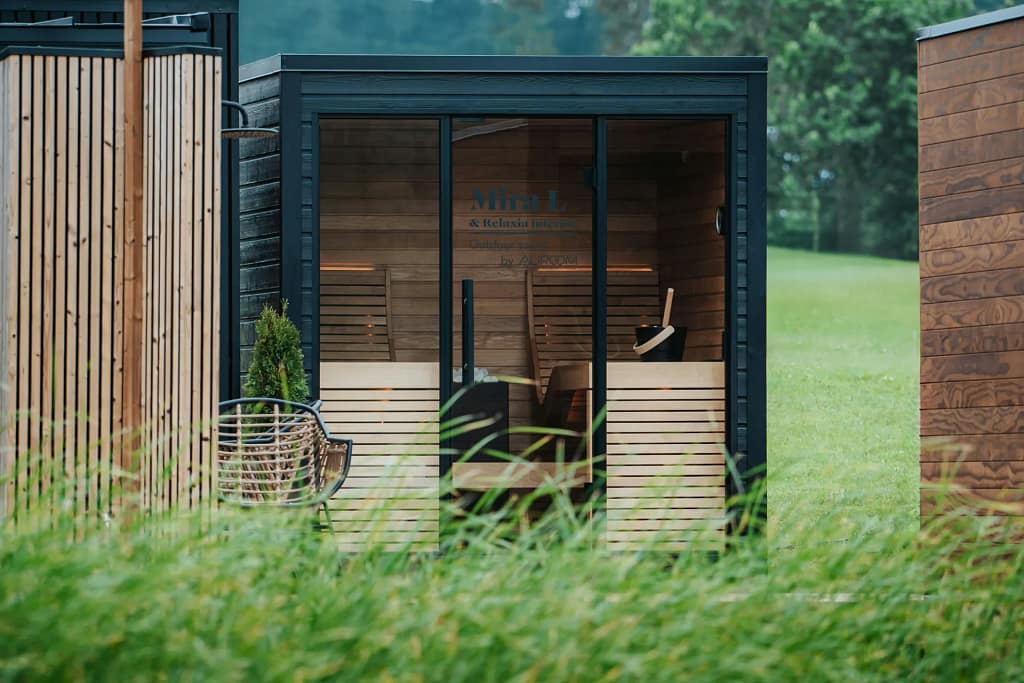
When indoor space is limited or a direct relationship with nature is wanted, the sauna can become a small pavilion in the garden. There are infrared cabins designed for outdoors, with weather-resistant woods and roofs, but the most elegant result comes from placing the cabin in a volume designed together with the house: same materials, same line, a glass wall towards the greenery.
The pavilion works if it is connected to the pool or an outdoor shower, if it has a sheltered path from the house and if it is discreetly lit at night. In winter it is the most coveted place in the villa; in summer it becomes a shaded room beside the water. It needs an underground electrical line, a drain and a stable, insulated base.
Sauna and pool: a single route
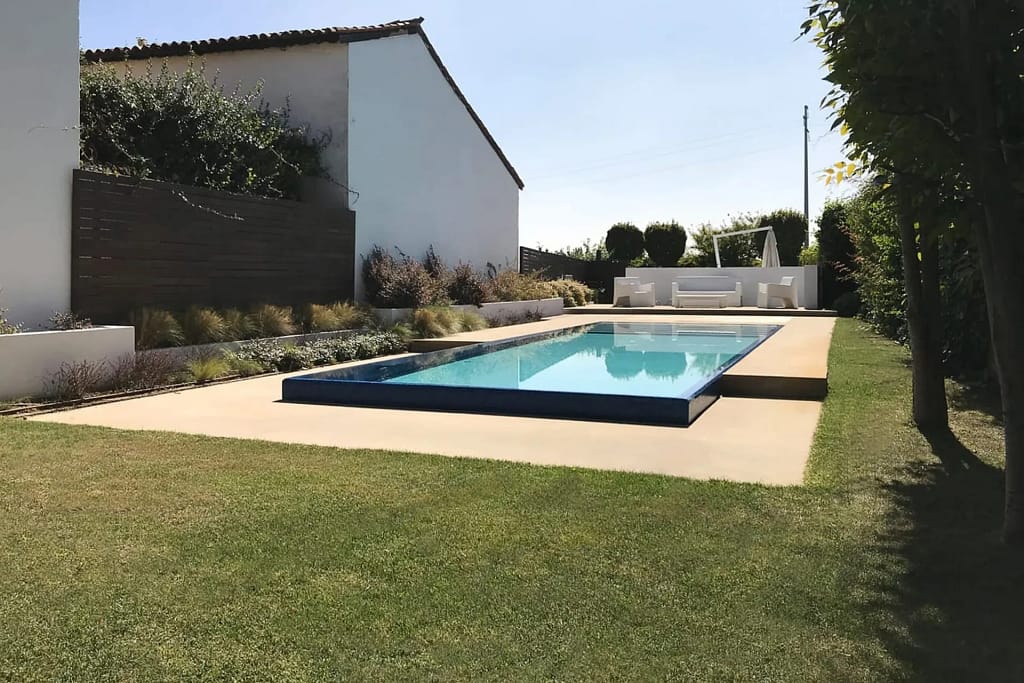
In villas with a pool the infrared sauna finds its natural place beside the water: heat, shower, dip, rest in the sun or shade. Designing these spaces together lets them share systems, plant room and changing room, cutting costs and making the route smoother. It is a solution we often propose in projects where the garden is part of daily life.
The infrared sauna in the master suite
An increasingly common trend is to integrate the infrared sauna into the master suite, between the bathroom and the walk-in wardrobe. The advantage is obvious: the sauna is a few steps from the bed and becomes an evening or morning habit. The condition is that the bathroom is large and ventilated enough, and that the cabin is clad in the same materials as the other surfaces, so it does not look like an appliance.
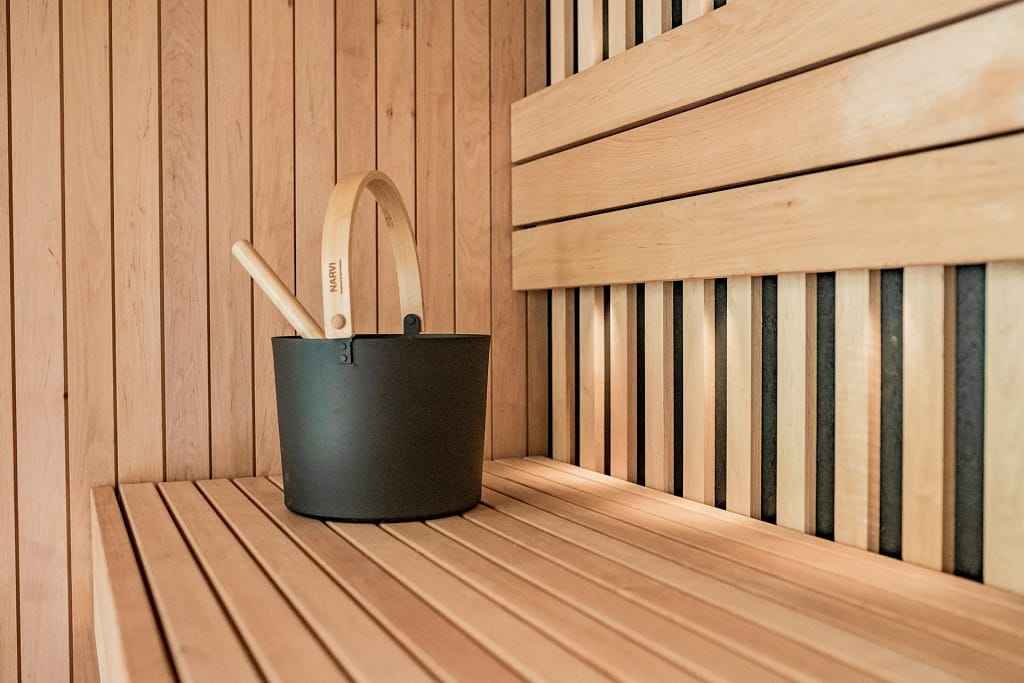
In this configuration the sauna is designed like bespoke furniture: a glass door aligned with the shower, light wood benches, indirect lighting, radiant panels built into the walls. The result is a small private spa that takes only a few square metres more than a traditional bathroom.
A week of wellness in the villa
To understand how life changes with a well-designed wellness area, imagine a week. Three evenings out of seven, a short infrared sauna session after work, followed by a cold shower and a quarter of an hour’s rest facing the garden. Two mornings, red light in the dressing room while getting ready. At the weekend, the sauna after the pool or after a walk, with friends or family.
None of this needs organising, because the spaces are close and ready. That is the difference between owning a sauna and using it: the distance between intention and habit shortens when architecture removes the obstacles. This is why we recommend designing the wellness area together with the rest of the house, not as a later addition.
Frequently asked questions on the infrared sauna
How much space does an infrared sauna at home need?
For one or two people a cabin of little more than one square metre is enough; for three or four people about two to three square metres, plus space for the door and a shower nearby.
Infrared or Finnish sauna: which to choose for a villa?
The Finnish sauna for those who love the ritual of intense heat and have space; the infrared sauna for daily, short use that is simple to install. Hybrid cabins also exist.
Is a special electrical system needed?
A dedicated line sized to the manufacturer’s instructions is needed, planned at design stage together with the room’s ventilation.
Is the infrared sauna good for everyone?
Not for everyone. Anyone with cardiovascular problems, low blood pressure, who is pregnant or takes medication should ask their doctor before using it.
Designing the wellness area
A longevity home is designed, not furnished afterwards. Federico Cappellina‘s studio integrates the wellness area, sauna, sleep-focused bedroom, air and light quality from the very first drawings: if you are planning a new villa or a renovation, this is the place to start.
Designing a villa?
The studio integrates wellness, sleep and air quality from the design stage.
Discover the UHNW Lifestyle
The sauna is the heart of the wellness area: from the choice of cabin to ventilation, every detail is decided at design stage.