
ELRE
Sleep technology and recovery
A bedroom designed for sleep and the technologies that really help: temperature, darkness, silence, sleep tracking and recovery.
Sleep technology: the room first, then the devices
Sleep technology is one of the most dynamic sectors of wellness: mattresses that regulate temperature, rings that track sleep stages, lights that change colour in the evening. It only really works if it rests on a solid base: a bedroom that is dark, quiet, cool and free of stimuli. That is the part decided when you design or renovate the house.
The American Academy of Sleep Medicine recommends that adults sleep at least seven hours a night. Reaching that goal depends on many personal factors, but the bedroom environment is one of the few you can act on once and for all.
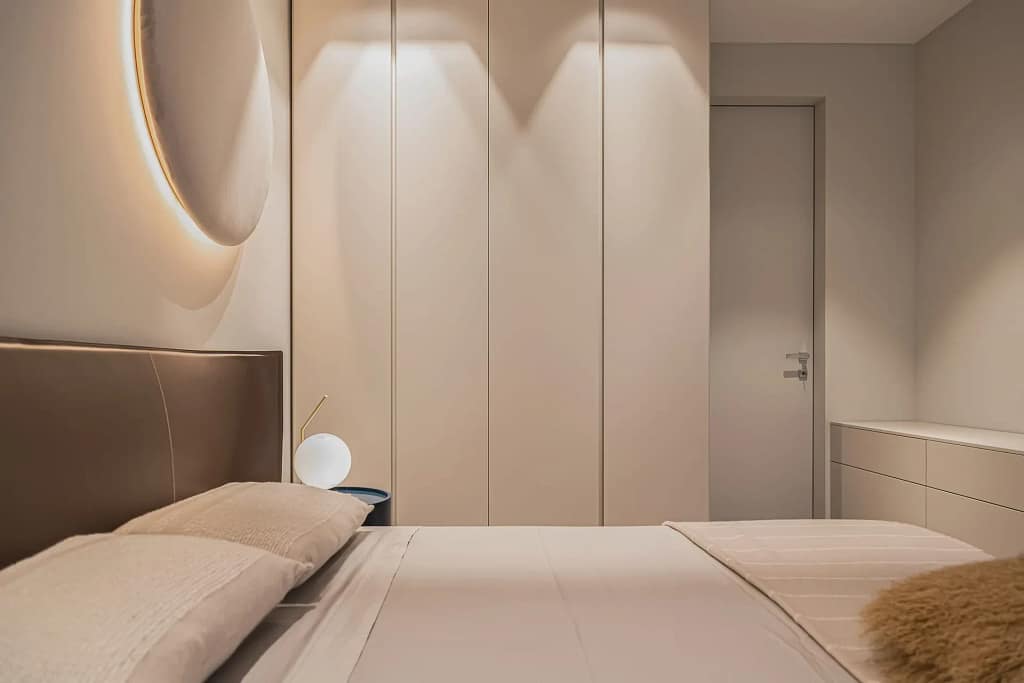
The bedroom designed for sleep
Real darkness
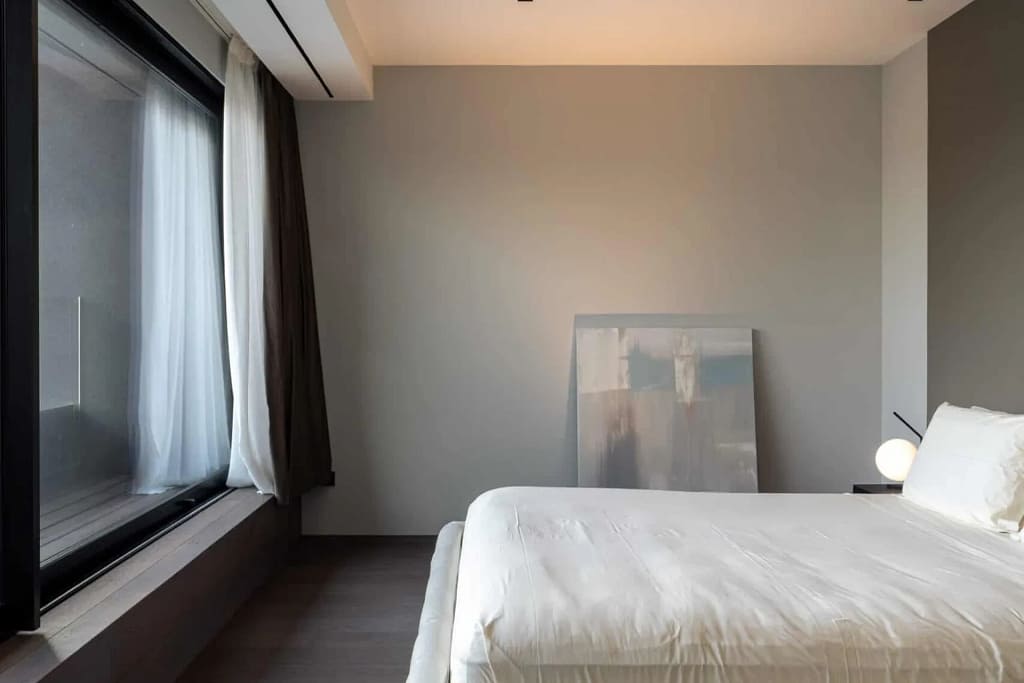
Blackout systems must close properly: light-tight shutters or blinds, heavy ceiling-mounted curtains, no gaps at the sides. Small standby lights, charger LEDs and corridor night lights matter too. At design stage you choose windows with insulated roller boxes and avoid putting devices with lights in the bedroom.
Silence
Night-time noise disturbs sleep even when it does not wake us. Windows with good acoustic performance, bedrooms away from plant rooms and the road, quiet air-conditioning, doors with seals: these choices cost little in a new project and a great deal in a finished house.
Explore Longevity
The longevity home
The method
Sauna and villa wellness
Sauna, red light, cold plunge
Sleep and recovery
Bedroom and technologies
Biohacking
Biological age and biomarkers
Supplements
European selection
Nutrition
Functional anti-ageing nutrition
Products
The chosen partners
Temperature
A cool bedroom helps rest. Low-velocity air conditioning, well-regulated underfloor heating and the ability to lower the temperature at night are the tools of architecture; temperature-regulating mattresses and covers are those of sleep technology.
Evening and morning light
In the evening you need warm, low, dimmable lights; in the morning plenty of natural light. A bedroom facing east, with automated blackout systems that open at wake-up time, uses daylight to regulate the sleep-wake rhythm without any device.
Longevity
Longevity and biohacking lifestyle: scientific protocols, curated products and dedicated retreats…
The sleep technologies we recommend
We select a few products, chosen for the seriousness of the brand and real usefulness in a high-end home. None of them replaces a doctor in case of sleep disorders: persistent insomnia, loud snoring or sleep apnoea should be assessed by a specialist.
Eight Sleep: bed temperature
Eight Sleep makes the Pod, a system fitted to the mattress that regulates the temperature of each side of the bed during the night, with an app that collects sleep data. It is one of the most interesting sleep technologies for couples with different temperature needs.

Investire
Infrared sauna in a villa: how to choose it, where to place it, how to combine it with red light…
Oura: tracking sleep
Oura is a smart ring that estimates sleep duration and stages, resting heart rate, heart rate variability and skin temperature. It is not a medical device, but it makes habits visible and helps you understand the effect of a change, for example a darker bedroom or an earlier dinner.
Therabody: recovery
Therabody is the brand of muscle recovery devices such as the Theragun percussion massagers. They fit in the home gym or wellness area and complement sleep’s work on physical recovery.
Transparency: some links on this page lead to the websites of the brands mentioned and may in future become affiliate links: if you buy, Elite Luxury Real Estate may receive a commission at no extra cost to you. The content is for information only and does not replace a doctor’s advice.
Longevity
Luxury biohacking lifestyle: advanced technologies and measurable protocols for UHNW clients who…
Home automation for sleep
A smart home can become invisible sleep technology: an evening scene that dims the lights and shifts them to a warm colour temperature, closes the blackout systems, lowers the bedroom temperature and silences notifications; a morning scene that opens the blackouts gradually. Home automation systems already offer these functions, if they are planned at design stage.
The key is simplicity: one command for the night, one for the morning. Complicated automation ends up unused. In the studio’s projects the scenes are defined with the client on the basis of their real habits.
Bedroom materials and furniture
Bedroom materials breathe with us for eight hours every night. We prefer low-emission finishes, solid wood or certified panels, natural fabrics, breathable plaster. A quality mattress and suitable pillows matter more than any device: they must be tried, not chosen from a catalogue alone.
Layout matters too: the bed away from the window if there are draughts, the headboard against a solid wall, no screen in front of the bed. Electrical devices and Wi-Fi in the sleeping area can be switched off at a switch: a common-sense choice that costs very little.
Investire
Functional anti-aging nutrition: a personalised system using food and supplementation to slow…
Recovery beyond sleep
Recovery is not just sleeping. A recovery area after training, an infrared sauna near the bedroom, a quiet space for reading or meditation: these are rooms that help switch off from the day and prepare for sleep. We cover them on the page devoted to the infrared sauna and villa wellness.
Evening habits matter as much as the room: dinner not too late, screens off an hour before, a regular routine. The house can make them easier: a living room with warm lights, a library, a reading corner away from the television.
Renovating to sleep better
Many sleep improvements are possible without building from scratch. Replacing the windows in the sleeping area, installing light-tight blackouts, redoing the air-conditioning with quiet units, moving the master bedroom to the quietest side of the house: this work improves rest every night for many years.
Before acting it pays to measure: night-time noise, temperature, residual light. A survey with simple instruments shows where to intervene and where not, avoiding needless expense.
Longevity
Longevity and biohacking products: a curated selection of supplements, devices and tools chosen…
How to choose the right sleep technology
Choosing sleep technology starts with one question: what is the problem? If you wake up hot, the priority is temperature, and the solution may be a system like Eight Sleep or more precise air conditioning. If you wake up tired without knowing why, a tracking device like Oura helps gather data to discuss with your doctor. If the problem is muscle tension after sport, recovery comes before sleep.
A good rule is to introduce one sleep technology at a time and observe its effect for a few weeks. Adding three devices at once makes it impossible to tell what works. The same goes for changes to the bedroom: blackouts first, then temperature, then the rest.
What to measure and how to read the data
Wearables offer many numbers: sleep duration, time in the different stages, heart rate, heart rate variability, temperature. The most useful for daily life are total duration and regularity of timing. Sleep stage estimates have margins of error and should be read as trends, not absolute values. A good use of sleep technology is to look at the monthly average, not one night’s score.
Architettura
Luxury interiors for villas: the 12 systems of The Villa Edit, from passive house to furniture…
Architettura
UHNW luxury villa architecture designed and supervised by Federico Cappellina’s studio since 2002…
Sleep technology in guest and children's rooms
The same rules apply to every bedroom in the house. Children’s rooms benefit from effective blackouts, warm evening lights and screens outside the room; guest rooms from good sound insulation and independently adjustable air conditioning. In a villa that often hosts friends and family, a quiet, dark guest room is one of the most appreciated comforts.
For children the most effective sleep technology is routine: regular hours, low light in the evening, a tidy room. Architecture helps with bedrooms away from the living area and windows that insulate from the noises of the house.
Bedroom acoustics: the detail that makes the difference
Of all the interventions for sleep, acoustics is the most underestimated. Night-time noise comes from three sources: from outside through the windows, from inside through walls and floors, from the house’s own systems. Against the first you need laminated glass with good acoustic performance and careful installation; against the second insulated walls and floors; against the third quiet machines, insulated pipes and plant rooms away from the sleeping area.
No sleep technology makes up for a noisy bedroom. That is why in the studio’s projects the plan of the sleeping area grows from acoustics: bedrooms on the quietest side of the plot, wardrobes and bathrooms as buffers towards noisy zones, no systems above or beside the beds.
The bed: mattress, pillows and fabrics
The mattress is the first sleep technology, even if it is rarely seen as such. The choice is personal: firmness, materials and breathability depend on the weight, sleeping position and habits of the person using it. The advice is to try it calmly and choose makers that offer a trial period.
Natural-fibre sheets such as linen and cotton, seasonal duvets, pillows chosen for your sleeping position: these details improve thermal comfort at night. A bed temperature system, like Eight Sleep’s, is added to this base and does not replace it.
The rhythm of the day
The night’s sleep is prepared during the day. Natural light in the morning, movement, regular meals, a break outdoors: the house can encourage these habits with a bright kitchen, a gym with a view, a garden that is easy to reach. The most effective sleep technology is often a day lived with regular rhythms in a house designed to support them.
Second homes and travel
Those who live between several homes know the problem: you sleep well in one and badly in another. Bringing the same standards to every residence, such as blackouts, temperature, mattress and lights, makes sleep more regular. Some sleep technologies are portable, like the tracking ring; others, like the bed temperature system, can be installed in each home.
In the holiday villas we design by the sea or on the lake, the master bedroom follows the same rules as the main home. Rest is part of the holiday, and a noisy or bright bedroom spoils it more than any other detail.
Common mistakes with sleep technology
Buying a device to track sleep without changing anything in the bedroom is the most frequent mistake: the data confirm the problem but do not solve it. Another is chasing the app score, turning sleep into a performance and increasing anxiety. The third is filling the bedroom with devices, when the best bedroom is the simplest one.
Sleep technology works best as a checking tool: you change one thing, measure for a few weeks, decide whether to keep it. It is the same method we use in design: permanent choices first, then the tools.
Sleep technology: the summary in five points
First: the most important sleep technology is the bedroom itself, dark, quiet and cool. Second: among devices, sleep technology that acts on bed temperature has the most direct effect on night-time comfort. Third: sleep technology that measures, like a smart ring, serves to check changes, not to replace them.
Fourth: home automation is invisible sleep technology, if the evening and morning scenes are simple. Fifth: each sleep technology should be introduced one at a time, observed for a few weeks and kept only if it really improves rest. For persistent problems, the first sleep technology to consult is still your doctor.
Sleep technology and villa design
In a new villa sleep technology is planned in the drawings: sockets and power near the bed for temperature systems, motorised blackouts, home automation scenes, quiet systems. Thinking about it early costs little and keeps the bedroom clean, without visible cables and devices.
Frequently asked questions on sleep technology
What is the most useful sleep technology?
The one that acts on the bedroom’s temperature and darkness. Tracking devices help you understand, but do not change the environment you sleep in by themselves.
Do smart rings measure sleep accurately?
They estimate sleep duration and stages reliably enough for daily use, but they are not medical devices and do not replace a sleep study.
How do you design a bedroom for sleep?
With light-tight blackouts, acoustic windows, quiet systems, night-time temperature control, warm evening lights and no devices switched on in the room.
Can sleep be improved without renovating?
Yes: better blackouts, warm lights in the evening, a lower temperature, screens outside the bedroom. These are simple changes with an often immediate effect.
Designing the bedroom for sleep
A longevity home is designed, not furnished afterwards. Federico Cappellina‘s studio integrates the wellness area, sauna, sleep-focused bedroom, air and light quality from the very first drawings: if you are planning a new villa or a renovation, this is the place to start.
Designing a villa?
The studio integrates wellness, sleep and air quality from the design stage.
Discover the UHNW Lifestyle
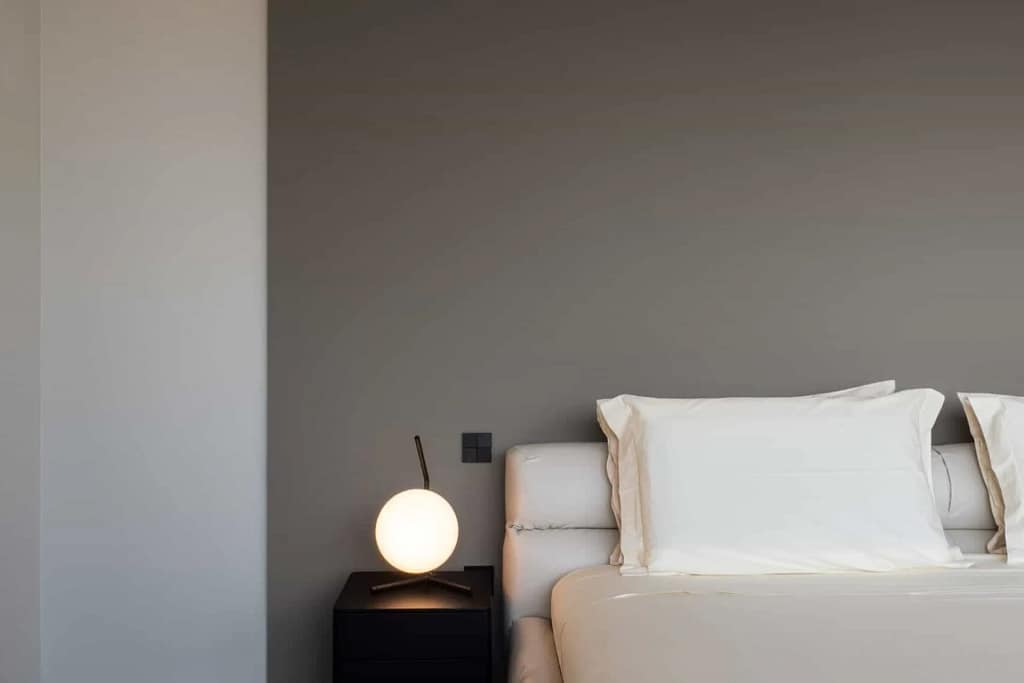
Sleep is designed: windows, blackout systems, quiet systems and light come before any device.