
ELRE
Home spa: sauna, steam, water and rest
A private spa is not an extra room: it is a journey. Heat, water, cold and rest, designed together with the villa so that they are used every day.
Home spa: a journey, not a room
A home spa is not a sauna put in the basement. It is a journey: heat, water, cold and rest, one after another, in spaces designed to be walked through in a bathrobe, without hurry. It can fit in a few square metres next to the master bathroom or take up an entire wing of the villa, with an indoor pool and a private garden; in both cases it only works if it is designed together with the architecture.
In this guide we explain how we design a home spa: the forms of heat, from the Finnish sauna to the Turkish bath; the water of experience showers, the Kneipp path and the pool; the cold that follows the heat; the relaxation area, the treatment room, the outdoor spa, the services you do not see and the brands we consider.
The rule behind every home spa is ancient and simple: after heat comes cold, after cold comes rest. It is the pattern of Finnish saunas and Roman baths, and it is also the method on which the best companies in the sector build their journeys. That is why a home spa is designed as a sequence: changing room and shower, heat, cold water, relaxation area. Distances are short, floors warm and non-slip, sightlines protected.
Heat: the five forms of the home spa
The heart of every home spa is heat. There is not just one kind of heat: the air temperature changes, the humidity changes, the way the body receives it changes. Each of the five forms below requires different building services, and it is best to choose before the design begins.
Finnish sauna
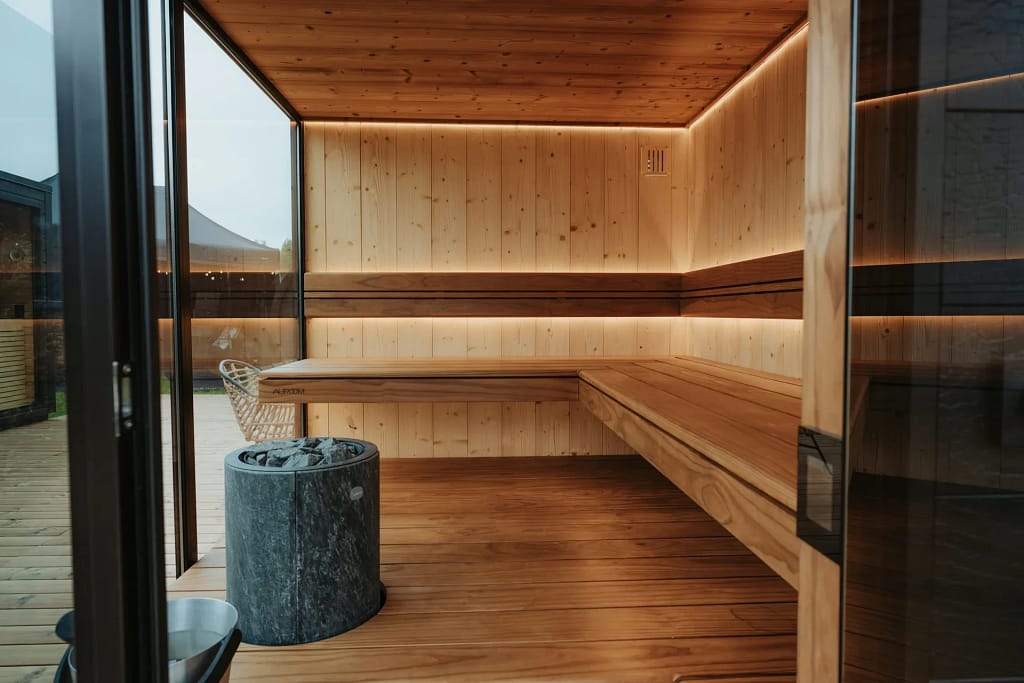
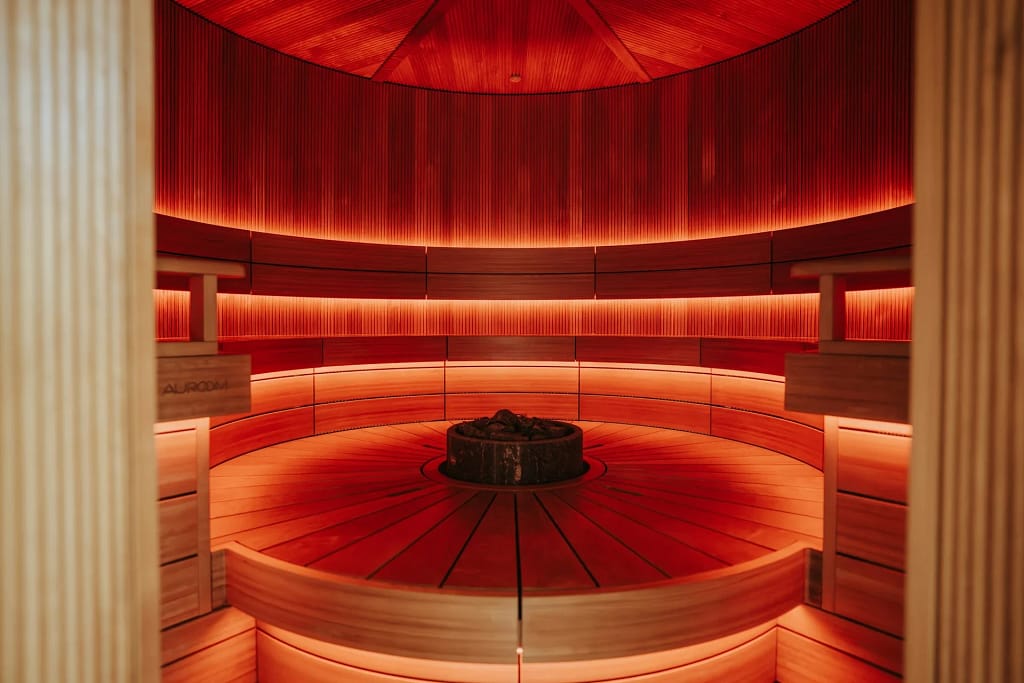
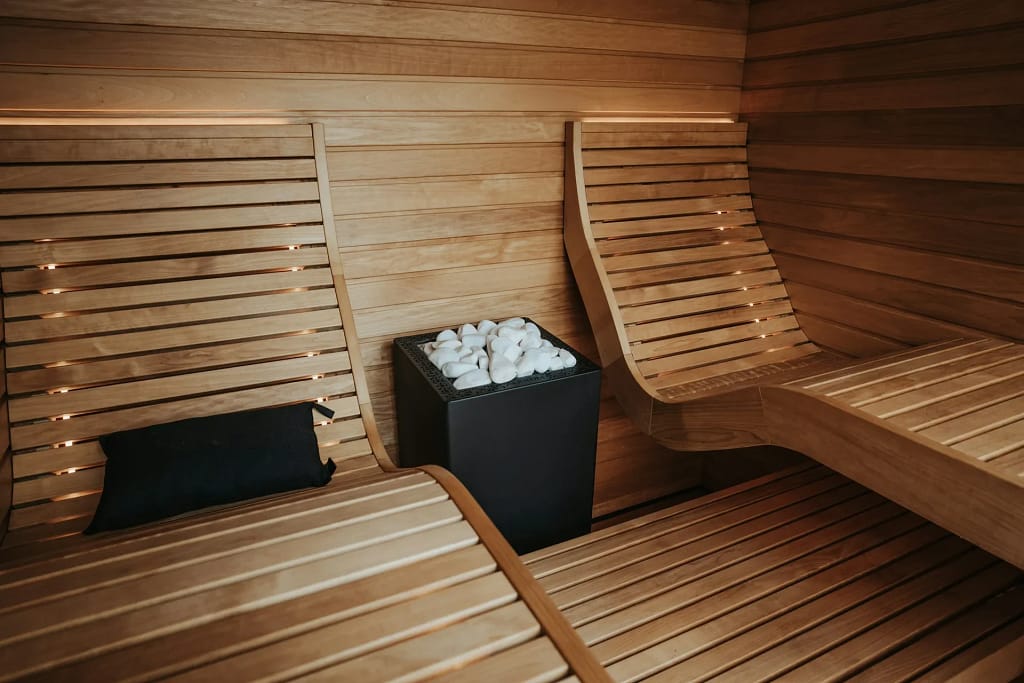
This is the classic sauna: very hot, dry air, around 80–100 °C, low humidity, wood everywhere. Water is poured on the stove’s stones for a short, intense wave of steam, the Finns’ löyly. In a home spa it is built in Nordic spruce, aspen or hemlock, with benches on two levels, low light and, where possible, a window onto the garden or the landscape. The electric stove needs a dedicated line, often three-phase.
Explore The Villa Edit
The Villa Edit
The method and the 12 systems
Structure and passive house
Construction system and Passivhaus
Windows and glazing
Windows, sliding doors, doors
Energy, air and water
Heat pump, MVHR, photovoltaics
Natural stone
Marble, travertine, wood
Porcelain tiles
Large slabs indoors and out
Lighting
Lighting design
Luxury kitchens
Kitchen, appliances, compost
Bathroom, spa and wellness
Master bathroom, sauna, recovery
Furniture
Living, bedrooms, walk-in closets
Pools and garden
Outdoor, landscape, robots
Home automation and security
One system for the whole house
Art and objects
Collections and signature pieces
Home spa
Sauna, steam, water, cold, rest
Soft sauna, or bio sauna
A gentler, more gradual heat: around 50–60 °C with 50–60% humidity. It is the sauna for those who find the Finnish one too intense, who want to stay longer, who use it as a family. It is often paired with coloured light and fragrances. In a home spa it can be the same cabin as the Finnish sauna, with a combined stove that works both ways.
Turkish bath
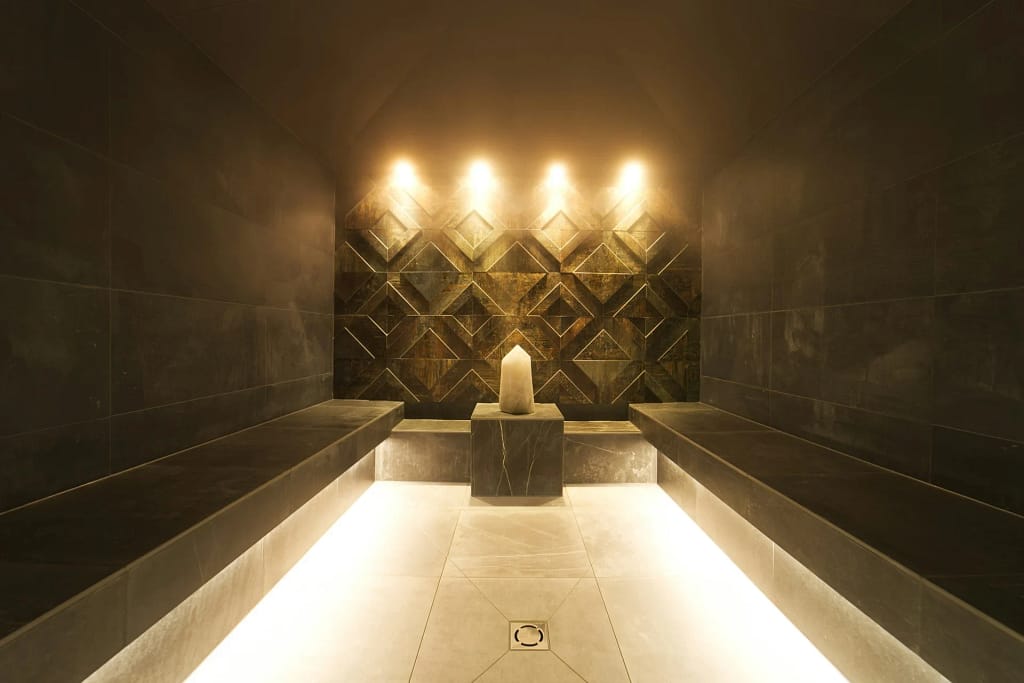
The Turkish bath, or steam room, is moist heat: air around 45 °C and humidity close to 100%, with steam settling on the skin. It is clad in stone, mosaic or seamless mineral surfaces, with a sloping ceiling so that drops do not fall on bathers, heated seats and a floor drain. The steam generator sits in a nearby plant room, easy to reach for maintenance.
The Villa Edit

Explore our projects

Schüco glazing, Minimal Cucine and Modulnova kitchen, Poliform and Baxter furniture, Occhio lighting, MAFI wood.
Mediterranean bath
Heir to the Roman tepidarium, the Mediterranean bath heats by radiation: walls and seats in stone, marble or glass spread an even warmth, around 45–50 °C, with medium humidity. It is the heat best suited to those who want to sit for a long time, talk, read. In a home spa it is often the most elegant room, because stone remains the protagonist.
Infrared sauna
Radiant panels warm the body directly while the air stays cooler than in a Finnish sauna. It takes up little space, often runs on a normal electrical line and can even fit in the master bathroom. We discuss it in detail in the guide to the infrared sauna in the Longevity section.
Water: experience showers, Kneipp and pool
After heat, water. In a home spa water serves to cool down, to change pace, to close one cycle and open another. There are many solutions, and each requires precise flow rates, drains and materials.
Experience showers
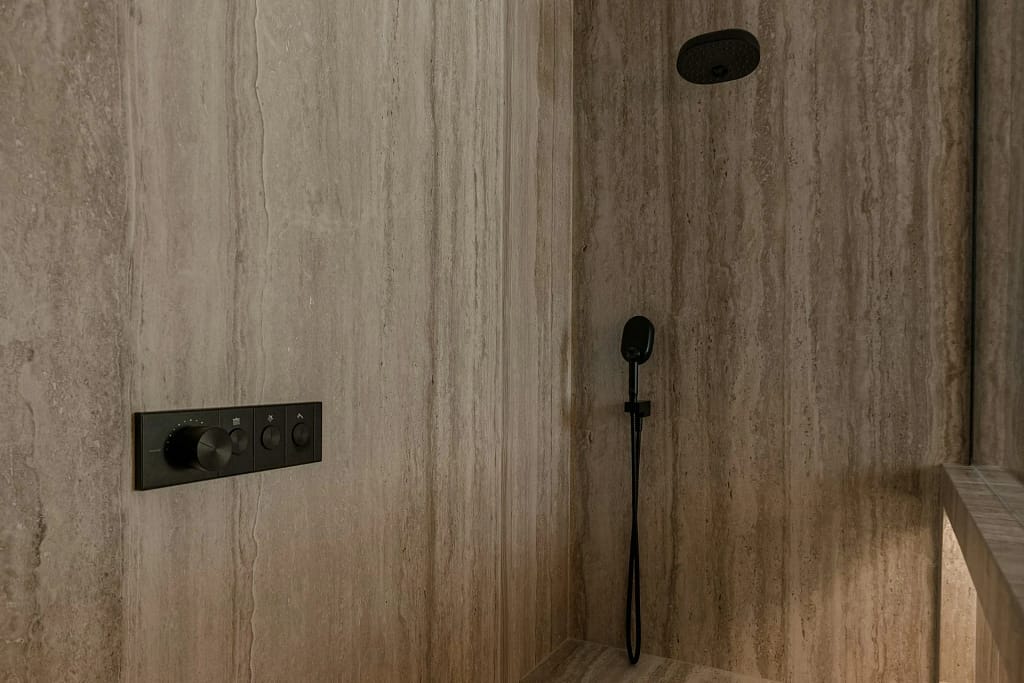
Rain heads, waterfalls, mist, alternating cold and hot jets, accompanied by light and fragrances: experience showers turn a daily gesture into a ritual. Scenarios are programmed, from a lukewarm tropical rain to the cold jet after the sauna. They need good water pressure, an adequate hot water store and generous drains: in a home spa these are details to decide before the walls are closed.

The Villa Edit

The Villa Edit

Steam shower
The steam shower combines the Turkish bath and the shower in a single cabin: a sealed door up to the ceiling, a compact generator, a seat. It is the simplest home spa to fit into the master bathroom when there is no room for a dedicated wellness area.
Kneipp path
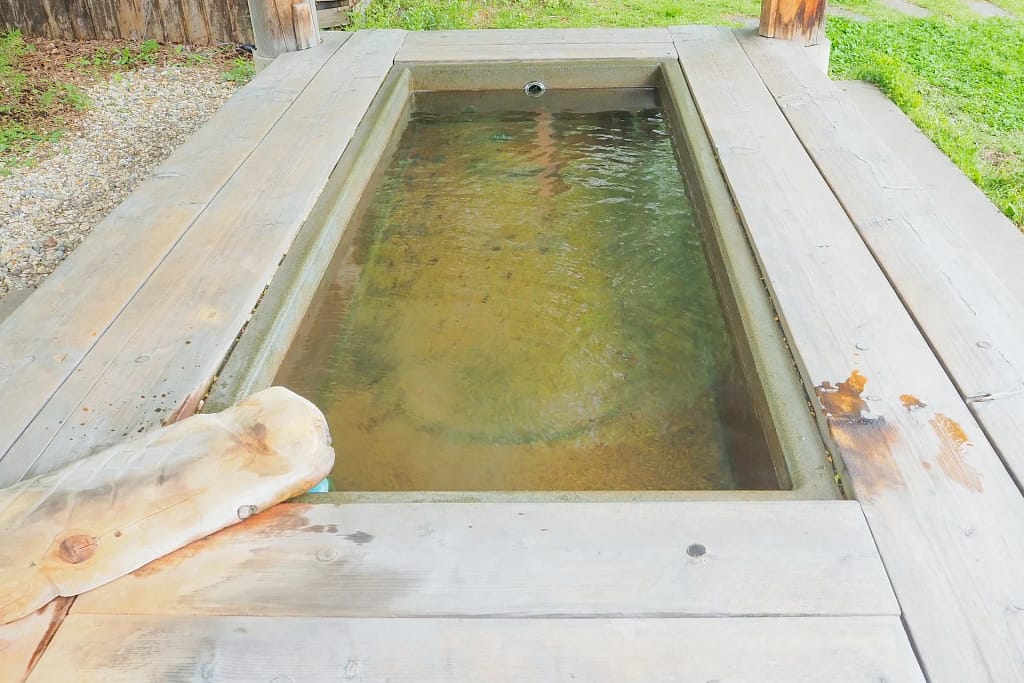
It is named after Sebastian Kneipp, the 19th-century Bavarian priest who popularised alternating hot and cold water. You walk through two shallow basins, one warm and one cold, over a pebble floor, or use alternating showers on the legs. In the garden it can become a stone basin along a path; indoors, a water corridor between the sauna and the relaxation area.
Indoor pool and hot tub
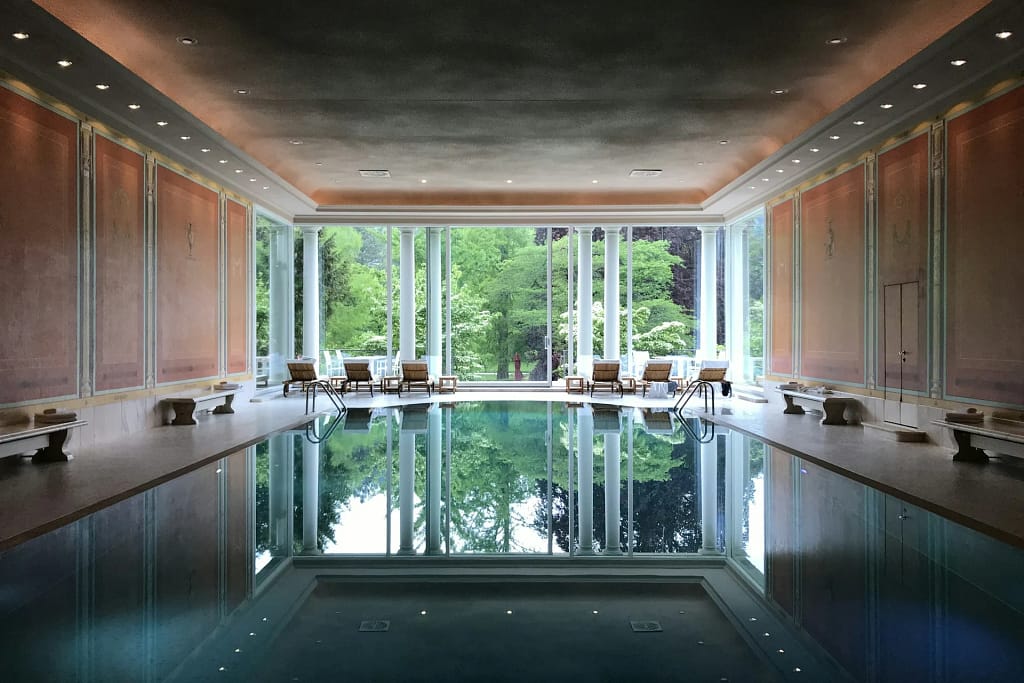
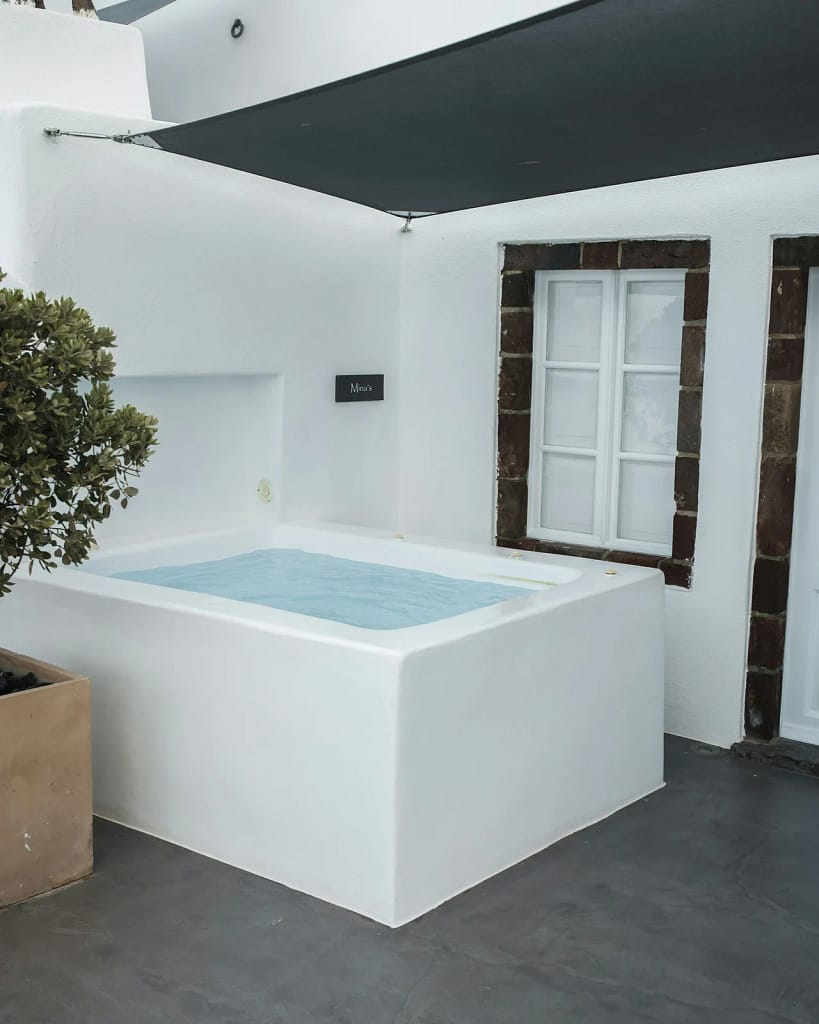
The indoor pool is the greatest luxury of a home spa, and also the most demanding: air dehumidification, a vapour barrier in the walls, water treatment, controlled temperatures. A hot tub, indoors or in the garden, offers much of the pleasure in less space. We discuss it in the guide to pools and garden.
Explore our projects

Metra glazing, Viabizzuno and OTY lighting, infinity pool: design and site direction by the studio.
Cold: the reaction after heat
Cold is the part many forget when they imagine a home spa, and the part those who use it every day appreciate most. A powerful cold shower, a tipping bucket that pours icy water, a fountain of crushed ice to run over the skin, a cold water tub with a chiller: these are the ways to close the heat cycle.
Each needs different space and services: the ice fountain needs an ice maker and a drain, the cold tub a chiller, safe flooring and somewhere to sit afterwards. Anyone with cardiovascular problems, or any doubt, should speak to their doctor before using intense heat and cold: the design provides the spaces, it does not promise benefits.
Rest: the room that makes everything work
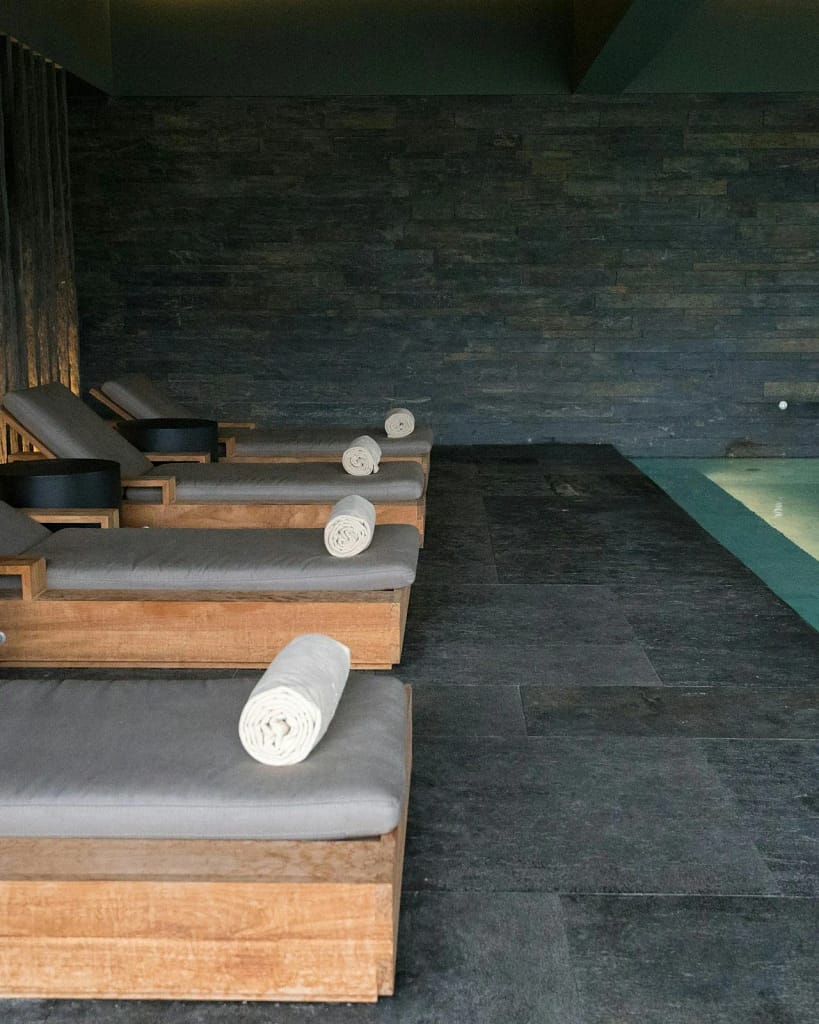
A home spa without a relaxation area is an interrupted journey. After heat and cold the body needs time: comfortable loungers, soft natural light, a view, silence, a pleasant temperature, a herbal tea. It is the room that decides whether the home spa will really be used or remain a space to show guests.
In our projects the relaxation area looks onto the garden, has curtains or shading to regulate the light, warm floors and careful acoustics: no echoes, no noise from the building services. It can also be the indoor pool hall, with loungers along the edge.
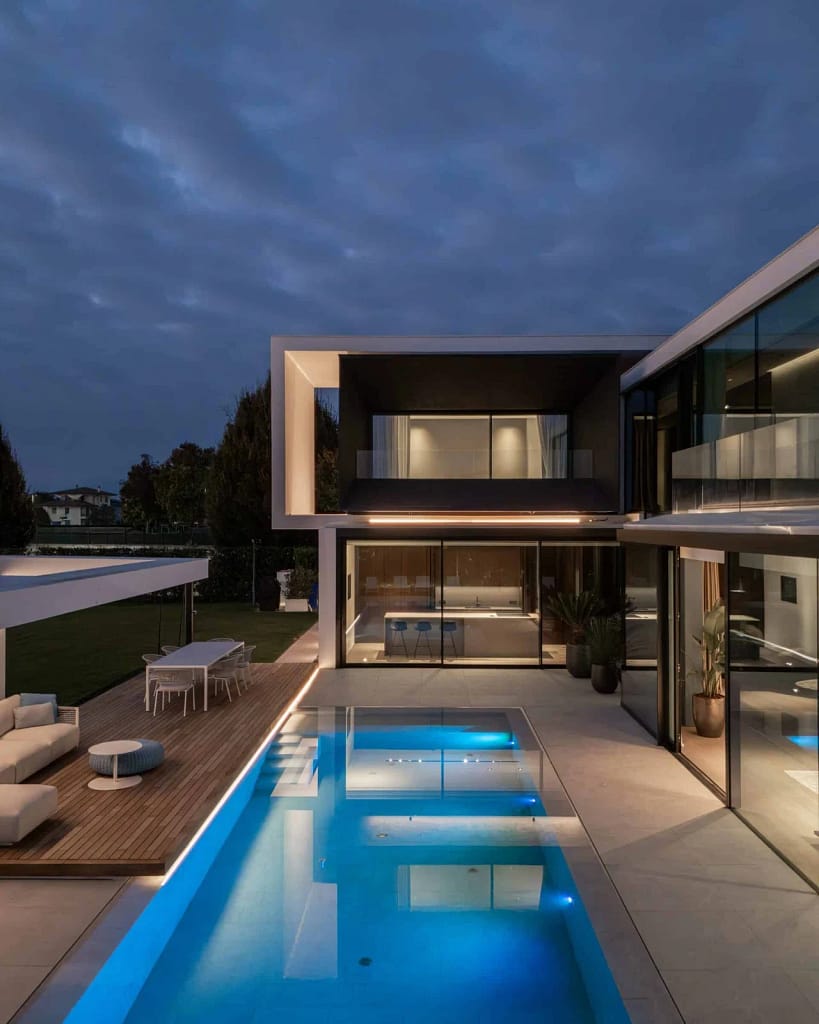
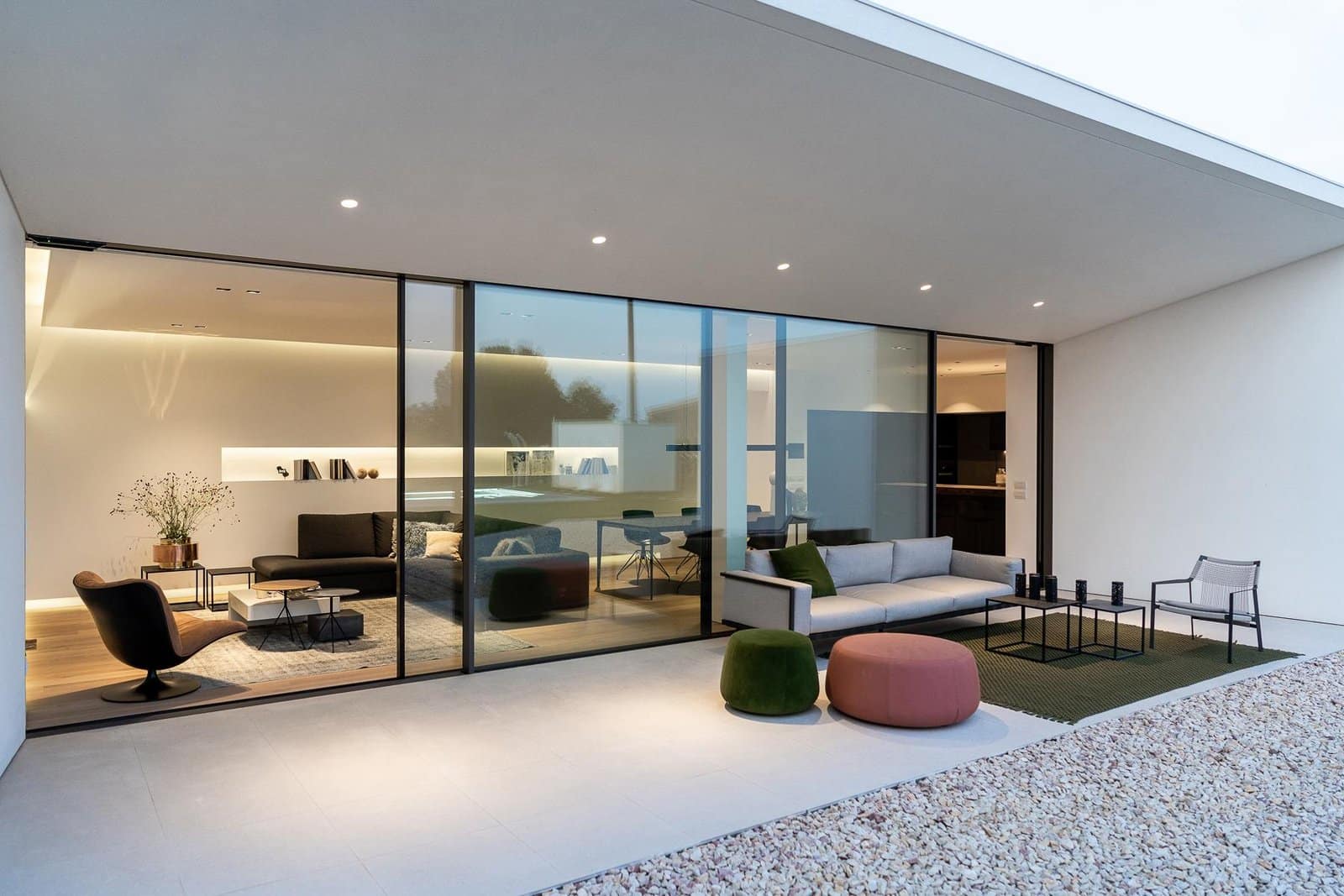
The most beautiful home spas are born from the architecture of the villa, not from a catalogue. The heat journey looks onto the garden, the pool lights up in the evening like a lantern, relaxation continues on the terrace. This is how the architecture studio designs the wellness area: as part of the house, connected to the master bedroom, the bathroom and the outdoors.
The Villa Edit

The Villa Edit

Self-care: massages, treatments and new technologies
A treatment room turns the home spa into a place to receive a massage therapist or beautician: a treatment bed, a basin, adjustable light, a cupboard for towels and products, a shower nearby. A few square metres are enough, as long as they are planned from the start, with sockets and lighting in the right place.
Professional spas are also introducing new technologies, such as dry flotation beds, cryotherapy and photobiomodulation lamps. Some are already entering homes. They are solutions to assess carefully and with medical advice, linked to the theme of living well for longer that we explore in the Longevity section.
The outdoor home spa
The home spa can move into the garden: an outdoor wooden sauna with glazing onto the landscape, a hot tub under the stars, an outdoor shower, a cold tub among the plants. In the mountains the contrast between the heat of the sauna and the snow is a unique experience; by a lake or the sea the journey continues with a swim.
Outdoor structures must be checked with the local authority, as they may require a building permit, and designed for rain, frost and sun: treated woods, roofs, drains, buried power supplies. A well-built outdoor home spa is used all year round.
Explore our projects

Edra sofas, Varenna kitchen, Noorth and Agape bathrooms: a studio project.
How much space a home spa needs
Less than you might think. A sauna for two and an experience shower fit into a few square metres next to the master bathroom. A complete home spa, with sauna, Turkish bath, showers, cold tub and relaxation area, generally needs a few tens of square metres; with an indoor pool and gym it becomes a wing of the villa.
More than space, order matters: a clear journey, with no passage through the living areas, with the changing room at the start and relaxation at the end. That is why the home spa is designed together with the villa’s floor plan, not afterwards.
Three levels: Essential, Signature, Icon
Essential: an experience shower and an infrared sauna or steam shower in the master bathroom. Signature: a dedicated wellness area with a Finnish sauna or soft sauna, Turkish bath, cold shower and relaxation area. Icon: a complete home spa with sauna, Turkish bath, Mediterranean bath, Kneipp path, cold tub, indoor pool, treatment room and outdoor spa.
The Villa Edit

Building services: what you do not see
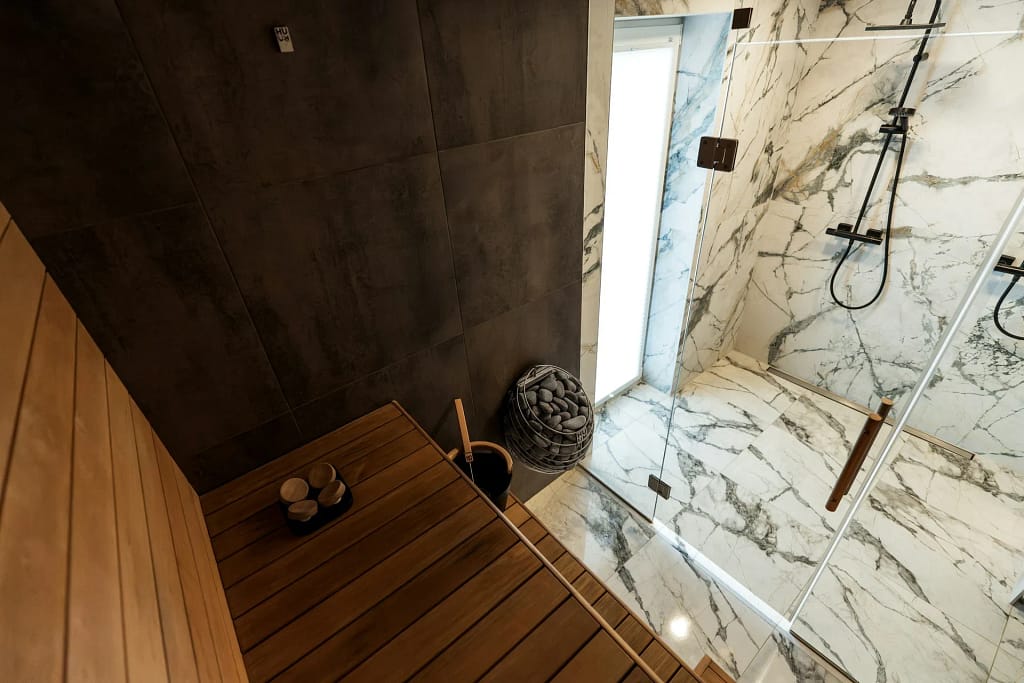
Behind a home spa there are serious building services. Dedicated electrical lines for stoves and generators; hot and cold water with adequate flow rates; floor drains in every wet room; mechanical ventilation that extracts humidity and dedicated dehumidification for the indoor pool. Walls and ceilings need a vapour barrier and correct insulation, otherwise humidity ends up in the structure.
Home automation switches the sauna on half an hour before you get home, controls light and music, monitors temperatures and consumption. Materials are chosen for heat and water: natural stone, porcelain tiles, woods suited to the sauna, seamless mineral surfaces. The lighting is low, warm and protected from water.
The home spa brands we consider
Starpool
Starpool, a company from Ziano di Fiemme in Trentino, designs the whole world of the spa: Finnish sauna and soft sauna, Turkish bath, Mediterranean bath, infrared sauna, steam and experience showers, Kneipp, pools, relaxation areas and outdoor solutions. It works on the heat, cold and rest method, with its own research department, and has lines dedicated to the home, even for small spaces.
Klafs
Klafs, a German company based in Schwäbisch Hall, is one of the historic names in sauna: founded in 1928 in Stettin, it settled in Schwäbisch Hall after the war. It produces saunas, steam baths and pools for private homes, hotels and yachts.
The Villa Edit

The Villa Edit

Effe
Effe, a company from Borello di Cesena in Romagna, active since 1987, produces saunas, Turkish baths, showers and tubs for homes and spas, with a contemporary language and many bespoke solutions.
Independent selection: the brands mentioned are chosen for quality, performance and service. No brand pays to appear on this page and the links lead to the official websites. Prices, availability and terms should be checked with the manufacturer or with the studio during the design.
The most common mistakes
Putting the sauna in a room without ventilation. Forgetting the vapour barrier in the Turkish bath or around the indoor pool. Designing the home spa without a relaxation area. Leaving the steam generator in an unreachable spot. Choosing materials that cannot withstand heat and humidity. Underestimating drains and slopes. Thinking about the home spa at the end of the project, when spaces and services have already been decided.
Maintenance
A home spa needs regular care: cleaning the sauna’s benches and woods, descaling the steam generator and shower heads, checking filters, treating the water of the pool and cold tub, periodic checks of the building services. Everything goes into the villa’s maintenance file with deadlines and technicians’ contacts, like the other systems of the house.
The Villa Edit

Frequently asked questions about the home spa
How much space does a home spa need?
A sauna for two and an experience shower need just a few square metres; a complete home spa with sauna, Turkish bath, showers, cold tub and relaxation area generally needs a few tens of square metres.
What is the difference between a Finnish sauna, a soft sauna and a Turkish bath?
The Finnish sauna works with very hot, dry air, around 80–100 °C; the soft sauna with a gentler heat, 50–60 °C and medium humidity; the Turkish bath with about 45 °C and humidity close to 100%.
Can you build a home spa in an existing villa?
Yes, often in a basement, an annexe or the garden, checking electrical and plumbing systems, ventilation, insulation and, for outdoor structures, the local authority’s permits.
Does a sauna use a lot of energy?
It depends on size, insulation and frequency of use. In a house with a heat pump and photovoltaics, part of the consumption is covered by the energy produced on the roof; home automation avoids leaving it on for no reason.
Is a home spa good for your health?
Heat, water, cold and rest are ancient wellness practices, but the design provides the spaces, it does not promise benefits: anyone with health problems should ask their doctor how and how much to use them.
Designing the home spa with the studio
The studio of Federico Cappellina designs the home spa together with the villa: the journey between heat, water, cold and rest, the building services, the materials, the light and the relationship with the garden. Specialist companies build the cabins and technologies; the studio holds the whole project together.
Are you designing a villa?
The studio coordinates architecture, spa, building services and furniture in a single project.
Discover the whole UHNW Lifestyle
The home spa is part of The Villa Edit, Elite Luxury Real Estate’s guide to the systems of the contemporary villa, alongside the bathroom, pools and Longevity.