
ELRE
Buying Property in Dubai: The Complete Guide
Buying property in Dubai with official sources: who can buy, what it really costs, how mortgages work, the steps one by one and what to do at home.
Buying property in Dubai in 2026: the guide in brief
Buying property in Dubai as a foreigner is possible, and simpler than many people think: ownership is full, the register is public and digital, the rules are written down. But it is different from buying at home: there is no notary, costs are split differently, mortgages follow their own rules and many homes are bought before they are built.
This guide follows the purchase from start to finish: who can buy, how much you really need, what everything else costs with an example calculated on official fees, how mortgages work, what the steps are, what changes off-plan, and what remains to be done in your home country. Every rule is linked to its official source.
In short, buying property in Dubai takes eight steps:
- Check whether and where you can buy: the freehold areas for foreigners.
- Make a complete budget: the price plus about 6–8% in costs.
- Choose between ready and off-plan, apartment and villa.
- Check the agency and the property.
- Sign the preliminary agreement and pay the deposit.
- If needed, obtain the mortgage.
- Register the transfer with the Dubai Land Department.
- Declare the property at home, if your country requires it.
Who can buy property in Dubai
Foreigners can buy property in Dubai as freehold owners in the areas designated by the emirate’s authorities. The rule comes from Law No. 7 of 2006 on real property registration and from Regulation No. 3 of 2006, which sets out the areas: the Dubai Land Department explains it in its Know your rights guide.
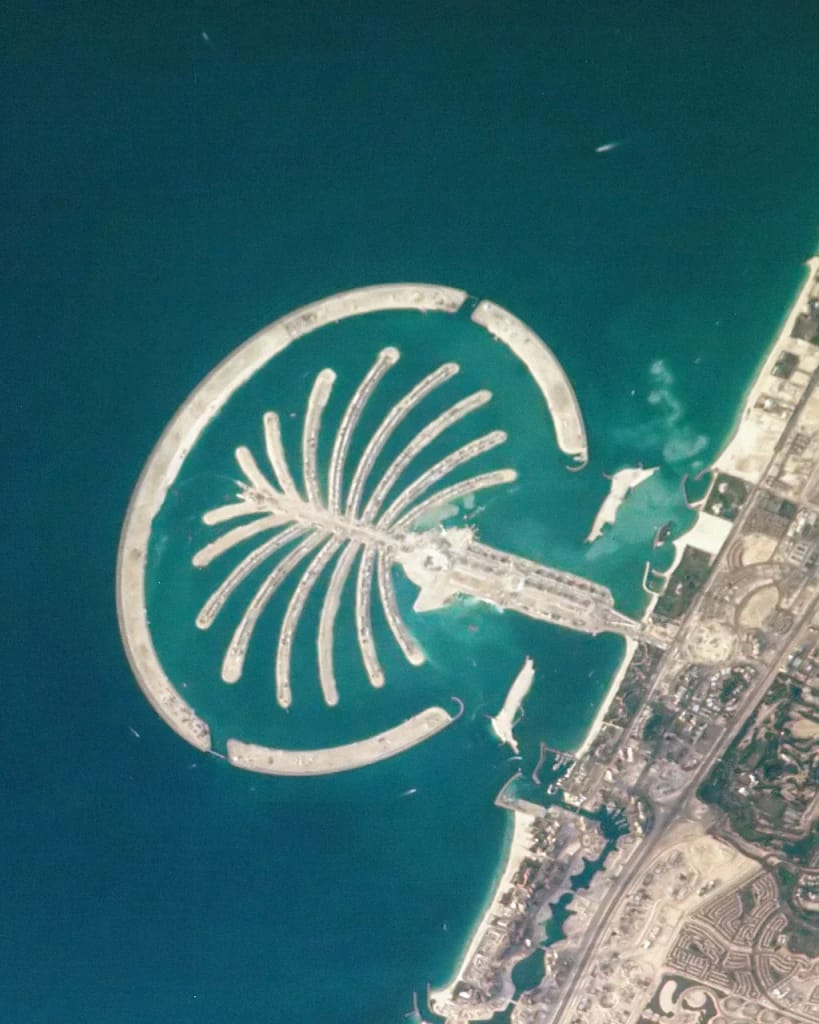
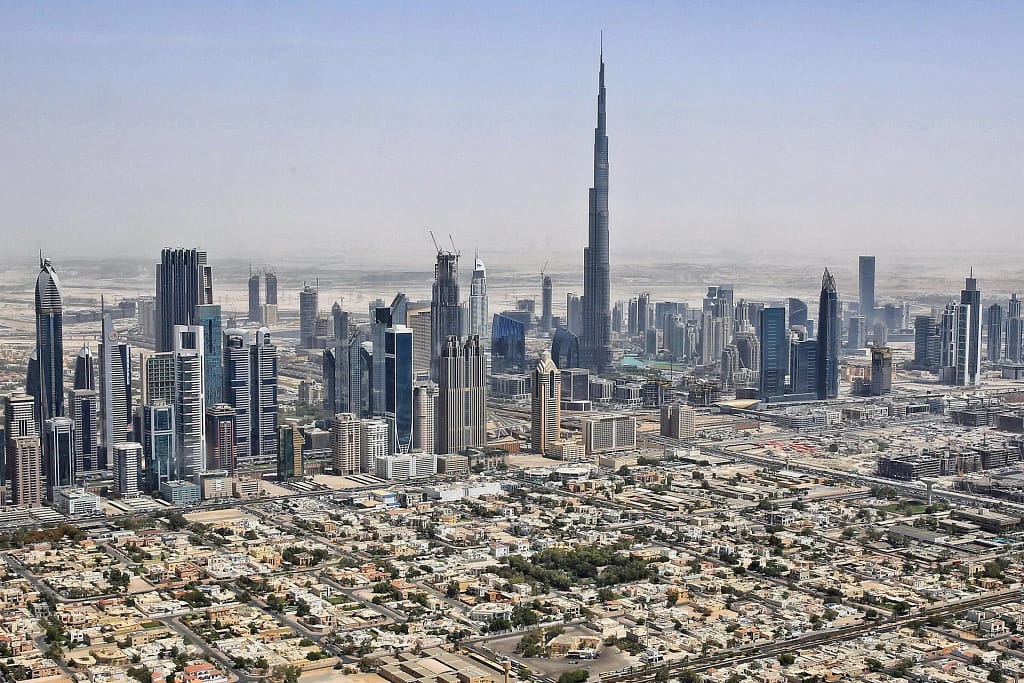
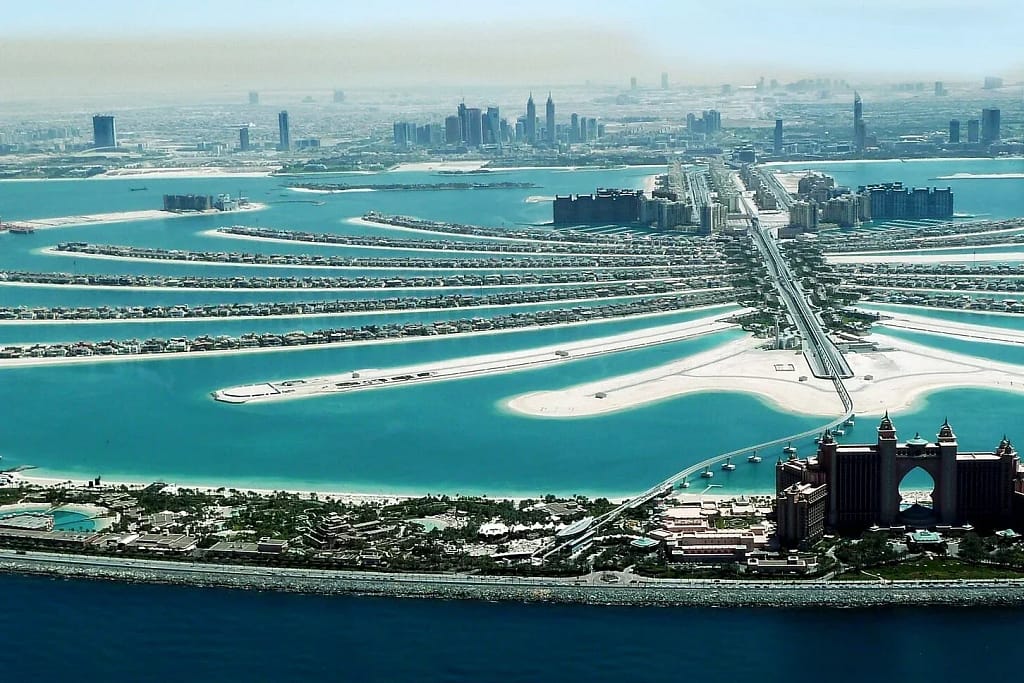
The freehold areas include most of the new neighbourhoods where the market is concentrated: Downtown, Business Bay, Dubai Marina, Palm Jumeirah, the villa communities and the large off-plan projects. Before buying property in Dubai in a less well-known area, it is still worth asking for written confirmation that it is open to foreigners.
UAE residency is not required: you buy with your passport. You can buy as an individual or through a company, but the choice of structure should be made with a tax adviser, because it changes taxes at home and inheritance.
The budget: how much you need for buying property in Dubai
The official sales register shows how much is really spent. In 2026, up to 10 October, the median price of an apartment sold was AED 1.22 million (about €0.30 million), and that of a villa AED 3.30 million (about €0.80 million). Half of the apartments sold cost less than that figure.
Purchase costs come on top of the price. As a rule of thumb, when buying property in Dubai it is wise to set aside between 6% and 8% of the price, depending on the commission and any mortgage: the example below calculates it item by item. Then there are annual costs, covered further on.
Price bands by type of home, areas and month-by-month sales are collected on our Dubai real estate page, built on the same register.
Dubai real estate
Market, areas, prices
Buying property in Dubai
Step-by-step guide
Buying off-plan
10 checks before signing
Luxury villas in Dubai
Palm Jumeirah and Emirates Hills
Dubai villa prices
Registered sales
Preliminary reading
Send us the property
Contact
Write to us

The cost of buying property in Dubai: a complete example
Here are the costs of two typical purchases, calculated on the fees published by the Dubai Land Department for registering a sale and for registering a mortgage. Euro figures are indicative.
| Item | Ready apartment AED 1,200,000, no mortgage | Ready villa AED 3,000,000, 70% mortgage |
|---|---|---|
| DLD transfer fee (4%) | AED 48,000 ≈ €11,663 | AED 120,000 ≈ €29,159 |
| Registration service partner (AED 4,000 + 5% VAT) | AED 4,200 ≈ €1,021 | AED 4,200 ≈ €1,021 |
| Title deed certificate and fixed DLD fees | AED 270 ≈ €66 | AED 270 ≈ €66 |
| Agency commission (assumption: 2% + 5% VAT) | AED 25,200 ≈ €6,123 | AED 63,000 ≈ €15,308 |
| Mortgage registration (0.25% of the loan) | — | AED 5,250 ≈ €1,276 |
| Fixed fees and service partner for the mortgage | — | AED 4,470 ≈ €1,086 |
| Total costs on top of the price | AED 77,670 ≈ €18,873 | AED 197,190 ≈ €47,915 |
| As a share of the price | 6.5% | 6.6% |
Three clarifications keep the example honest. First: the Dubai Land Department states the 4% fee as 2% paid by the seller and 2% by the buyer; who actually pays must be written in the contract, and in off-plan sales the buyer usually pays. In the table we show the full 4%, the worst case for the buyer.
Second: the agency commission is not set by law. The 2% is an assumption for the example; it must be agreed in writing before the viewing, and UAE VAT of 5% applies to the commission, as the Federal Tax Authority explains.
Third: banks have their own fees (arrangement, valuation, insurance) that vary from bank to bank and are not in the table. Ask for them in writing before accepting a mortgage offer.
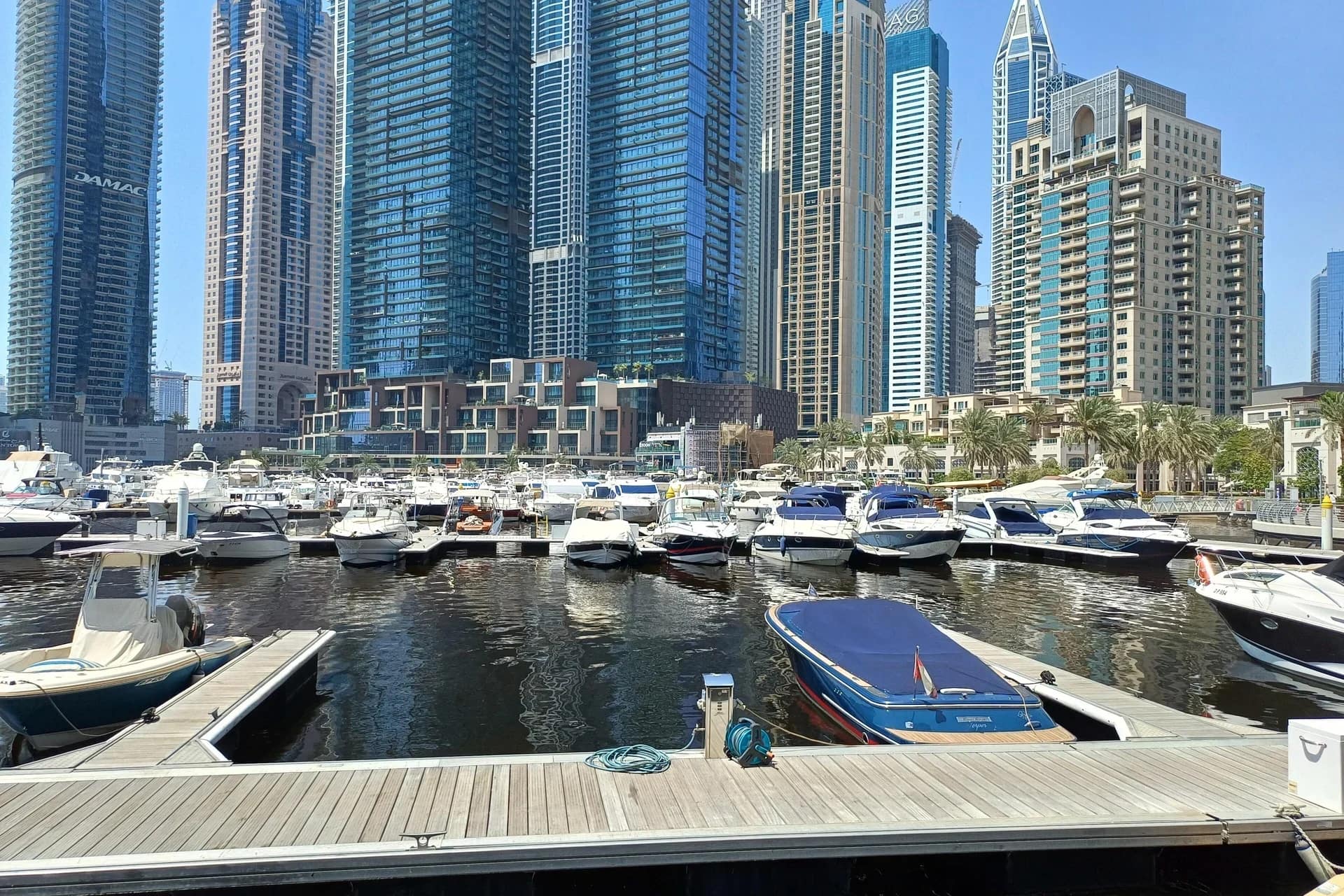

Invest
Dubai real estate in 2026: 108,562 registered sales, apartment and villa prices, areas, costs…

Getting a mortgage when buying property in Dubai
Buying property in Dubai with a mortgage starts from the rules of the UAE Central Bank, which sets how much a bank can lend against the value of the home. The mortgage regulation (in force since 2013, amended in 2019 and 2020) sets these limits for foreign residents:
| Case (foreign buyer resident in the UAE) | Maximum loan-to-value |
|---|---|
| First home up to AED 5 million | 80% |
| First home above AED 5 million | 70% |
| Second home or investment property | 60% |
| Off-plan property (any buyer) | 50% |
The same regulation sets the maximum mortgage term at 25 years and requires that the instalment, together with other debts, does not exceed 50% of income; for expatriates the maximum amount is seven years of annual income. Off-plan, the 50% limit applies to everyone, because completion risk is higher.
Non-residents can obtain a mortgage only from some banks and on their own terms, usually stricter. Before buying property in Dubai with financing, get a written pre-approval from the bank: signing a preliminary agreement without knowing whether the mortgage will come through is one of the most expensive mistakes.
The mortgage is also registered with the Dubai Land Department, with a fee of 0.25% of the loan amount: we included it in the cost example.
Invest
Buy off-plan property in Dubai with the right checks: escrow account, Oqood registration, payment…
Invest
Luxury villas in Dubai: Palm Jumeirah and Emirates Hills compared by an architect. Light…
Questions to ask the bank before buying property in Dubai
Before choosing a mortgage for buying property in Dubai, ask every bank the same questions and compare the written answers.
- What share of the value do you finance in my case, as a resident or non-resident?
- Is the rate fixed or variable, and for how long is it fixed?
- What are all the fees: arrangement, valuation, insurance, early repayment?
- Which income documents do you accept from someone working abroad?
- How long is the pre-approval valid, and what happens if the valuation is below the price?
The last question is the most important: if the bank values the home below the agreed price, it lends less, and the difference must be covered with your own funds.
The steps of buying property in Dubai, one by one
For a ready home bought from a private seller, the process is as follows. Off-plan it changes at some points, which we cover right after.
- Check the agency. In Dubai, brokers must be registered with the Dubai Land Department, which runs an official programme for real estate brokers. Ask for the agency and agent registration numbers and verify them.
- Viewing and checks on the property. Title deed, any seller’s mortgage, condition of the home, outstanding service charges, community rules.
- Offer and preliminary agreement. You sign a preliminary agreement with price, deposit, timing, who pays the fees and what happens if a party withdraws. Have a lawyer read it before signing.
- Deposit. Paid as set out in the agreement, by cheque or traceable transfer; never in cash, never to people other than those named in the contract.
- Developer’s no-objection certificate. For many homes in communities, a certificate confirming there are no outstanding service charges is required.
- Mortgage. If there is one, the bank values the property, confirms the loan and prepares the mortgage documents.
- Registration with the Dubai Land Department. At an authorised registration office the fees are paid, the price is settled and the transfer is registered.
- Title deed. The Dubai Land Department issues the title in the buyer’s name: from that moment the home is yours.
There is no notary as in many European countries: the legal check is done by the lawyer you choose, and the registration by the Dubai Land Department. This is why, when buying property in Dubai, the lawyer is not a cost to save on.
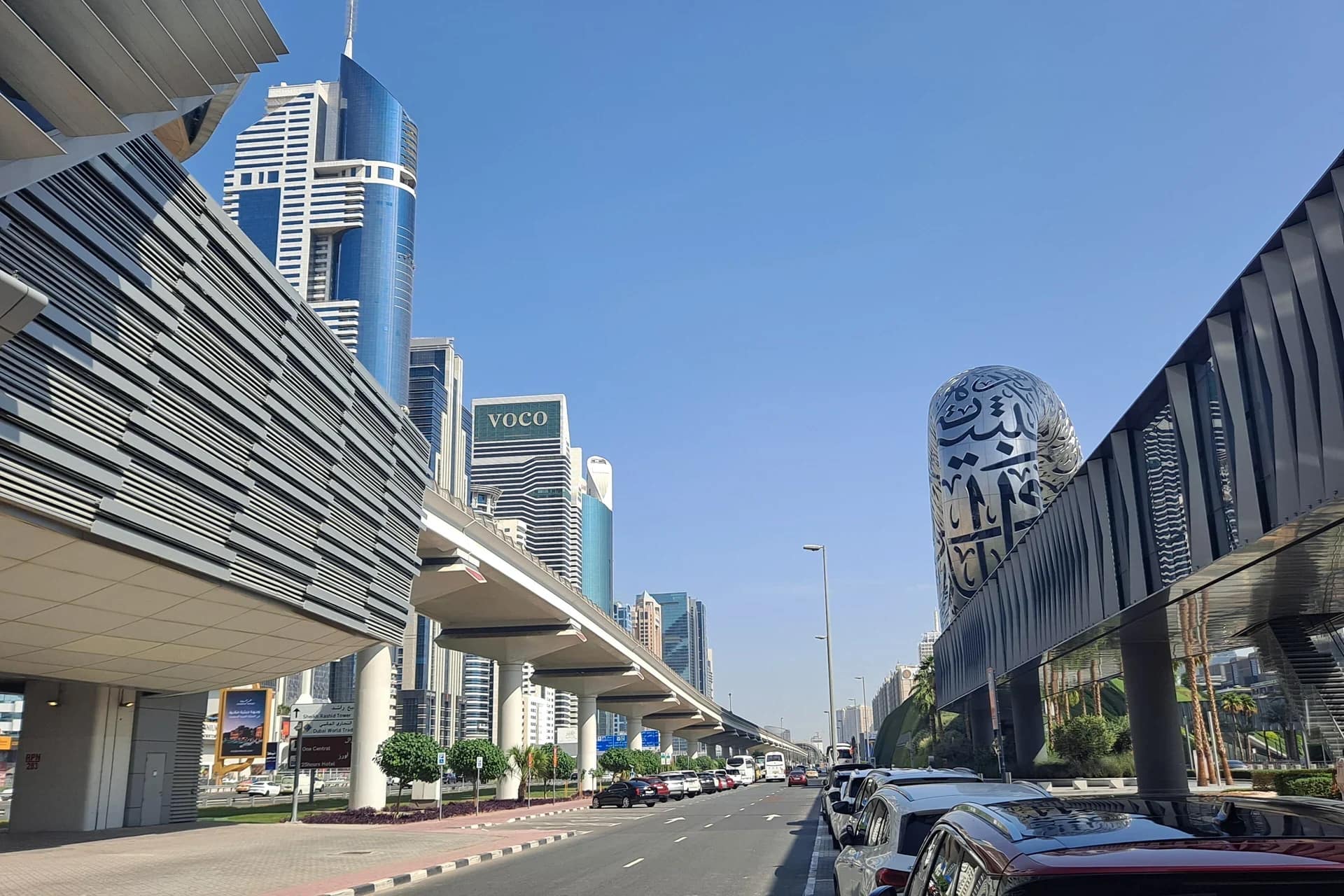
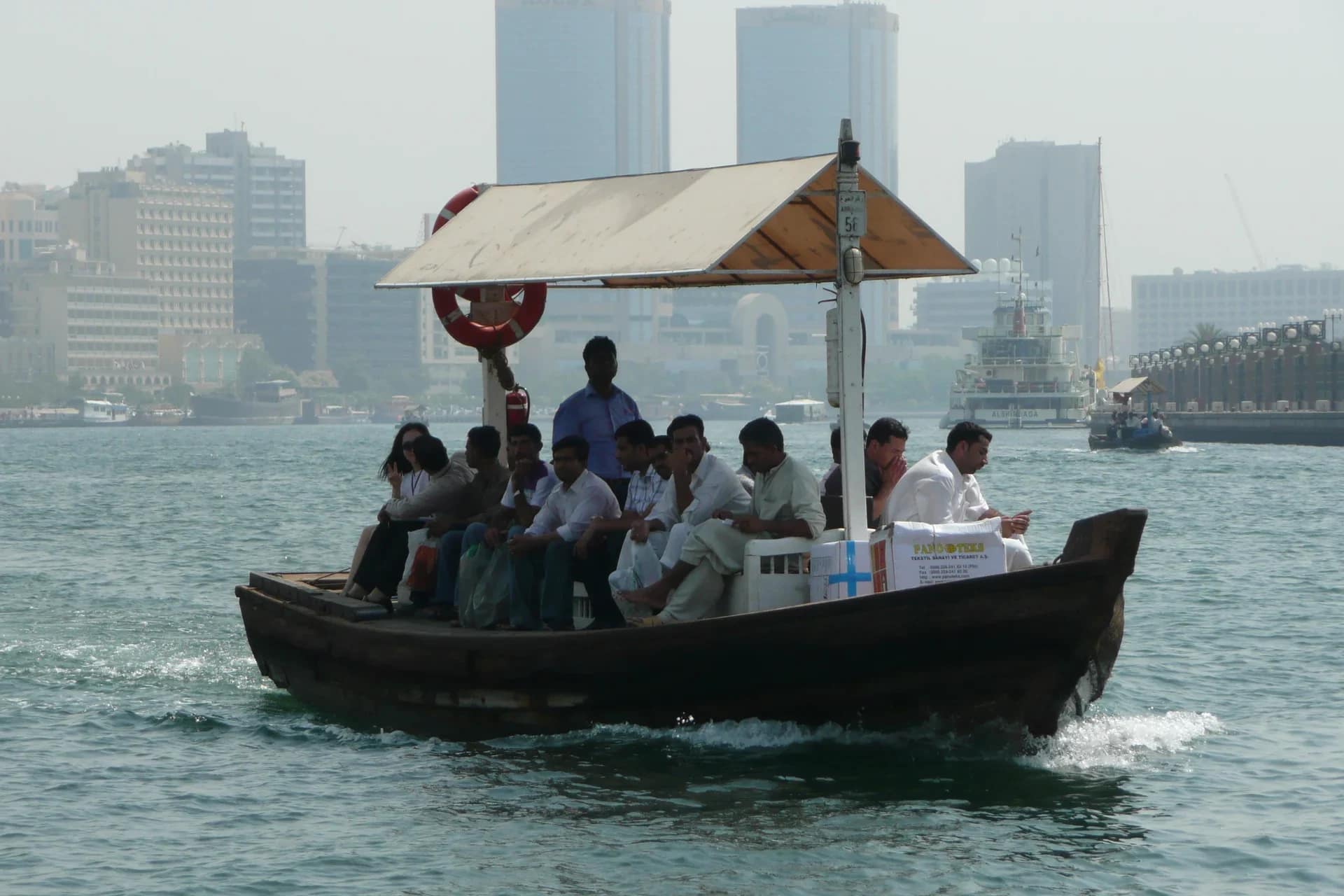
The timeline for buying property in Dubai
How long does buying property in Dubai take? It depends mostly on the mortgage and on how quickly the documents are gathered. This is the typical order for a ready home.
- Before the search: complete budget, tax adviser’s view on the structure, any bank pre-approval.
- Search and viewings: few areas, few properties, with questions prepared; for those abroad, video viewings and an in-person visit before deciding.
- Offer and preliminary agreement: negotiation, lawyer’s review, signature and deposit.
- Documents: developer’s no-objection certificate, bank valuation and confirmation if there is a mortgage.
- Transfer: registration with the Dubai Land Department, payment of the fees, title in the buyer’s name.
- After: utilities, insurance, service charges, management, declaration at home.
Without a mortgage and with documents ready, the transfer can happen a few weeks after the preliminary agreement. With a mortgage, the bank’s timing counts. The part that takes longest, almost always, is the choice: that is where it pays not to rush.
Invest
Dubai villa prices from Dubai Land Department registers: 9,869 sales in 2026, median prices by…
Invest
In 2026 only Greece and Dubai still grant residency through direct real estate purchase. Portugal…
Invest
Before buying a luxury villa in Italy, the Dominican Republic, Zanzibar or Dubai: send us the…
Buying property in Dubai off-plan: what changes
Three homes in four in Dubai are bought off-plan: in 2026, 76% of apartments and 72% of villas sold. Buying property in Dubai off-plan means paying in instalments for a home that will be delivered later, and it changes three things.
- Where the money goes. Under Law No. 8 of 2007, payments go into the project’s escrow account and, if the project is cancelled, must be refunded. Outside the escrow account the protection is lost.
- Registration. The contract is registered immediately with the Dubai Land Department with a provisional registration (Oqood); the final title comes at handover.
- The mortgage. Off-plan, the bank lends at most 50% of the value: the rest is paid from your own funds during construction.
The ten checks we make on every project (escrow account, contract, instalments, delivery, specifications, drawings) are in our guide to buying off-plan property in Dubai.
Ready or off-plan: the comparison
When buying property in Dubai, the first choice is between a property that exists and one that will be built. Here are the main differences, point by point.
| Ready home | Off-plan home | |
|---|---|---|
| What you check | The home as it is: condition, systems, exposure, neighbours | The project: drawings, specifications, developer, escrow account |
| How you pay | Deposit and balance at registration | In instalments during construction, into the escrow account |
| Maximum mortgage | Up to 80% for a first home (foreign residents) | 50% for everyone |
| Registration | Final title at transfer | Provisional registration (Oqood), title at handover |
| When you use it | Immediately | At handover, if on time |
| Main risk | Hidden defects, outstanding charges | Delays, different specifications, stalled project |
There is no right choice for everyone. Those who need the home soon, or want to rent it out at once, buy ready; those who can wait and want to pay in instalments look at the off-plan market, with more checks.
Architecture
Architectural assessment of a villa before buying: three checks, declared sources, what is observed…
Invest
Made in Italy chosen by an architect: verified Italian brands, districts and real villas by the…
Invest
Elite Luxury Real Estate is a premier luxury real estate agency specializing in exclusive…
Buying property in Dubai from abroad: the power of attorney
Many people decide on buying property in Dubai without being able to attend every step. Video viewings, remote signatures and a power of attorney make it possible, but they must be prepared carefully.
The power of attorney is usually signed before a notary in your home country and must then be made valid in the UAE: as a rule the UAE does not apply the apostille, so legalisation at the UAE diplomatic mission and then at the UAE Ministry of Foreign Affairs is needed. The exact steps and the Arabic translation should be checked with your lawyer before signing.
Two rules of prudence: give the power of attorney for a specific act, not for everything, and give it to someone who works for you, not for the seller. Those buying property in Dubai from abroad take the most risk precisely when they delegate too much.
Currency and payments when buying property in Dubai
The UAE dirham has a fixed exchange rate with the US dollar: AED 3.6725 to one dollar. For anyone buying property in Dubai with savings in euros, the currency risk is therefore between the euro and the dollar: it matters little for a purchase paid in one go, much more for an off-plan home paid in instalments over several years.
Payments are made with traceable instruments: transfers and bank cheques, as set out in the contract and, for off-plan homes, only into the project’s escrow account. Keep every receipt: it is needed for registration, for the bank and, at home, for your tax adviser.
Those paying from abroad should also consider the timing and checks of their own bank on international transfers, especially for large amounts: it is worth warning the bank in advance.


Invest
Luxury villas for sale in Italy, the Dominican Republic and Dubai, read with an architect’s method…
Choosing the area before buying property in Dubai
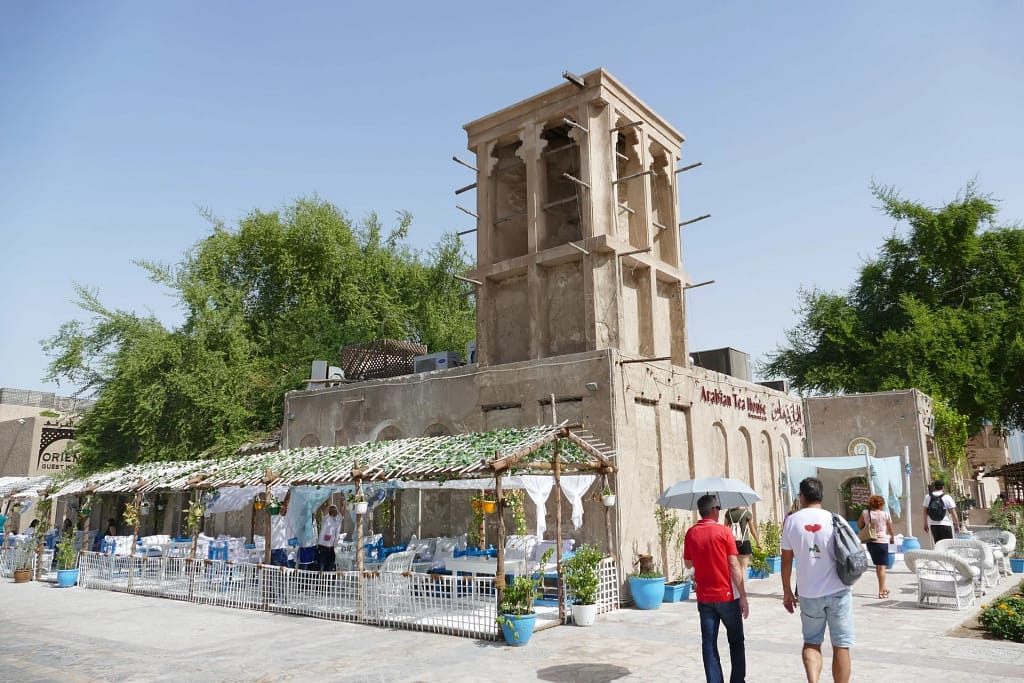
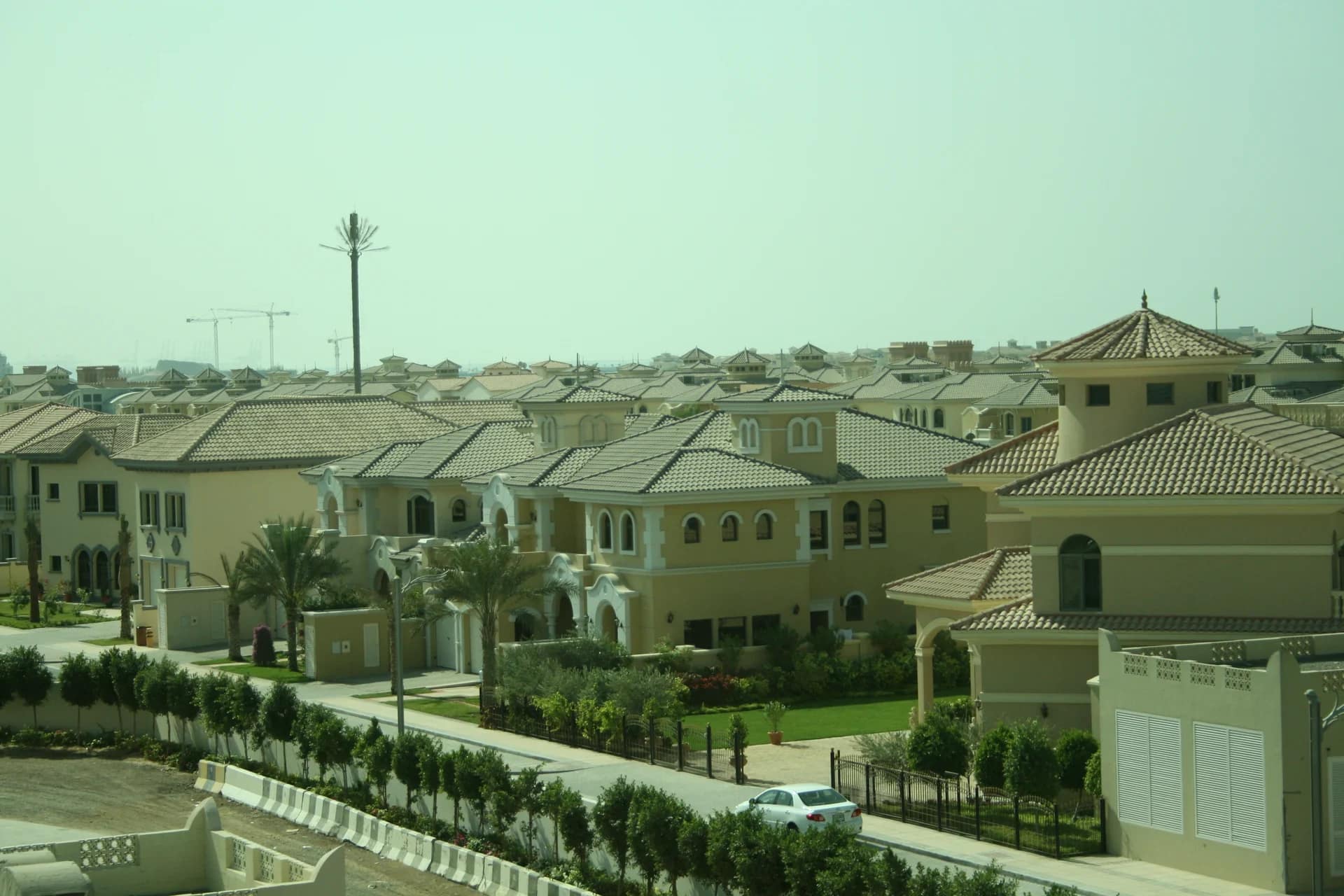
Before buying property in Dubai it is worth deciding what you will do with it: live there all year, spend the winter there, rent it out. Each answer leads to a different area and type of home: the centre with Downtown and Business Bay, the coast with Dubai Marina, islands such as Palm Jumeirah, the villa communities inland.
Apartment or villa is the second choice. An apartment offers shared amenities and simple maintenance; a villa offers space, a garden and privacy, but needs more care. Top-end villas are described in our guide to luxury villas in Dubai, with community-by-community prices in our article on Dubai villa prices.
The third criterion is the design. A west-facing apartment without shading or a villa with unreachable building services costs more for its whole life: it is the kind of check we make with the architecture studio’s method.

Agency, lawyer and architect: who does what
Buying property in Dubai requires three different skills, and it is worth not confusing them: those buying property in Dubai on their own risk asking the agency for what the lawyer should do.
- The agency finds the property, organises viewings, handles the negotiation and the practical steps. It must be registered, and the commission must be agreed in writing.
- The lawyer checks the title, the contract, the clauses on delays and termination, the power of attorney if you buy from abroad. They work for you, not for the seller.
- The architect reads drawings, specifications, exposure and building services, and for a ready home its condition. It is the check most often missing, especially off-plan.
Elite Luxury Real Estate follows Dubai properties with its Real Estate team and our contact Tatiana Juma; the founder, an architect, guarantees the reading method. We work with DAMAC as an agent, and we disclose it.
After the purchase: annual costs, renting out and management
Buying property in Dubai does not bring an annual property tax like those in many European countries, but every year you pay the service charges of the building or community. They are calculated per square metre and vary greatly from one project to another: approved rates can be checked in the Dubai Land Department’s official service charge index.
Those who want to rent must distinguish: long-term lets are registered with a standard contract; short-term lets to tourists require a permit from Dubai’s tourism authority and registration of the home as a holiday home, and many buildings have their own rules. It must be checked before buying, not after.
For those living abroad who have decided on buying property in Dubai, you also need a contact person on site, air-conditioning maintenance even when away and insurance for the home and its contents. And anyone wanting to redo the interiors will find on our Made in Italy page the criteria for choosing materials suited to the climate.

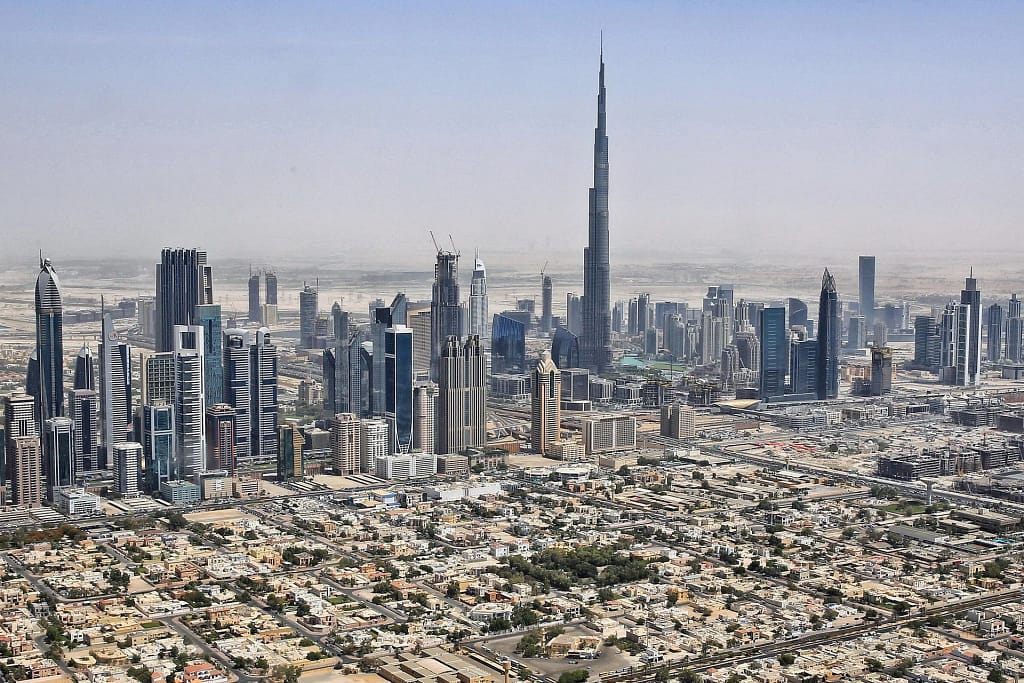
Buying property in Dubai to rent out: the numbers to run
People thinking of buying property in Dubai to rent it out often look at the gross yield, that is the annual rent divided by the price. It is a useful figure, but incomplete: what counts is the net yield.
To calculate it, subtract from the annual rent the service charges, maintenance, management if entrusted to a company, the months the home stays empty and, for short lets, cleaning and permit costs. Then divide by the price plus all purchase costs, not by the price alone.
Two homes with the same rent can have very different net yields: a building with high service charges or a badly oriented home that uses a lot of energy eat a large part of the income. And the yield must be compared with the risk: an off-plan home yields nothing until handover.
This is why, before buying property in Dubai as an investment, it is worth asking in writing for the building’s service charges, registered rents for similar homes in the same area and the building’s rules on short lets.
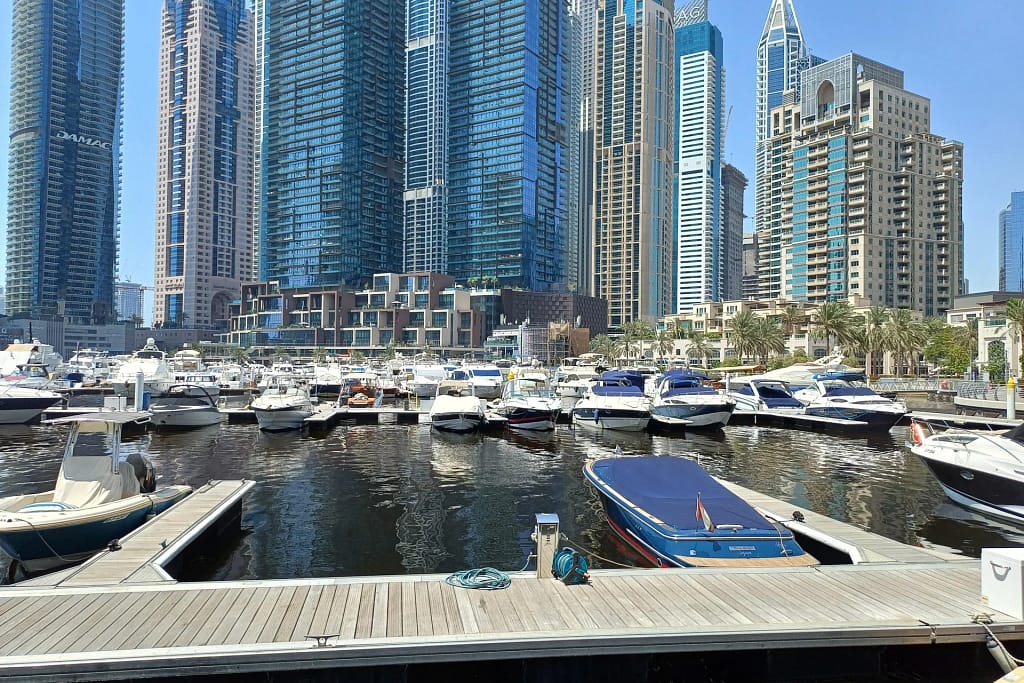
Buying a plot and building a villa
Alongside those buying a finished home, there are those who want to build one: buying a plot in a villa community and having a bespoke house designed. It is a smaller market, but it exists: the Dubai Land Department register records sales of residential land every year, and in our article on Dubai villa prices we collected the sizes of the plots sold, area by area.
Building requires more steps: the community rules on heights, setbacks and façades, approval of the design by the community developer and the authorities, a technician licensed on site for permits, a contractor and site supervision. In return you get a home designed for the climate, the light and the way of life of the people who live in it.
The architecture studio of Federico Cappellina has designed two villa projects for Dubai, Iron Villa and Rock House. Anyone assessing a plot can ask us for a first reading: it is the point where an architect is worth most, before buying.
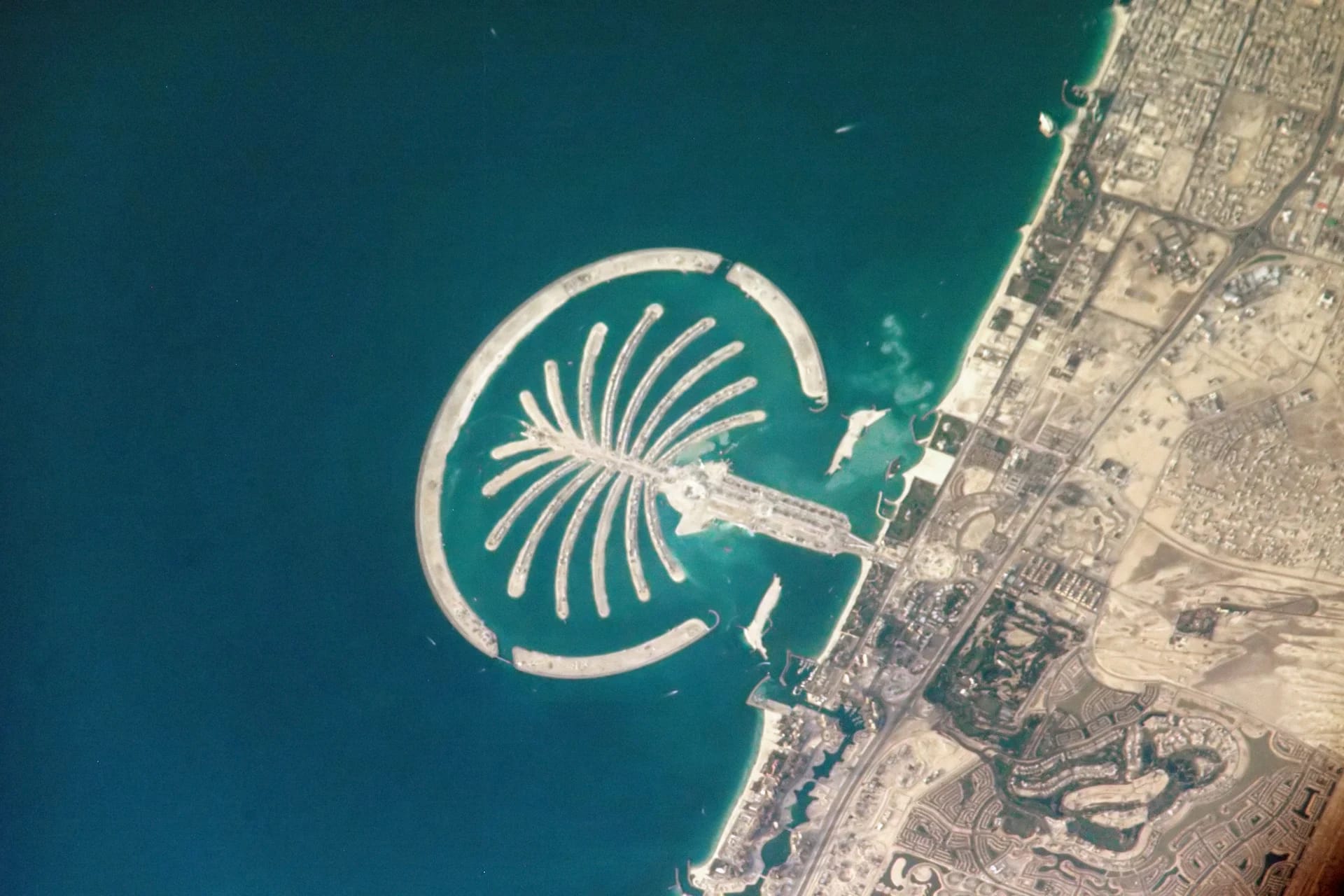
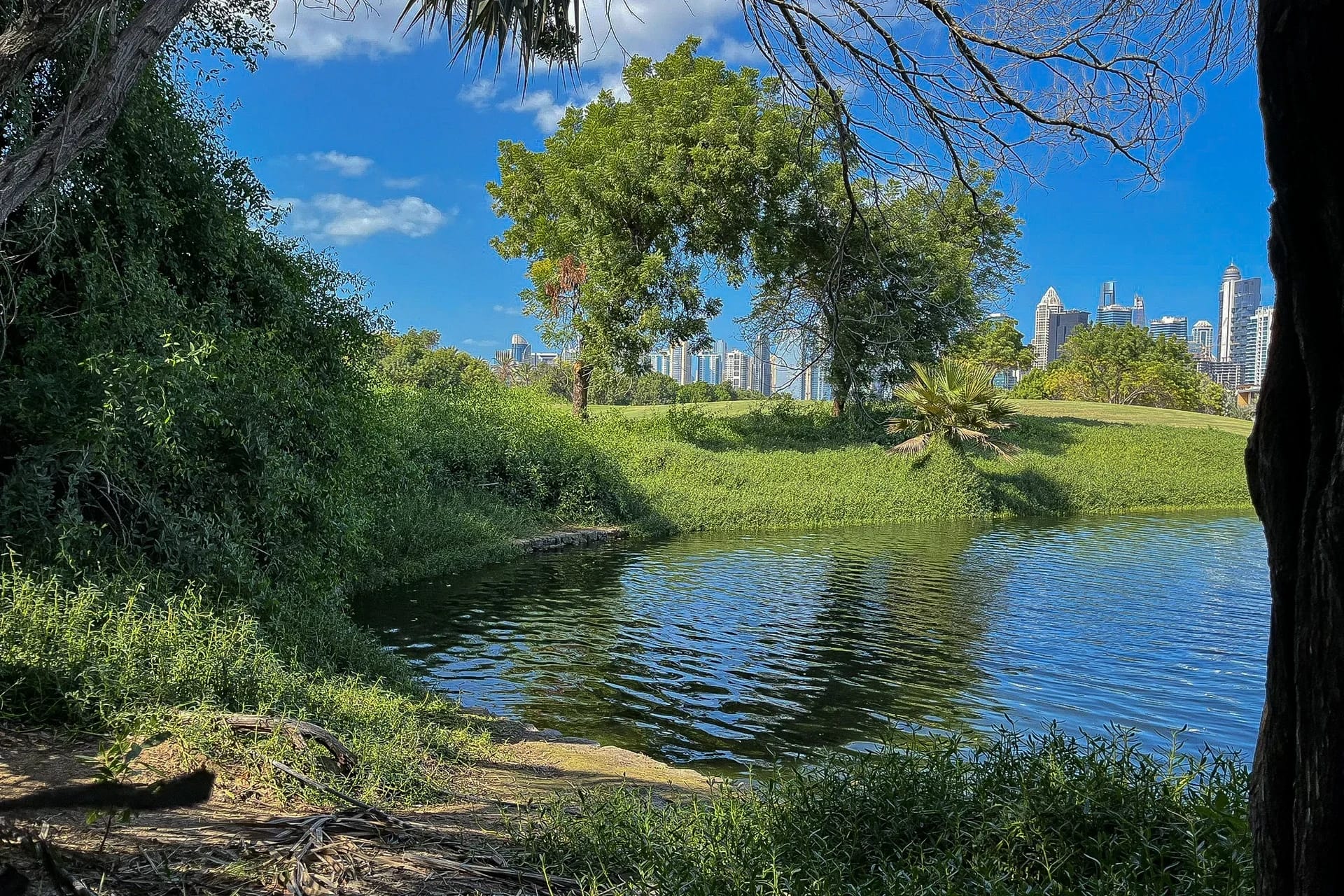

Reselling: what to know at the time of purchase
Those buying property in Dubai would do well to think about resale from the start, because some choices made at purchase make it easier or harder.
- Service charges up to date. To resell you usually need the developer’s no-objection certificate, which is only issued without arrears.
- The mortgage to be repaid. If the home is mortgaged, the bank must be paid before the transfer.
- Dubai Land Department fees are paid again at every transfer: they are part of the cost of entry and exit.
- Off-plan, before handover, resale depends on the developer’s rules and on the share of the price already paid: read them in the contract.
A well-designed, well-oriented home in a well-managed building resells better than one chosen only for its entry price. It is one more reason to look at the design before buying property in Dubai.
Buying property in Dubai and the Golden Visa
Buying property in Dubai can give the right to the long-term residence visa for real estate investors. The Dubai Land Department handles the Golden Visa application for investors: the stated threshold is a property value of at least AED 2 million, with conditions and documents to be checked at the time of application.
Two warnings. A residence visa does not automatically make you tax-resident in the UAE and does not, by itself, change your tax residence at home. And choosing a home only to reach the visa threshold often leads to the wrong property. Other residency-by-investment options are in our Golden Visa guide.

Taxes at home when buying property in Dubai
Your home country may tax property abroad and its income, because many countries tax residents on their worldwide income. Italy is a clear example of the obligations to expect:
- RW section. Residents of Italy report property held abroad in the RW section of their tax return, as the Agenzia delle Entrate instructions explain.
- IVIE. As a rule, residents of Italy pay the tax on the value of property held abroad, calculated on the contract cost or market value.
Any rents must be declared under the rules of your country of residence. Every situation is different (individual or company, first or second home, letting or own use): before signing, talk to your tax adviser. This is not tax advice, but the points to bring to them.


The most common mistakes when buying property in Dubai
- Signing the preliminary agreement without mortgage pre-approval. If the mortgage does not come through, the deposit is at risk.
- Paying outside the escrow account for an off-plan property: it is the only payment protected by law.
- Not writing down who pays the 4% fee. The Dubai Land Department splits it in half; without a clear clause there is a dispute at signing.
- Forgetting VAT on the commission and the bank’s fees in the budget.
- Not checking the seller’s outstanding service charges: they block the transfer.
- Buying from the rendering without reading drawings and exposure.
- Forgetting home: tax reporting and taxes on property abroad must be planned in advance.
Each of these mistakes is avoided with a question asked at the right time. For buying property in Dubai calmly, it is enough to follow the order of the steps and not skip any.
The checklist before signing
Before signing the preliminary agreement when buying property in Dubai, make sure you have all these answers in writing.
- Registration numbers of the agency and the agent, and the agreed commission with VAT.
- A copy of the seller’s title deed, or for off-plan homes the number of the project’s escrow account.
- A clause on who pays the Dubai Land Department’s 4% fee and the other fees.
- Written mortgage pre-approval, if needed, with all the bank’s fees.
- Status of service charges and estimated annual amount.
- Drawings, specifications and exposure of the unit, not only of the complex.
- Timing of the transfer or handover, and what happens in case of delay.
- The lawyer’s opinion on the contract and, if you buy from abroad, a power of attorney limited to the act.
- Your tax adviser’s opinion on the purchase structure and obligations at home.
If one of these answers is missing, stop and ask for it. Buying property in Dubai well means arriving at the signature with no open questions.

An architect's eye before buying property in Dubai
A listing shows the home at its best moment. Before buying property in Dubai, an architect looks at five things photos do not show: exposure to the afternoon sun, shade from loggias and overhangs, where the building services are and how they are reached, materials against sand, sun and salt, layout and privacy from neighbours.
They are the same things the studio checks when designing its villas in Italy. Applied to a home in Dubai, they help tell a property that is pleasant to live in from one that is merely easy to sell. If you already have a listing or a dossier, you can ask us for a preliminary reading.
Official sources for buying property in Dubai
- Dubai Land Department, Know your rights: ownership by foreigners, escrow, registration.
- Dubai Land Department, sale registration: fees and charges.
- Dubai Land Department, mortgage registration: fees and charges.
- UAE Central Bank, mortgage regulation.
- Dubai Law No. 8 of 2007 on escrow accounts.
- Dubai Land Department, programme for real estate brokers.
- Dubai Land Department, service charge index.
- Dubai Land Department, Golden Visa for investors.
- UAE Federal Tax Authority, VAT on real estate.
- Agenzia delle Entrate (Italy), RW section instructions.
- Dubai Land Department, open sales data.
Fees are those published at the date of this article (October 2026) and may change: always have the exact amount calculated before signing.
Frequently asked questions about buying property in Dubai
Can a foreigner buy property in Dubai?
Yes, as a freehold owner in the areas designated for foreigners by Law No. 7 and Regulation No. 3 of 2006. Residency is not required: you buy with your passport.
How much does buying property in Dubai cost on top of the price?
About 6–8% of the price: the Dubai Land Department’s 4% transfer fee, registration fees, agency commission with 5% VAT and, if there is a mortgage, mortgage registration at 0.25%. The example in the guide calculates each item.
Who pays the Dubai Land Department's 4% fee?
The Dubai Land Department states it as 2% paid by the seller and 2% by the buyer. Who actually pays must be written in the contract; in off-plan sales the buyer usually pays.
Can I get a mortgage for buying property in Dubai?
Yes. For foreign residents, the Central Bank sets a maximum of 80% of the value for a first home up to AED 5 million, 70% above, 60% for second homes and 50% off-plan. For non-residents the terms depend on the bank.
Do I need a notary?
No. The legal check is done by a lawyer of your choice; the transfer of ownership is registered by the Dubai Land Department, which issues the title in the buyer’s name.
Does buying property in Dubai give residency?
A real estate investment of at least AED 2 million can qualify for the investor Golden Visa, under the conditions set by the Dubai Land Department. The visa does not by itself change your tax residence at home.
Do I have to declare the property at home?
It depends on your country. Residents of Italy, for example, report it in the RW section and as a rule pay the tax on property abroad; rents follow the tax rules of the country of residence. Check with your tax adviser.
Can I buy property in Dubai through a company?
Yes, in some cases, but the choice between individual and company changes taxes at home, management and inheritance. It should be decided with your tax adviser before signing, not after.
What documents are needed for buying property in Dubai?
A valid passport, the preliminary agreement, proof of payments and, if you are not present, a power of attorney legalised for the UAE. For resale in a community, the developer’s no-objection certificate is also needed.
Can a couple, or parents with children, buy together?
Yes: the title can be registered to several people, with shares stated at registration. Before choosing how to register the home, talk to your lawyer and tax adviser, because the choice affects taxes and inheritance.
Should I visit the home in person?
Yes, at least once before deciding. Video viewings help to choose, but light, noise, heat on the terraces and the quality of finishes can only be understood on site.
How long does buying property in Dubai take?
For a ready home without a mortgage, the transfer can happen within a few weeks of the preliminary agreement; with a mortgage, the bank’s timing applies. Off-plan you sign and register at once, but the home arrives at the project’s handover.
Thinking of buying property in Dubai? Let us start from the property
Send us the link or the dossier of the home you are interested in, or tell us your budget, use and timing: the Real Estate team will reply with the points to check and, if needed, other properties to compare.
Already have a property in mind?
Send us the listing: we reply with the points to check.
Discover the UHNW Lifestyle
Real Estate articles: markets read with sources.