
ELRE
Buy a villa in Italy: an architect's guide for foreign buyers
Buy a villa in Italy: territories, prices, taxes and the seven steps of the purchase, read by architects and backed by official sources.
Buy a villa in Italy: where to start
Anyone who wants to buy a villa in Italy usually opens a portal and faces thousands of listings sorted by price. But Italy is not one market. It is a set of landscapes, with different rules, climates and ways of living. A villa on Lake Como and a farmhouse in the Val d’Orcia share a cadastral label and not much else.
This guide is written by architects and does one thing: it helps you decide where to look and what to check before making an offer. Each territory links to its own detailed guide, tax figures come from official sources, and prices are declared for what they are. We have no listings to offer you on these pages. This is a technical reading, to use alongside the work of your agent and your notary.
Buy a villa in Italy: the essentials
- The territory comes before the house: Tuscany, the lakes, the Venetian coast and the Veneto hills are different purchases with different checks.
- Published average prices almost always refer to apartments and are asking prices: a villa needs a valuation and real comparable sales.
- Purchase taxes depend on the seller: 9% registration tax from a private seller, VAT from 10% to 22% from a company.
- Villas registered as A/8, like A/1 and A/9, get no «first home» relief.
- Conformity between project, reality and cadastre must be checked before the offer, not on the eve of completion.
Luxury villas in Tuscany
An architect's guide
Lake Como real estate
An architect's guide
Buy property in Sardinia
An architect's guide
Buying a house in Sicily
An architect's guide
Rome real estate
An architect's guide
Investing in Jesolo
The Venetian coast
Preliminary reading
Understand a villa before you buy it
The method
Three checks, declared sources
Signature Architecture
Design or renovate a villa
Luxury villas for sale
International selection
Real estate FAQ
Questions with sources
Contact
Write to us
Best places to buy a villa in Italy: territories compared
The table sums up the territories we follow closely. It is not a ranking: each landscape asks something different of those who live in it, and the right question is not which is best but which suits the life you want.
| Territory | What you buy | The design question | Our guide |
|---|---|---|---|
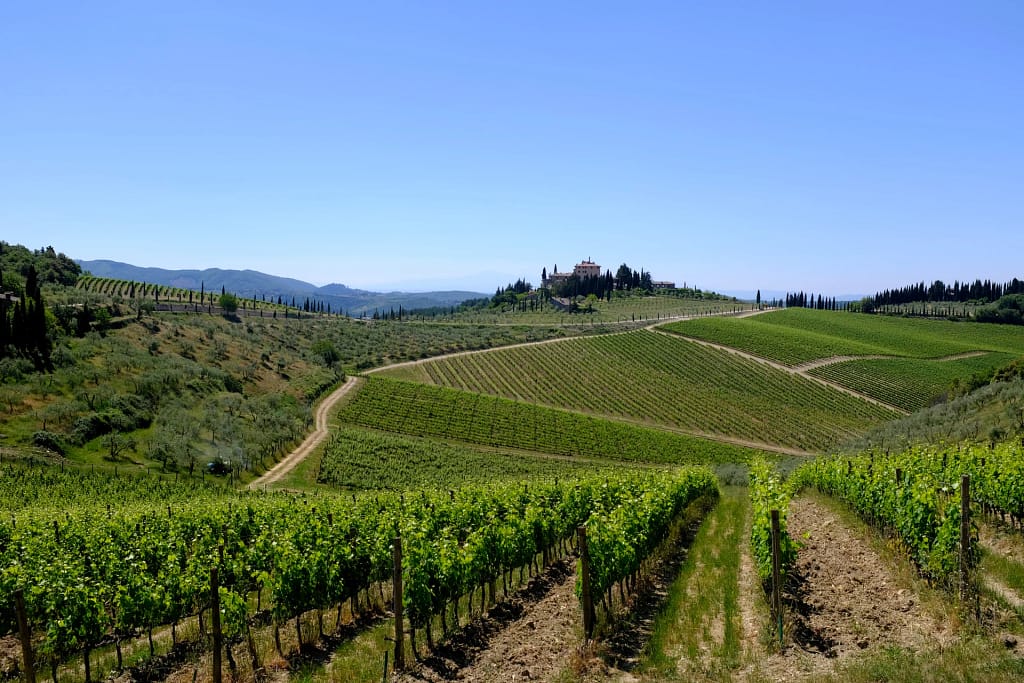
| Tuscany | Hilltop farmhouses, period villas, estates with vines and olives | The landscape governs everything: gravel roads, cypresses, stone walls, water | Luxury villas in Tuscany |
| Lake Como | Period villas with parks, villas on the slope, village houses | Slope, winter sun, retaining walls, jetties and the lake’s public domain | Lake Como real estate |
| Lake Garda | Villas with olive groves, contemporary villas, residences with pools | Three regions, wind, seasonality, rock on the northern shores | Italian guide: Lago di Garda |
| Venetian coast and Jesolo | Seaside residences and new towers by well-known architects | Recent construction, shared costs, management and letting | Investing in Jesolo |
| Veneto hills and Verona | Bespoke contemporary villas and building plots | Light, volumes, envelope: this is where the studio works | Signature Architecture |

Explore our projects

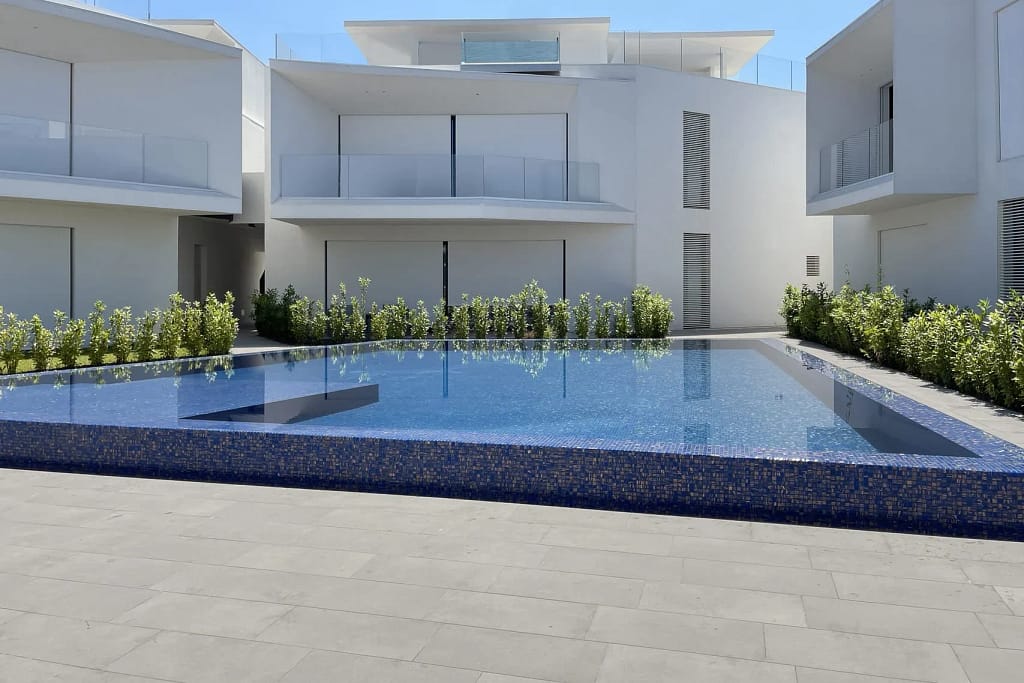
Metra glazing, Viabizzuno and OTY lighting, infinity pool: design and site direction by the studio.
Tuscany: the landscape is the first project
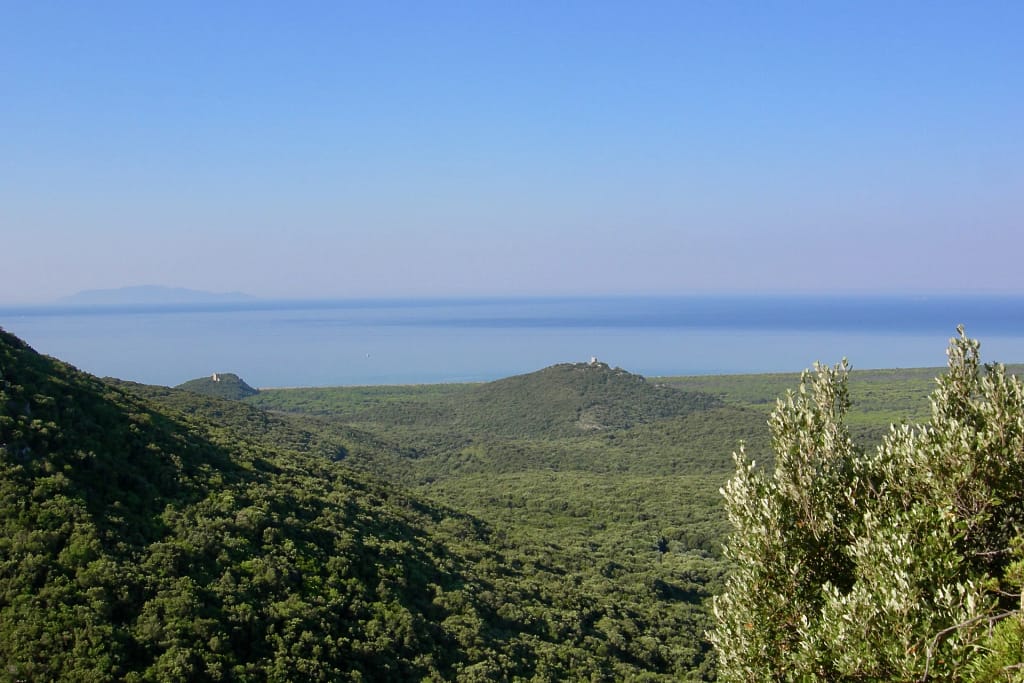
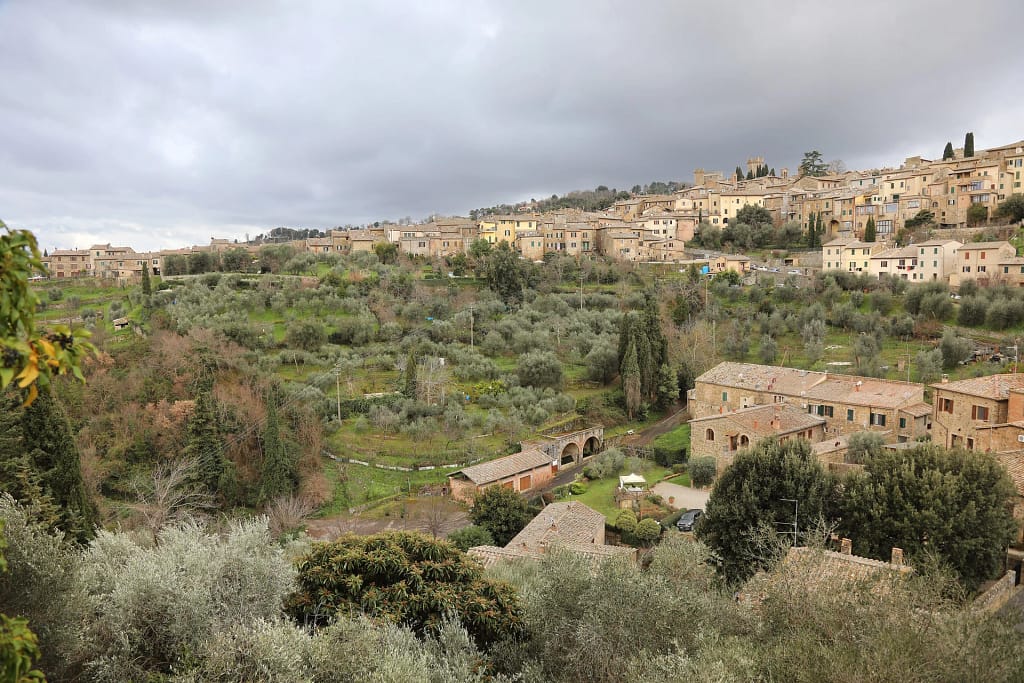
In Tuscany the house is part of a larger design: the gravel road, the row of trees, the proportion between building and hill. Buying here means accepting strict landscape rules and running costs tied to the land. Our guide Luxury villas in Tuscany explains the areas and the twelve checks.
Lake Como: the slope and the shore
On Lake Como a villa is born from a steep slope and nearby water: terraces, retaining walls, hours of winter sun, concessions for jetties and boathouses. These decide long-term value more than the view does. Our guide Lake Como real estate takes them one by one.
Lake Garda: three regions and a different climate
Garda has moraine hills and olive groves in the south, rock walls and wind in the north, and it touches Lombardy, Veneto and Trentino-Alto Adige. Rules change with the shore, and tourism shapes daily life in summer. It is the lake closest to our studio, and an English guide is on its way; the Italian one is online.

The Venetian coast and Jesolo: the contemporary seaside home
On the Venetian coast buyers mostly choose recent residences, often by international architects, with shared services and a second-home market. Build quality, service charges and management matter most. We cover it in Investing in Jesolo.
The Veneto hills: building instead of buying
Between Verona and Vicenza the market for top-level contemporary villas is small, and for many clients the answer is to design one. If that is your case, the way is Signature Architecture.
How much does it cost to buy a villa in Italy?
There is no reliable average price for luxury villas in Italy. The most recent public figures we have verified are asking prices for apartments of one to five rooms, collected by Casa.it in May 2026 (in Italian):
| Area | Average asking price, €/m² | What it measures |
|---|---|---|
| Lake Garda (average) | 4,768 | Apartments of 1 to 5 rooms, Casa.it, May 2026 |
| Lake Como (average) | 3,765 | Apartments of 1 to 5 rooms, Casa.it, May 2026 |
| Torri del Benaco, Garda | 7,072 | The highest town in the Garda survey |
| Menaggio, Como | 5,461 | The highest town in the Como survey |
Read them with three cautions: they refer to apartments, not villas with gardens; they are sellers’ requests, not sale prices; and a villa with a shoreline, park or view normally sits above the town average. They show the gap between places, not the value of a house.
For an official reference use the quotations of the Italian property market observatory (OMI), which give ranges by zone and condition. Then ask the agent for completed sales of truly comparable houses and have a surveyor value the villa. For unique houses, value is built, not read from a table.
Explore our projects

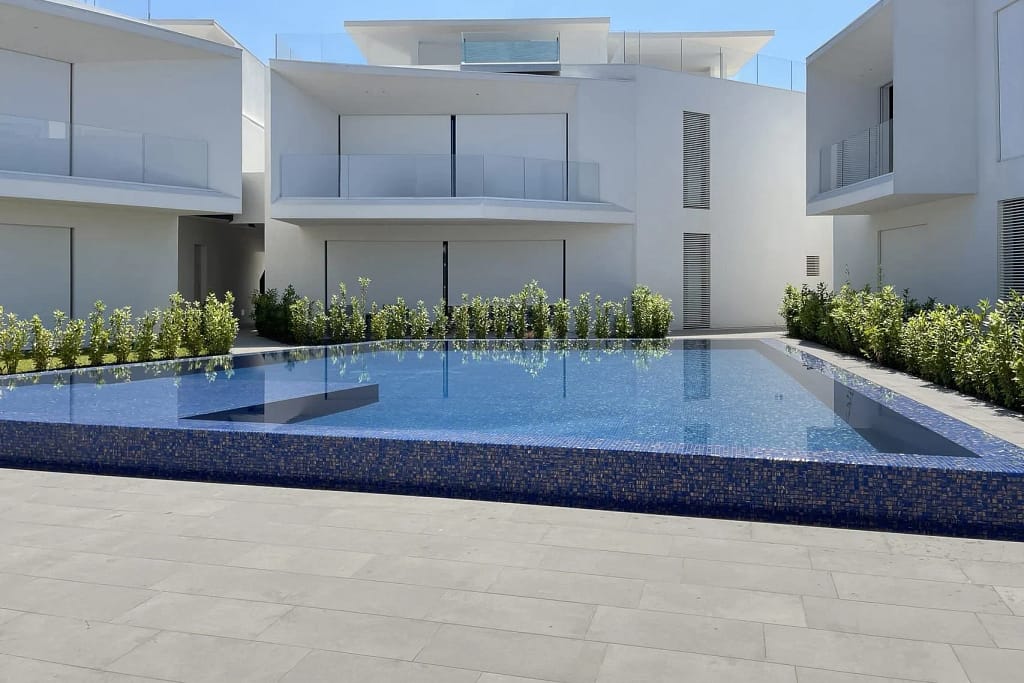
Schüco glazing, Minimal Cucine and Modulnova kitchen, Poliform and Baxter furniture, Occhio lighting, MAFI wood.
What is happening at the top of the market
According to Knight Frank on 25 September 2026, prime residential transactions in Italy rose 140% in the first eight months of the year compared with 2025. That figure refers to the firm’s own activity, so it is a signal rather than a measure of the whole market. In 2025 about 80% of its completed sales were in Tuscany and the Lakes; in 2026 activity has spread to Rome and Milan. Its reading is that Italy is increasingly chosen as a longer-term base rather than only a holiday home.


Invest
Elite Luxury Real Estate partner network: luxury real estate agencies, developers and local…
How to buy a villa in Italy: the seven steps
The sequence is the same everywhere; only the weight of each step changes. Our most frequent advice is to move the technical work towards the start, when choices are still free and checks are cheap:
- Define the life before the house. How many months a year, with whom, how far from an airport and a hospital. The answer sets the region, the type of house and the running budget.
- Choose the territory in the low season. A villa is measured in January: light, damp, open roads, closed shops. The same house in August tells only half the story.
- Have the villa read before you offer. A surveyor compares approved project, actual state and cadastre, and looks at structure, systems, restrictions and what can be changed. This is when a check costs little.
- Get an Italian tax code. You need a codice fiscale to sign any deed. Non-residents normally appoint someone to file the request at the Revenue Agency in Italy; consulates step in only in limited cases, and procedures differ from one to another (example: Consulate in Edinburgh).
- Make a written offer. The proposta is a written commitment, often backed by a cheque held as a guarantee. Have it read before you sign: it can bind you without any further document, and it should carry the conditions that protect you, such as the outcome of the checks.
- Sign the preliminary contract and consider registering it. It sets price, timing and deposit. It can be registered if drawn up as a public deed or an authenticated private deed: that protects the buyer, but the effects lapse if the final deed is not registered within three years (art. 2645-bis of the Civil Code, in Italian).
- Complete with the notary. The notary draws up the deed, runs the searches and collects the taxes for the State. Ask early how the deed will be explained to you if you do not read Italian, and whether you will sign in person or by power of attorney. If the house is a listed cultural asset, the transfer must be notified to the Ministry, and the State normally has 60 days to exercise its right of first refusal; the deed stays suspended until then (art. 59 and art. 61 of Legislative Decree 42/2004, in Italian).
Taxes when you buy a villa in Italy: verified figures
Taxes depend on who sells. The table shows the values given by the Italian Revenue Agency for a purchase without «first home» relief:
| You buy from | Registration tax | VAT | Mortgage tax | Cadastral tax |
|---|---|---|---|---|
| Private seller or VAT-exempt company | 9% (minimum €1,000) | — | €50 | €50 |
| Company with VAT, ordinary home | €200 | 10% | €200 | €200 |
| Company with VAT, categories A/1, A/8, A/9 | €200 | 22% | €200 | €200 |
If you buy from a private seller as an individual, the 9% can generally be charged on the cadastral value rather than the price: that value is the cadastral income multiplied by 1.05 and by 120. The Agency’s example is an income of 900 euros, which gives a value of 113,400 euros and a tax of 10,206 euros. Your notary confirms whether this applies to your case.
The «first home» relief, with registration tax at 2%, does not apply to A/1, A/8 and A/9 homes: upscale homes, villas, and castles or palaces of outstanding value. For other categories it has precise conditions, including residence in the municipality within 18 months.
Be careful: a house called a «villa» in a listing may be registered differently, and the category changes the taxes. A/1, A/8 and A/9 homes also pay IMU, the municipal property tax, even as a main residence, at a base rate of 0.5% that the municipality may vary (Department of Finance, in Italian).
Invest
Luxury villas in Tuscany: types, six areas compared, landscape rules, taxes and the 12 checks an…
Invest
Why invest in Jesolo in 2026: Richard Meier architectural brand, growing demand and rental yields…
Architecture
Architectural assessment of a villa before buying: three checks, declared sources, what is observed…
Invest
Luxury villas for sale in Italy, the Dominican Republic and Dubai, read with an architect’s method…
Invest
Luxury off-plan property in Italy, the Dominican Republic, Zanzibar and Dubai: risks…
Can foreigners buy a villa in Italy? Reciprocity and residence
Citizens of the European Union and the European Economic Area face no limits. The same goes for non-EU citizens living in Italy with a regular permit for work, family or study. For others the condition of reciprocity in art. 16 of the preliminary provisions to the Civil Code applies, unless a bilateral investment treaty covers real estate: the Ministry of Foreign Affairs publishes the list of countries and treaties, and the notary carries out the check. Americans and British buyers should ask the notary to confirm their position at the start, using that list.
For those who truly move their residence there is the regime for new residents: a fixed tax on foreign income, which since 2026 has been 300,000 euros a year (in Italian) for up to 15 years. According to Knight Frank about 5,000 people use it, up from 3,000 two years ago. It is a personal tax decision that does not depend on the house you buy: discuss it with a tax adviser, because the rules have changed several times.

Architecture
Luxury interiors for villas: the 12 systems of The Villa Edit, from passive house to furniture…

Conformity and restrictions: where the real problems start
Most surprises come from the paperwork, not the walls. The deed of sale must declare that cadastral data and plans match the actual state of the property: the rule is art. 29, paragraph 1-bis, of Law 52/1985. Cadastral conformity is not the same as building regularity, though; they are two separate tracks (in Italian). A veranda may appear on the cadastral plan and never have been authorised.
In older villas it is common to find extensions, pools, pergolas and changes of use made at different times. They must be reconstructed by comparing the approved project with what you see. Then come the restrictions: the 300-metre belt along coasts and lakes, areas of landscape interest, declarations of cultural interest. The reference text is the Code of Cultural Heritage and Landscape (in Italian); the territory guides explain how it applies place by place.
What an architect looks at in a villa
Before an offer we look at six things, always in the same order. The place: orientation, winds, shadows from the mountains, noise, what can be built next door. The structure: cracks, retaining walls, roofs, rising damp. The envelope: windows, insulation, thermal bridges, because they decide comfort and consumption.
The systems: often added in phases, to be read with diagrams and declarations of conformity. The plan: whether the rooms still follow the way you live, or whether changing them means touching the structure. The margin for change: what the land-use plan and restrictions allow. A beautiful house that cannot be altered is worth less than it seems to someone with a clear idea of how to live in it.
This reading is what we do with the preliminary reading: a written opinion on what the project shows, what is missing, and what to check with a surveyor on site and with the notary.
Invest
Lake Como real estate and luxury villas: five areas, asking prices, the 300-metre landscape belt…
Invest
Before buying a luxury villa in Italy, the Dominican Republic, Zanzibar or Dubai: send us the…
Architecture
UHNW luxury villa architecture designed and supervised by Federico Cappellina’s studio since 2002…
Invest
Dominican Republic real estate FAQ: buying as a foreigner, title, taxes, CONFOTUR, sourced yields…

Buy or build a villa in Italy: when designing makes sense
In the best places the supply of quality villas is scarce, and many houses for sale were built for another way of living. For some clients it makes more sense to buy a plot, or a house to demolish and rebuild where the rules allow it, and design from scratch. You gain orientation, light, efficiency and a tailored plan; you accept longer timescales and a building site to manage.
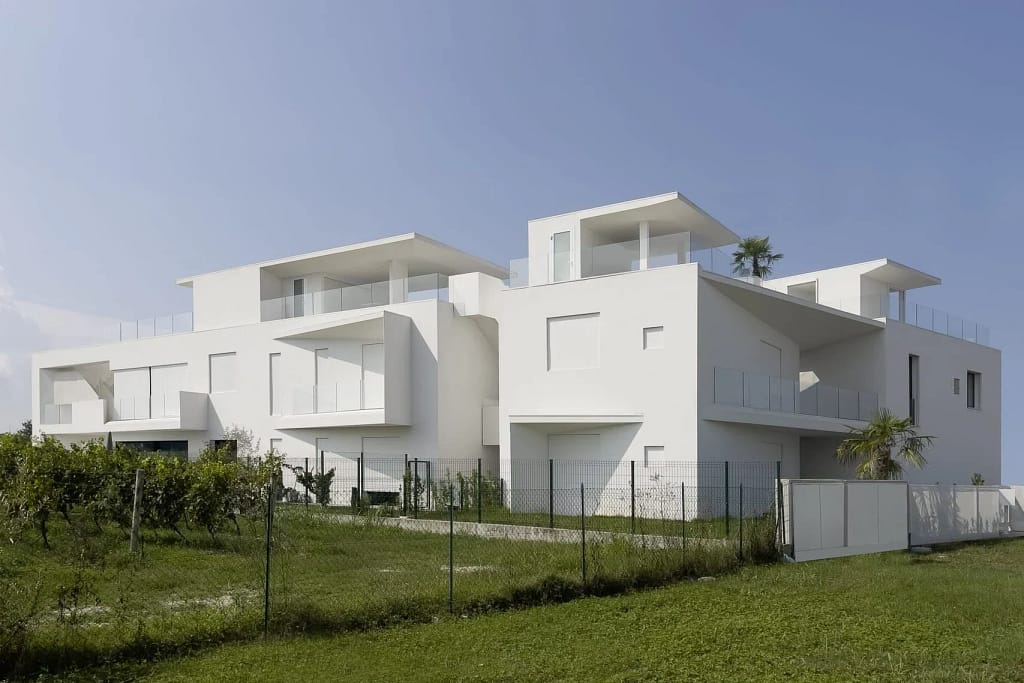
The comparison must rest on real numbers: land price, construction cost, fees, timing, charges. The founder of ELRE, architect Federico Cappellina, leads a studio designing contemporary villas across Veneto and Lombardy: a separate activity, with its own client commissions. AV Home in Dueville, pictured, is one of its works. For the starting costs, the studio has published building a villa in Italy and architect fees for a villa in Italy.
How we read the market: the ELRE method
Every assessment goes through three checks, always in the same order: the architectural reading of the project, the check on the ground by people who work in that market, the comparison with declared sources. The real estate work is done by the Real Estate team; the founder guarantees the method, described on the method page. When we hold a mandate, the property appears in the selection of villas for sale; we do not propose any in these guides.
Invest
Hotels for sale in Italy: Milan, Sardinia, Cortina d’Ampezzo and Venice. Teaser data, ELRE…
Frequently asked questions: how to buy a villa in Italy
Can an American buy a villa in Italy?
Foreign nationals can generally buy, subject to the reciprocity check or a treaty covering real estate. The Ministry of Foreign Affairs publishes the references and your notary confirms your position. You will need an Italian tax code.
How much does a luxury villa cost in Italy?
There is no reliable average: value depends on territory, view, land, condition and restrictions. Public figures concern apartments: in May 2026 Casa.it gave average asking prices of 4,768 euros per square metre on Lake Garda and 3,765 on Lake Como. A villa needs OMI quotations, comparable sales and a technical valuation.
What is the best place to buy a villa in Italy?
It depends on how you will live there: Tuscany for landscape and countryside, the lakes for water and proximity to Milan, the Venetian coast for the sea and simple management, the Veneto hills if you want to build.
Are the €1 homes a way to buy a villa?
No. Those are schemes run by single municipalities for buildings needing restoration, with their own conditions and obligations. They are a different thing from the villa market this guide covers: read the municipality’s notice before planning anything.
What taxes do I pay when buying a villa in Italy?
From a private seller, 9% registration tax with a minimum of 1,000 euros, plus 50 euros of mortgage tax and 50 of cadastral tax. From a company charging VAT, 10%, or 22% for categories A/1, A/8 and A/9, plus three fixed taxes of 200 euros. Source: Italian Revenue Agency.
Do I need to live in Italy to buy?
No. You can buy without residing in Italy, and you can usually sign by power of attorney. Residence matters for the «first home» relief, which villas registered A/1, A/8 and A/9 cannot get anyway.
How do I get an Italian tax code from abroad?
You normally appoint someone to file the request at a Revenue Agency office in Italy. Consulates step in only in limited cases, and procedures differ, so check with yours.
What is the State's right of first refusal?
If the house is a listed cultural asset, the transfer must be notified to the Ministry, which normally has 60 days to buy on the same terms, or 180 if the notice is missing or incomplete. Until then the deed stays suspended.
Do I need an architect before making an offer?
It is not compulsory, but it is the check that costs least compared with the risk it covers. With the preliminary reading we tell you in writing what the project shows, what is missing and what to check.


Have you found a villa in Italy you like?
Send us the listing or the dossier: we tell you what the house shows, what is missing and what to check before you decide. If you are still choosing the territory, start from the guides on Tuscany and Lake Como, or from the contact page.
Sources: taxes, Italian Revenue Agency and first home relief; reciprocity, Ministry of Foreign Affairs; asking prices, Casa.it (21 May 2026, apartments of 1 to 5 rooms); quotations, OMI; market, Knight Frank; new residents regime, Fiscal Focus; right of first refusal, art. 59 and art. 61 of Legislative Decree 42/2004; preliminary contract, art. 2645-bis Civil Code. Data consulted on 31 October 2026. This guide does not replace the advice of a notary or tax adviser.
Photos: AV Home, a project by the studio; the others from Wikimedia Commons: kuhnmi · CC BY 2.0; Luca Trombetta · CC BY-SA 4.0; Auge=mit · CC BY-SA 4.0; Enrico Pighetti from Civitanova Marche, Italia · CC BY 2.0; Graziano Cannoletta · CC BY-SA 4.0; Kryštof Jelínek · CC0; Awaxi · CC BY-SA 4.0.
Would you like a reading of the house?
Send the listing or the dossier: we reply with the points to check.
Discover the UHNW Lifestyle
Real Estate articles: markets read with their sources.